Modern Architecture in Lindau: Thermal Baths, Inselhalle & More
Modern Architecture in Lindau – Buildings That Impress (A Look at Upcoming Experiences & Developments)
Between the lakeshore, city districts, and hillside locations, interest in contemporary building culture is growing in Lindau: less as "loud icons," but rather as well-designed places for living, recreation, and public use. This article focuses exclusively on future opportunities for you to consciously experience modern architecture in Lindau in the near future – and what matters most.
Three Focus Locations for Your Next Architectural Perspective
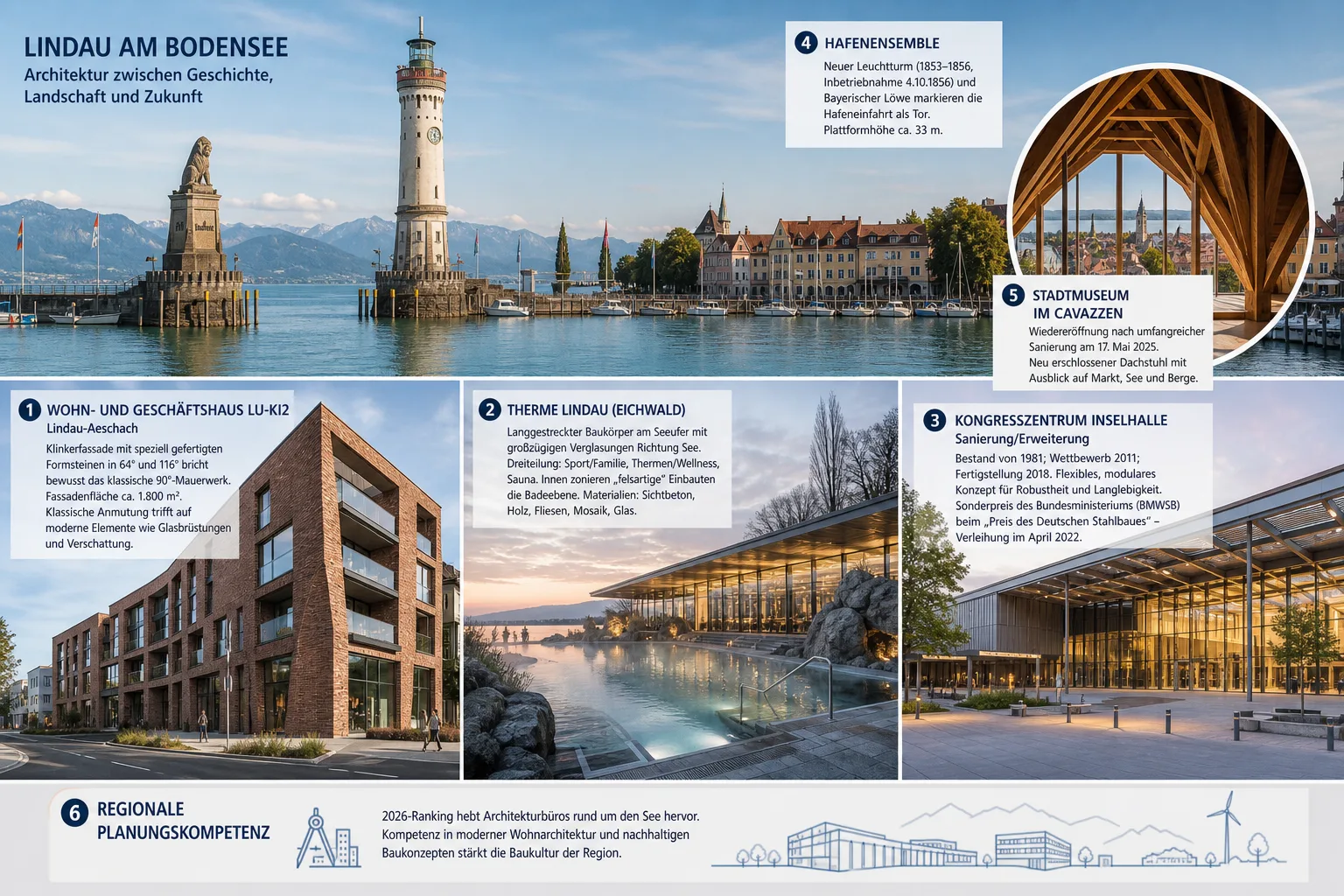
1) Lindau-Aeschach: Brick, Edges, Character as an Urban Address
In the Aeschach district, contemporary residential and commercial buildings shape the impression where traffic spaces, stops, and local amenities come together. For your next exploration, it is worthwhile to consciously "read" facades: materiality (e.g., brick/clinker), precisely placed corners, robust base zones, clearly defined entrances, and good transitions from the building to the sidewalk.
What you can particularly pay attention to in the future: How does the building respond to the urban space (intersection, roundabout, sightlines)? Is there wind protection, shade, seating options, or clear orientation? Good modern architecture here is less about spectacular forms and more about everyday usability.
2) Lakeshore/Eichwald: Landscape as a "Co-Designer"
On the shore, it is especially clear in Lindau whether architecture takes the landscape, pathways, and sightlines into account. On your next visit, you can resolve not only to view buildings head-on, but to "walk along" the shoreline: How long does a building appear in motion? Where do glass fronts open to the water, where are retreat zones created, and how are outdoor spaces made usable?
The lakeshore will remain a sensitive location in the future: Modern architecture is convincing here when it supports the alternation between openness (view into the landscape) and security (protected zones, calm materials, good acoustics).
3) Island/Old Town: Building On Instead of Replacing
On the island city, the opportunities in the coming years are often "unspectacular" but crucial: renovations, conversions, energy improvements, accessibility, and functional updates in existing buildings. This is architecturally demanding because new technology, new pathways, and new safety requirements must be integrated into established structures.
For your next tour, it is therefore worthwhile to look at details that will become increasingly important: new entrances and guidance systems, redesigned foyers, transparent transitions, improved access (stairs/elevators), and the question of whether interventions are "honestly" readable without dominating the historic environment.
Suggestion for an Upcoming Architecture Route (No Fixed Dates)
This route is designed so that you can walk it flexibly in the future – without being tied to specific event dates:
- Start in the Aeschach area: Observe how new buildings function in everyday traffic (entrances, ground floor zones, material changes, shading).
- Continue toward the shore: Pay attention to transitions from urban space to landscape – paths, planting, sightlines, quality of stay.
- Finish in the island city: Compare the scale of historic spaces with contemporary interventions (e.g., modernized entrances, clear orientation, restrained additions).
Tip for the near future: Deliberately choose two perspectives – one "up close" (material, joint pattern, handrail, door details) and one "in motion" (how the building changes along your walking line).
How to Recognize "Good" Modern Architecture in Lindau
- Sensitivity to Place: Does volume, height, and rhythm fit the surroundings without seeming arbitrary?
- Material Honesty: Are materials durable and sensibly used (e.g., robust bases, weather-resistant surfaces by the lake)?
- Quality of Use: Do entrances, pathways, orientation, and areas for staying work even with high frequency?
- Climate & Comfort: Is there shading, summer heat protection, wind protection, and good use of daylight?
- Sustainability in Practice: Is resource consumption reduced by building on, sensible floor plans, and durable components?
- Accessibility & Inclusion: Are entrances, movement areas, and information usable for as many people as possible?
Modern architecture in a sensitive urban space rarely convinces through loudness – but rather by improving pathways, sightlines, and everyday use.
Planning Reality: What May Still Change in the Future
For all projects related to building, renovating, and repurposing, the following applies: planning statuses can change (approvals, budgets, construction processes, environmental regulations, participation processes). If you specifically want to experience modern architecture, check the latest information via official city and operator channels before your visit.
Transparency Notice: This article does not describe completed or past events, but rather looks ahead to future explorations and typical, Lindau-relevant topics of contemporary building culture. You should always verify specific dates, programs, or construction statuses for up-to-date accuracy.