
Daniil Charms
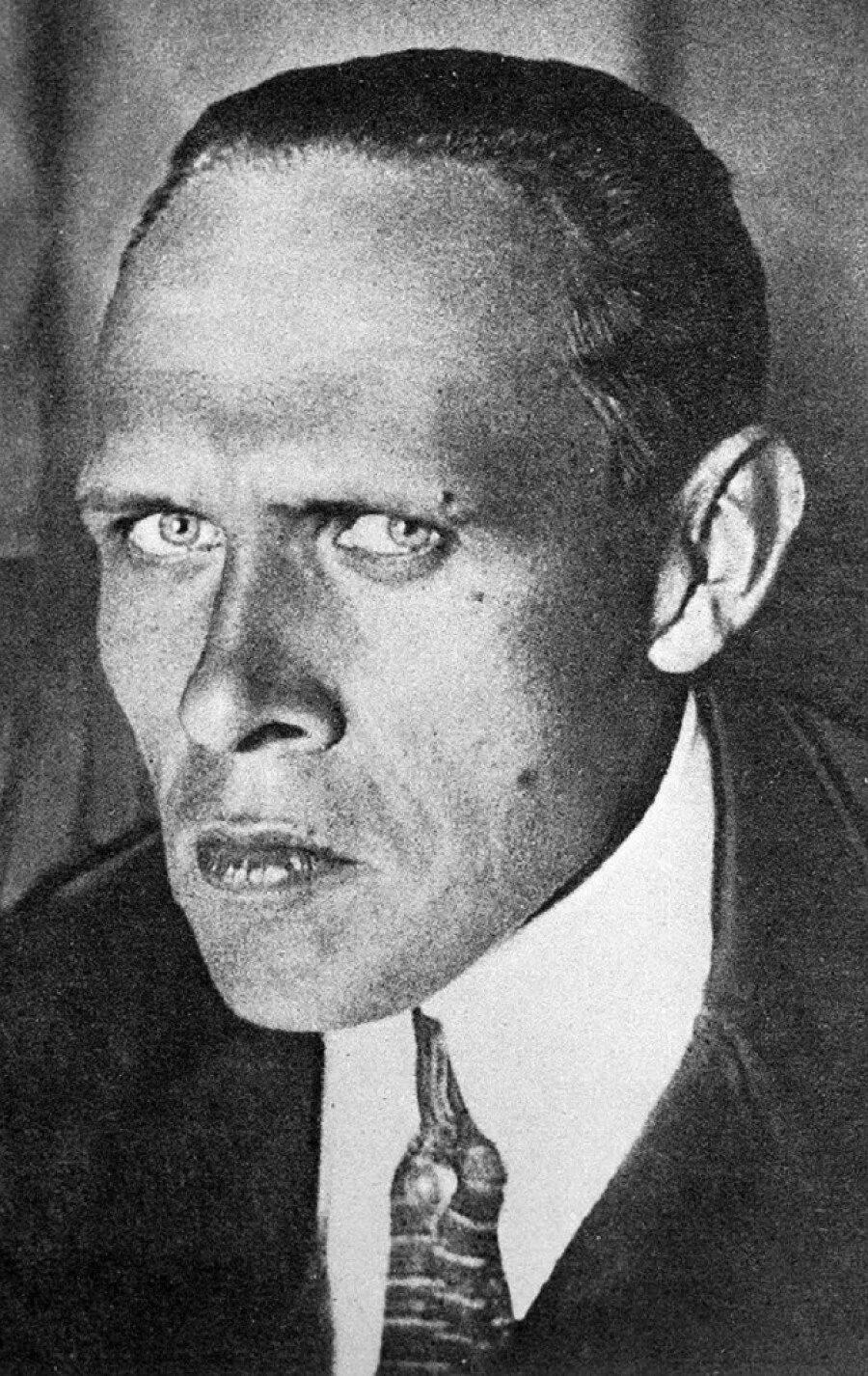
Image from Wikipedia
Image from Wikipedia
Daniil Charms – The Master of the Absurd Between Avant-Garde, Poetry, and Persecution
A Writer Who Exploded Logic
Daniil Charms, whose real name was Daniil Ivanovich Yuvachov, is among the most idiosyncratic voices of Russian modernism. As a poet, prose writer, playwright, and children's book author, he created a body of work that deliberately blurred the boundaries between literature, performance, and intellectual provocation. His texts are now circulated as key works of the avant-garde, although they were published only fragmentarily and often not at all during his lifetime. (zeit.de)
Biographical Origins and Early Influences
Charms was born in 1905 in Saint Petersburg, in the Russian Empire, during a time of dramatic political and cultural upheaval. From an early age, he showed a tendency toward experimentation, mask play, and linguistic shifts; his pseudonym appeared already during his school years and became a literary trademark. Later, he pursued studies, abandoned his electrical engineering program, and turned to art history—a break that clearly illustrates his distance from bourgeois utility logic. (zeit.de)
Daniil Charms' biography is inseparably linked to the political violence of the Soviet system. His works came into conflict with the cultural-political climate of Stalinism, which viewed formal radicalism, absurdity, and trans-logical procedures as suspicious. The consequence was not only aesthetic isolation but also real repression, which ultimately led to arrest, banishment, and death. (osa.fu-berlin.de)
OBERIU, Left Flank, and the Leningrad Avant-Garde
In the 1920s, Charms became a formative figure of the Leningrad avant-garde. Together with his companions, he founded the artists' association OBERIU, which stands for "Union of Real Art" and opposed the conventions of realistic representation. This group engaged in quasi-Dadaist actions, literary experiments, and a theater and performance logic that both disturbed the audience and drew attention to the material conditions of language. (osa.fu-berlin.de)
Charms was not only a co-founder of a movement but also its most radical formal artist. His texts operate with abrupt negation, miniature scenes, paradoxical twists, and a poetics of interruption. In the context of literary classification, he is considered an author who does not merely represent the absurd but structurally produces it. (osa.fu-berlin.de)
The Breakthrough Without Publicity
A genuine "breakthrough" in the classical sense eluded Charms, yet his name quickly became a reference within the avant-garde scene. The performance of his absurd play "Elizaveta Bam" in 1928 provoked sharp reactions; afterward, his works were increasingly not published. This very exclusion from the official literary scene shaped the image of an author whose significance could only be fully realized retrospectively. (zeit.de)
His relevance lies precisely in this tension: Charms wrote against expectations of linear narrative, psychological plausibility, and ideological readability. This made him a central name in absurd literature and literary modernism for later generations. His prose miniatures and poems continue to appear as precisely placed disturbances within the fabric of language. (osa.fu-berlin.de)
Children's Literature as Livelihood and Art Form
After the repressions, Charms turned to children's literature as a means of being able to publish at all. These texts did not arise as mere sideline projects, but as part of his literary system, where irony, rhythm, reduction, and surprise play a central role. The children's texts exhibit the same penchant for precision and calculated break as his more experimental works. (zeit.de)
Here, too, his artistic development is evident: Charms did not distinguish between "high" and "low" literature but worked in both fields with the same formal energy. Thus, children's literature became an important part of his discography of words when one reads his work in a broader cultural sense as a complete composition. His impact unfolds not only through individual narratives but through a cohesive aesthetic thought. (zeit.de)
Style, Composition, and Poetic Signature
Charms' style is immediately recognizable: concise, laconic, convoluted, and often supported by a dry humor that tips into the grotesque. He employs repetition, deprivation, contrast, and linguistic miniatures that transform a seemingly simple situation into a metaphysical riddle. In this reduction lies his modernity, as the composition of his texts relies less on action than on disruption, pacing, and surprising semantic shifts. (osa.fu-berlin.de)
Musically speaking, Charms' writing possesses a pronounced rhythm, almost a percussion of language. Sentences break off, characters appear and vanish, and logic is replaced by another, uncanny logic. This is precisely where the special literary energy of his work lies: it is form-conscious, pointed, and at the same time existential. (osa.fu-berlin.de)
Persecution, Archival Rescue, and Posthumous Fame
Charms was arrested in 1941 for "spreading defeatist propaganda" and was placed in a prison psychiatric facility; he died in Leningrad in 1942, likely from hunger. The fact that his work is today accessible in such breadth is largely thanks to his friend Yakov Druskin, who rescued the estate from a bombed apartment, thereby establishing the foundation for later reception. Without this rescue, a significant part of Russian modernism would have been lost. (zeit.de)
It was not until the time of Perestroika that many of his texts were published and thus came into international awareness. Since then, Charms has been regarded as one of the most important authors of absurd writing, a precursor of postmodern methods, and an indispensable name in any serious engagement with the Russian avant-garde. The history of his work is therefore also a story of delayed justice. (de.wikipedia.org)
Discography, Reception, and Cultural Influence
Daniil Charms does not possess a discography in the musical sense; instead, the history of his work unfolds through books, editions, theatrical adaptations, and cultural studies. Among the well-known German-language editions are "Zirkus Sardam" and collections of his prose and poetry that have significantly shaped his international reception. Academic materials and publications also illustrate how strongly Charms is read today as an author of absurd thinking. (zeit.de)
His cultural influence extends from literary theory to theater and performance, all the way to visual culture. The author's works continue to inspire productions, research studies, and new publications because they develop a language of resistance against ideological clarity. Charms remains an author who must not only be read but continually reinterpreted. (rowohlt-theaterverlag.de)
Current Projects and Publications: Since Daniil Charms died in 1942, there are no new albums, singles, or tours. The current relevance of his work arises through reprints, scholarly editions, and cultural rediscoveries, rather than contemporary releases. (zeit.de)
Relevant Press Opinions and Classifications: Zeit describes the devastating reaction to "Elizaveta Bam" and the subsequent publication blockade; the Free University of Berlin classifies Charms as a Leningrad avant-garde author with trans-logical word experiments and absurd prose. Such classifications confirm his rank as a radical modernist whose work has long been written against the times. (zeit.de)
Conclusion: Why Daniil Charms Continues to Fascinate
Daniil Charms fascinates because his work does not use the absurd decoratively but as a means of knowledge. He combines linguistic audacity, formal rigor, and existential urgency into a poetics that appears remarkably modern in the 21st century. Reading Charms brings one face to face with not a smooth classic but an author who puts thought itself into motion. (osa.fu-berlin.de)
For this reason, every new encounter with his texts is worthwhile: in readings, performances, academic editions, and translations. Daniil Charms remains a name for all who understand literature not as a mirror but as an event. Discovering him means experiencing the power of literary avant-garde in its purest form. (zeit.de)
Official Channels of Daniil Charms:
- Instagram: No official profile found
- Facebook: No official profile found
- YouTube: No official profile found
- Spotify: No official profile found
- TikTok: No official profile found
Sources:
- Wikipedia – Daniil Charms
- DIE ZEIT – Daniil Charms (2003)
- Free University Berlin – Daniil Charms "The Blue Notebook No. 10"
- Routledge Encyclopedia of Modernism – Daniil Kharms
- Wunderhaus Verlag – Easter Tales from Around the World
- German Digital Library – Works / Charms, Daniil; Vol. 2
- Rowohlt Theater Verlag – Daniil Charms