
Dante Alighieri
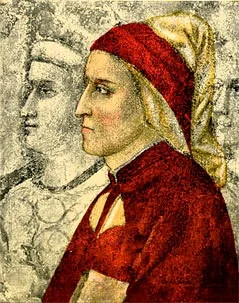
Image from Wikipedia
Image from Wikipedia
Dante Alighieri – the poetic force that reinvented Europe
The poet who transformed language into world literature
Dante Alighieri is one of the defining figures in European cultural history. Born in 1265 in Florence and dying in 1321 in Ravenna, the author is regarded as the greatest Italian poet of his time and a key figure of the Middle Ages. With the Divine Comedy, he wrote not only an epic masterpiece but also elevated Italian to a new literary level. His biography is that of an intellectual, political exile, and linguistic artist whose influence extends to the present day. ([britannica.com](https://www.britannica.com/biography/Dante-Alighieri))
Biography: Florence, education, and early influences
Dante was born into a family of minor nobility in Florence and began writing at a young age. Britannica describes how he met Beatrice Portinari at the age of nine, a figure who profoundly influenced his poetry and became an idealized guiding figure in his works. His marriage to Gemma Donati and the early death of his parents occurred during a phase of life where personal experience and literary ambition were already closely intertwined. This early influence explains the emotional depth and symbolic richness of his verses. ([britannica.com](https://www.britannica.com/biography/Dante-Alighieri))
The social and political realities of his hometown shaped Dante as profoundly as his reading and poetic talent. In Florence, he became embroiled in the power struggles between the "Whites" and "Blacks" of the Guelphs and was exiled from the city in 1302. This turning point made him a lifelong exile and lent an existential tension to his literature that runs throughout his entire body of work. It was precisely from this experience of loss that the authority of his voice emerged. ([britannica.com](https://www.britannica.com/biography/Dante-Alighieri))
The breakthrough: The Divine Comedy as a literary revolution
His lasting breakthrough is inseparably linked to the Divina Commedia, a work that unfolds the journey through Inferno, Purgatorio, and Paradiso as an architecture of spiritual and moral meaning. Britannica emphasizes the global significance of this epic, which is considered one of the most important and influential texts in literature. Dante not only narrated an otherworldly journey but also shaped a complex model of the world combining theology, philosophy, politics, and linguistic artistry. This is precisely where the enduring brilliance of his work lies. ([britannica.com](https://www.britannica.com/biography/Dante-Alighieri))
Particularly revolutionary was Dante's decision to write in Old Italian or Tuscan instead of Latin. By doing so, he broke through one of the major cultural barriers of his time and played a decisive role in establishing Italian as a literary language. This linguistic assertion turned him not only into a poet but also into an architect of cultural identity. From today's perspective, this move appears as a media and aesthetic new beginning with epochal significance. ([visittuscany.com](https://www.visittuscany.com/de/ideen/dante-biografie/?utm_source=openai))
The musicality of language and poetic composition
Although Dante was not a musician in the strict sense, his work possesses a distinct musicality that readers still feel today. His verses work with rhythm, sound figures, repetitions, and a clear dramatic escalation that recalls strict composition. In the Divine Comedy, formal discipline and powerful imagery combine into poetry of nearly symphonic architecture. It is precisely this inner order that makes his work so enduringly performable, recitable, and interpretable. ([britannica.com](https://www.britannica.com/biography/Dante-Alighieri))
Dante's poetic development shows an extraordinary control over tone and perspective. From the autobiographical impulse of his early lyric poetry to the universally conceived epic, his expressive range gradually expands. His poetry employs allegory, vision, and moral sharpening, without ever losing emotional immediacy. This results in a literary presence that can rightly be described as the stage presence of language. ([britannica.com](https://www.britannica.com/biography/Dante-Alighieri))
Exile, conflict, and creative resilience
Dante's exile was not a marginal event but the central biographical experience of his life. His exclusion from Florence forced him to a life between courts, cities, and political dependencies, sharpening and universalizing his perspective. In this tension, he developed a language that merges personal injury, political analysis, and metaphysical order. The harshness of his fate lent a rare credibility to his authority. ([britannica.com](https://www.britannica.com/biography/Dante-Alighieri))
Particularly striking is the cultural-historical impact that was noted even during his lifetime. Visit Tuscany mentions the legend that a blacksmith quoted his verses, prompting Dante to damage the blacksmith's tools because he understood his words as his true craft. Whether as legend or cultural memory, the anecdote illustrates how profoundly his fame was embedded in the public consciousness early on. Dante was not only read but also perceived as a creative authority. ([visittuscany.com](https://www.visittuscany.com/de/ideen/dante-biographie/))
Works and reception: Influence, canon, and cultural aftermath
Dante's works stand at the center of the European literary canon and extend far beyond Italian literature. Britannica describes the Divine Comedy as one of the most influential works of world literature, and therein lies its enduring significance for scholarship, education, and cultural memory. His imagery, moral topography, and linguistic power continue to shape literature, art, film, and pop culture today. The name Dante thus represents not only an author but also a cultural coordinate system. ([britannica.com](https://www.britannica.com/biography/Dante-Alighieri))
Modern institutions also keep this relevance alive. The anniversary in 2025 will be utilized by church and cultural projects to once again bring the Divine Comedy to the forefront and read Dante as a "pilgrim of hope." Such initiatives demonstrate that his work is not museum-like but subject to continual reinterpretation. Dante thus remains a living reference point for literary education and cultural debate. ([iubilaeum2025.va](https://www.iubilaeum2025.va/de/notizie/comunicati/2025/mostra-dante-alighieri-pellegrino-speranza.html?utm_source=openai))
Discography, albums, and current music projects
A classical discography in the sense of a musician does not exist for Dante Alighieri since he was a poet and philosopher and did not release albums, singles, or tours. Nonetheless, this classification is important for an SEO-oriented artist page, as it sharpens the author's profile and avoids false expectations. Dante's "body of work" consists of poetry, treatises, and intellectual historical impact, not recordings or charts. This distinction is precisely what underscores his historical significance. ([britannica.com](https://www.britannica.com/biography/Dante-Alighieri))
Current music projects, new releases, or collaborations are naturally not documented for Dante. Instead, his presence endures through reprints, exhibitions, scholarly contexts, and cultural programming. Therefore, anyone searching for a current creative status will not find pop or rock productions but rather an unbroken story of reception. This form of relevance is the true constant in a classic like Dante. ([iubilaeum2025.va](https://www.iubilaeum2025.va/de/notizie/comunicati/2025/mostra-dante-alighieri-pellegrino-speranza.html?utm_source=openai))
Cultural influence: From Tuscany to the world
Dante's cultural influence begins in Florence and has no end. Visit Tuscany illustrates how closely his work remains connected to places in Tuscany, and this geographical anchoring gives his poetry additional vividness. His texts turn landscape, politics, and inner movement into a shared experiential space. As a result, Dante still appears today as an author who is not only read but is almost traversed. ([visittuscany.com](https://www.visittuscany.com/de/ideen/dante-biografie/))
German Biography and Britannica further emphasize his entanglement with political and biographical contexts that brought his writing to this greatness in the first place. The combination of exile, education, religious imagination, and linguistic innovation formed an authority that extends into modernity. Dante is thus a key figure for all who understand literature as a spiritual force rather than just a text. His significance lies in the connection of formal consciousness, world-narration, and cultural self-assertion. ([britannica.com](https://www.britannica.com/biography/Dante-Alighieri))
Conclusion: A century-author whose language still shines today
Dante Alighieri fascinates because he encapsulates personal fate, political experience, and poetic vision into a work of unique power. His literature is precise, vivid, and intellectually uncompromising, while also being open to ever-new interpretations. Encountering Dante is not just meeting a poet but engaging with an entire model of European culture. His texts deserve to be read, heard, recited, and rediscovered again and again. ([britannica.com](https://www.britannica.com/biography/Dante-Alighieri))
Especially at a time when cultural orientation often seems fleeting, Dante remains a focal point of extraordinary brilliance. His works demonstrate how powerful language can be when it connects knowledge, emotion, and form at the highest level. Anyone who has the opportunity to experience Dante's texts in reading, theater, concert format, or exhibition should seize it. Few names stand so impressively for the power of art over the centuries. ([iubilaeum2025.va](https://www.iubilaeum2025.va/de/notizie/comunicati/2025/mostra-dante-alighieri-pellegrino-speranza.html?utm_source=openai))
Official channels of Dante Alighieri:
- Instagram: no official profile found
- Facebook: no official profile found
- YouTube: no official profile found
- Spotify: no official profile found
- TikTok: no official profile found
Sources:
- Britannica – Dante Alighieri
- German Biography – Dante, Alighieri
- Visit Tuscany – Dante Alighieri: Life, Facts, and Curiosities
- Anniversary 2025 – Exhibition about Dante Alighieri
- Wikipedia: Image and text source – Dante Alighieri