
Dornröschen
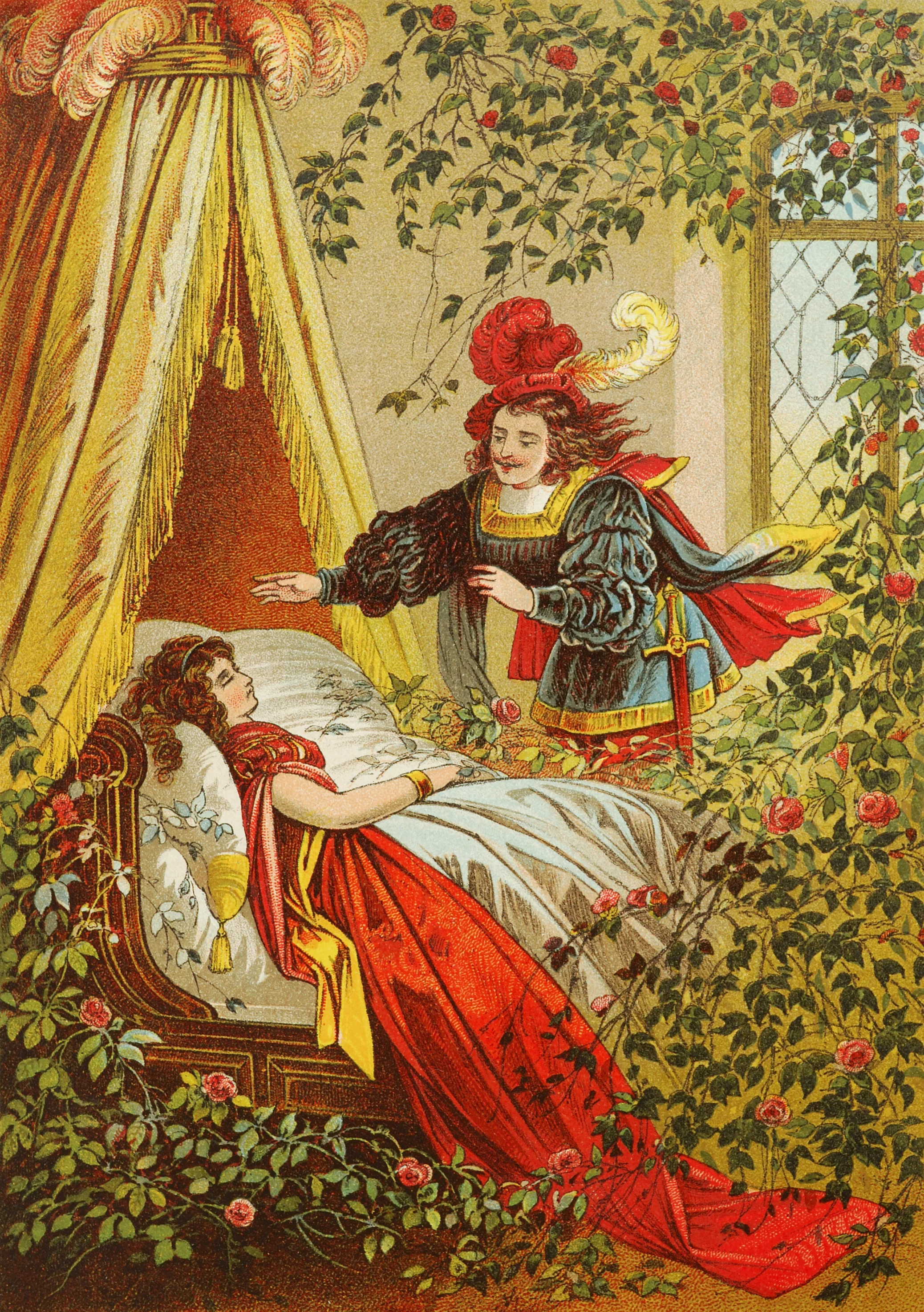
Image from Wikipedia
Image from Wikipedia
Sleeping Beauty: The Fairy Tale of Sleep, Time, and Awakening
A Timeless Fairy Tale That Has Preserved Its Fascination for Centuries
Sleeping Beauty is one of the most well-known fairy tales in the European storytelling tradition and ranks among the defining texts of the Brothers Grimm's collection of Children's and Household Tales. Documented as KHM 50 since the first edition of 1812, the story combines motifs of doom, magic, patience, and redemption into an irresistibly captivating narrative that continues to enchant today. Its cultural scope extends far beyond the study of folk tales, making Sleeping Beauty a key text in literary and reception history.
The Grimms' version is not isolated but part of a long oral and written tradition. The source traces back through Marie Hassenpflug to Charles Perrault's La belle au bois dormant, which was published in 1697 in the Contes de ma Mère l’Oye and already existed in 1696. Ludwig Bechstein later included the fairy tale as Das Dornröschen in his Deutsches Märchenbuch, further solidifying the recognition of the motif in the German-speaking world.
Origin and Transmission: From Oral Storytelling to Canonical Fairy Tale Collection
The story of Sleeping Beauty is categorized as the international fairy tale type ATU 410 and exemplifies how a narrative transforms, condenses, and culturally adapts over generations. In the Grimms' version, the fairy tale is presented not as an original creation but as a result of transmission, collection, and editorial shaping. Its historical strength lies precisely in this aspect: it is not just a fairy tale, but a testimony to the formation of tradition.
The Brothers Grimm published Sleeping Beauty in the first edition of their collection in 1812 and retained it in the canon until the final edition of 1857. This consistency indicates the special status of the material within the collection. Sleeping Beauty, for example, was considered in terms of how fairy tales were read, organized, and transmitted as part of a national narrative culture in the 19th century.
The Plot as Cultural Memory: Sleep, Time, and Liberation
At the center is a princess whose life is placed into a decades-long sleep by a curse, while her world remains in silent stagnation. The image of the overgrown castle grounds is among the most famous motifs in the European fairy tale realm. It connects the outer landscape with the inner state and makes sleep a metaphor for interruption, standstill, and hidden future.
The narrative builds a strong dramatic tension: the threat of the curse, the time of concealment, the approach of the savior, the解除 of paralysis. This very structure explains the extraordinary connectivity of the fairy tale. Sleeping Beauty is not only a children's fairy tale but a narrative form that condenses archetypal experiences of maturation and rebirth.
The Grimms' Version: Romanticization, Condensation, and Folklore Aesthetics
The Brothers Grimm positioned Sleeping Beauty in their collection as part of a broader folkloric and poetic program. Their version is characterized by clear, concise language and strong imagery. This design allows the story to appear both simple and deeply symbolic, which is a crucial aspect of its effect.
The famous "wildly romantic" overgrown castle landscape, which later interpretations repeatedly referenced, enhances the impression of a closed enchanted space. In this aesthetic, nature and fate, architecture and memory merge. The fairy tale thereby creates a place where time does not simply pass but becomes a narrative force.
Charles Perrault and the European Origin of the Material
The connection to Charles Perrault makes Sleeping Beauty a prime example of the cross-European movement of fairy tales. Perrault's La belle au bois dormant was published in 1697 in the famous collection Contes de ma Mère l’Oye and has had a lasting impact on the material. The Grimms' version thus stands in a long line of courtly and popular narrative literature that influenced each other.
Perrault's version is of central importance for the history of reception because it early on brought the material into a literarily developed form. The later German tradition adopted the core of the story but set its own accents, integrating it into the project of a German-language fairy tale collection. This creates an example of cultural translation that remains significant in fairy tale research to this day.
Literary Significance: Why Sleeping Beauty is Still Read Today
Sleeping Beauty occupies a place in cultural memory not just for its plot but for its symbolic depth. The princess's sleep can be read as an image of transition, protection, maturation, or historical interruption. At the same time, the fairy tale opens up various interpretations in literary studies, psychoanalysis, and cultural history.
The material shows how fairy tales create vast spaces of tension in few scenes. The characters are archetypical, the plot is clearly constructed, and yet the narrative remains open to interpretations. It is precisely this balance of simplicity and ambiguity that makes Sleeping Beauty one of the most enduring texts in fairy tale tradition.
Reception and Cultural Influence: From Childhood to High Culture
Sleeping Beauty has influenced culture far beyond the printed page and has become an integral part of popular and artistic culture. The material inspired theater, illustrations, adaptations, and later reinterpretations in various media. Its iconic imagery has made it one of the most recognizable fairy tale motifs.
Particularly remarkable is how Sleeping Beauty mediates between folk culture and high culture. The fairy tale represents both the classic Grimm tradition and an international narrative figure that recurs in many contexts. This dual status explains why Sleeping Beauty remains so present in modern reading and viewing practices.
Language, Imagery, and Symbolism: The Quiet Power of the Fairy Tale
The linguistic effect of Sleeping Beauty relies on condensation. The fairy tale says little and shows much: a curse, a silence, a wall of thorns, a sleeping castle, a later opening of time. It is this reduction that creates literary intensity and makes the fairy tale particularly memorable.
The symbolism is open enough to endure cultural shifts. Sleeping Beauty can be read as a narrative about vulnerable order, protective spaces, or the return of the living. Thus, the text is not bound to a historical epoch but continually develops its power anew.
Conclusion: A Fairy Tale That Endures Through Time
Sleeping Beauty is far more than just a well-known children's story. The fairy tale consolidates historical transmission, literary condensation, and cultural imagination in a form that has been impactful for over two centuries. Engaging with this narrative leads to an encounter with one of the central texts of the European fairy tale tradition.
Sleeping Beauty remains exciting because it touches on major themes with few images: sleep and awakening, transformation and redemption, stagnation and new beginnings. This blend of grace, symbolism, and narrative clarity makes the fairy tale timeless. It is worth revisiting, seeing, and discovering Sleeping Beauty as a cultural original time and again.
Official Channels of Sleeping Beauty:
- Instagram: no official profile found
- Facebook: no official profile found
- YouTube: no official profile found
- Spotify: no official profile found
- TikTok: no official profile found
Sources:
- Wikipedia – Sleeping Beauty
- Children's and Household Tales of the Brothers Grimm – Sleeping Beauty KHM 50
- KHM.li – All Versions of Sleeping Beauty
- University of Colorado Boulder – Charles Perrault: La Belle au Bois Dormant
- Wikisource – Sleeping Beauty
- Bör Verlag – Ludwig Bechstein / Deutsches Märchenbuch