
Duisburger Philharmoniker
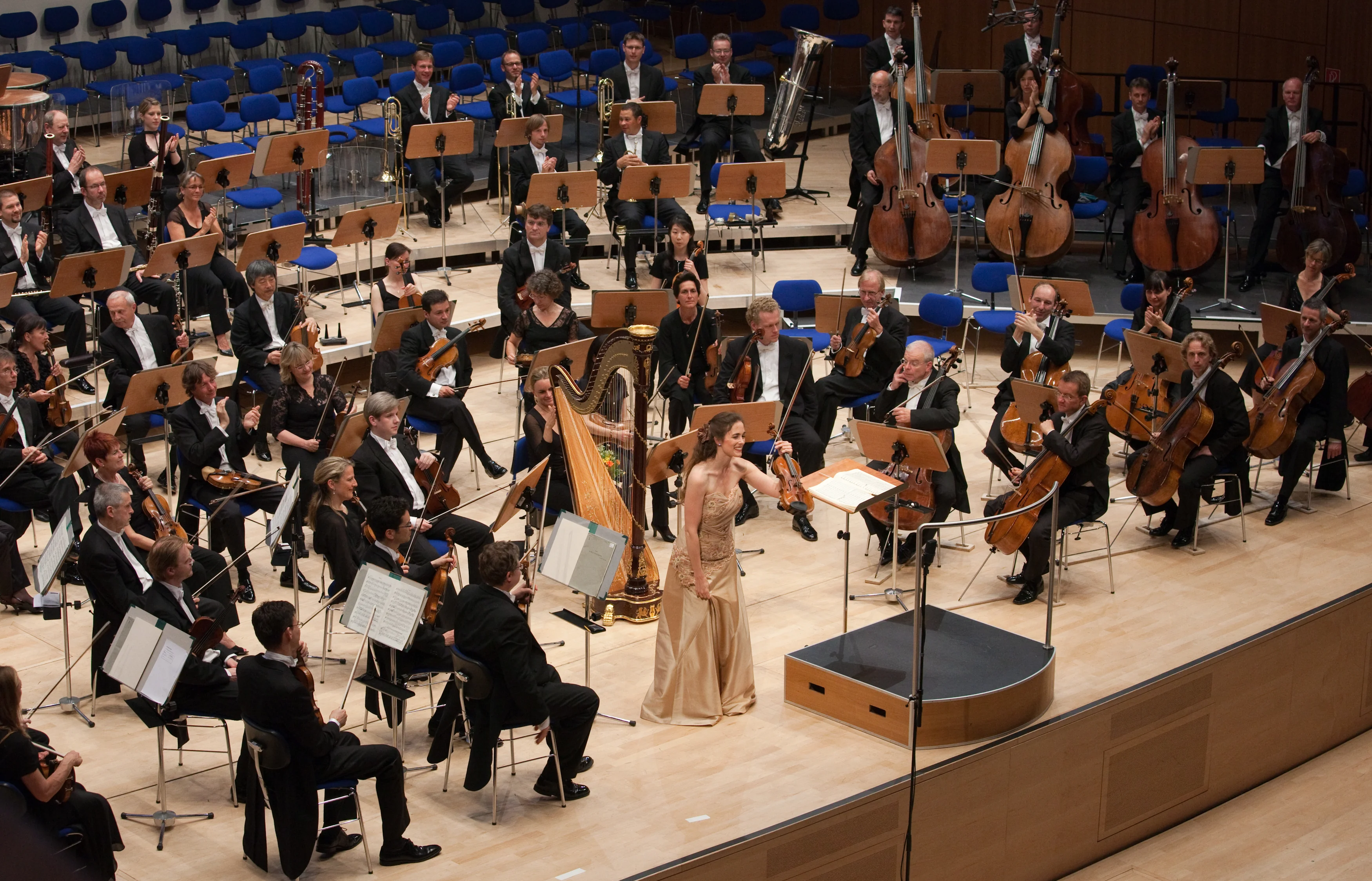
Image from Wikipedia
Image from Wikipedia
Duisburg Philharmonic – Orchestra Tradition, Present and Sound Culture on the Rhine
A historic municipal orchestra with character, attitude, and a vibrant musical identity
The Duisburg Philharmonic is one of the defining cultural institutions in the Ruhr area and serves as the municipal orchestra of the city of Duisburg, as well as one of two orchestras of the Deutsche Oper am Rhein. Founded in 1877 as the "Neue Städtische Kapelle" under the direction of Hermann Brandt, the ensemble has since evolved into a versatile orchestra deeply rooted in history, connecting classical tradition, musical education, and contemporary openness. Throughout its long history, the orchestra has been led by significant principal conductors and guest conductors, with composers like Richard Strauss, Max Reger, and Paul Hindemith conducting themselves. ([duisburger-philharmoniker.de](https://duisburger-philharmoniker.de/duisburger-philharmoniker/der-gmd/?utm_source=openai))
From Municipal Chapel to Professional Concert Orchestra
The history of the Duisburg Philharmonic also tells the story of a city that showcased its cultural aspirations through music early on. From the municipal chapel of the 19th century, the orchestra gradually developed into a performing ensemble with its own artistic fingerprint, now playing a central role in Duisburg's concert life. The list of principal conductors documents this evolution over generations and illustrates how closely musical direction and institutional identity are intertwined here. ([duisburger-philharmoniker.de](https://duisburger-philharmoniker.de/duisburger-philharmoniker/der-gmd/?utm_source=openai))
This continuity is particularly evident in the recent past: Until the end of the 2024/2025 season, Axel Kober served as principal conductor; from the 2026/2027 season onward, Stefan Blunier will take over the artistic leadership for an initial three years. Between these phases lies a time of profiling, during which the orchestra further expanded its repertoire, audience engagement, and formats. Thus, the Duisburg Philharmonic presents itself not as a static traditional institution, but as an ensemble with a consciously developed relevance to the present. ([duisburger-philharmoniker.de](https://duisburger-philharmoniker.de/duisburger-philharmoniker/der-gmd/?utm_source=openai))
Artistic Development Under Changing Principal Conductors
The artistic development of the Duisburg Philharmonic is closely linked to the influential names at its podium. The official chronology spans from Hermann Brandt to Walther Josephson, Paul Scheinpflug, Eugen Jochum, Georg Ludwig Jochum, and includes Lawrence Foster, Alexander Lazarev, Bruno Weil, Jonathan Darlington, Giordano Bellincampi, and Axel Kober. This succession not only reflects personnel history but also the history of style: Each term emphasized different aspects within the tension field of repertoire management, sound ideal, and public impact. ([duisburger-philharmoniker.de](https://duisburger-philharmoniker.de/duisburger-philharmoniker/der-gmd/?utm_source=openai))
Axel Kober shaped the orchestra's artistic profile since 2019 as principal conductor, having previously influenced its musical work as chief conductor. The official website describes how he significantly developed the orchestra's profile. At the same time, with the appointment of Stefan Blunier, a conductor has been recruited who is well-versed in both opera and concert practice and is expected to provide the orchestra with new impulses in the coming years. This indicates a culture of continuous renewal that is firmly anchored within the Duisburg Philharmonic. ([duisburger-philharmoniker.de](https://duisburger-philharmoniker.de/duisburger-philharmoniker/der-gmd/?utm_source=openai))
Repertoire, Concert Life and Current Season 2025/2026
The current season 2025/2026 showcases the Duisburg Philharmonic as a well-rounded concert orchestra with classical core programs, special formats, and a pronounced outreach to the local community. The twelve Philharmonic concerts form the centerpiece of the program, combining classical-romantic repertoire with new works. This is supplemented by chamber music, special concerts, educational offerings, and the festival "Eigenzeit – Music of Now," which explicitly focuses on contemporary music. ([duisburger-philharmoniker.de](https://duisburger-philharmoniker.de/2025/06/duisburger-philharmoniker-stellen-die-neue-konzertsaison-2025-2026-vor/?utm_source=openai))
Among the notable projects is the "Marxloh Music Circus," which highlights the cultural diversity of Duisburg's northern parts and facilitates musical encounters in streets, courtyards, and shop windows. The Philharmonic regards this project as a laboratory for transcultural practice: Workshops, jam sessions, and commissioned compositions link classical orchestral work with urban soundscapes. This also reflects their current artistic identity, which extends beyond the concert hall. ([duisburger-philharmoniker.de](https://duisburger-philharmoniker.de/2024/02/duisburger-philharmoniker-erneut-als-exzellenzorchester-ausgezeichnet/?utm_source=openai))
Discography: CD Projects, Recordings, and Documented Orchestral Work
A traditional hit discography in the pop sense is not typical for a symphony orchestra; however, the Duisburg Philharmonic is documented through numerous CD recordings. The official website points to a dedicated CD page and mentions specific releases, such as a recording of Tchaikovsky's Violin Concerto with Susanna Yoko Henkel and Jonathan Darlington in the "Living Concert Series." Such recordings make the interpretive work of the orchestra permanently audible and anchor it beyond the concert evening. ([duisburger-philharmoniker.de](https://duisburger-philharmoniker.de/duisburger-philharmoniker/cds/?utm_source=openai))
Additionally, the CD "Zwerg Nase / Das kalte Herz – Orchester Märchen für Sprecher und großes Orchester" received the LEOPOLD media prize. This demonstrates that the Duisburg Philharmonic is not only present in regular symphony and opera performances but is also taken seriously in the field of music education and family audiences. Their recordings and projects are thus part of a comprehensive discography in the broader sense: as an auditory archive of a culturally active institution. ([duisburger-philharmoniker.de](https://duisburger-philharmoniker.de/2019/10/leopold-preis-fuer-die-cd-zwerg-nase-das-kalte-herz/?utm_source=openai))
Critical Reception, Awards, and Cultural Influence
In public perception, the Duisburg Philharmonic is regarded as an ensemble with significant societal and cultural reach. In 2024, they were once again recognized as an "Excellence Orchestra" and received additional support for their innovative community work. The official justification emphasizes their function as an open cultural institution and as an orchestra that works with transcultural approaches, actively involving the city community. ([duisburger-philharmoniker.de](https://duisburger-philharmoniker.de/2024/02/duisburger-philharmoniker-erneut-als-exzellenzorchester-ausgezeichnet/?utm_source=openai))
Moreover, the orchestra's communication underscores this claim: In their self-conception, they define themselves as a forum for all citizens and as an aesthetic power center of the city of Duisburg. This profile is evident in educational formats for children, adolescents, families, and individuals with dementia, as well as in collaborations with museums, libraries, and sponsors. Thus, the Duisburg Philharmonic operates far beyond pure concert activities as a cultural engine of the region. ([duisburger-philharmoniker.de](https://duisburger-philharmoniker.de/2024/02/duisburger-philharmoniker-erneut-als-exzellenzorchester-ausgezeichnet/?utm_source=openai))
Musical Language, Ensemble Profile, and Sound Image
The repertoire of the Duisburg Philharmonic spans a wide range from Viennese classicism to romantic symphonies, including premieres and contemporary formats. This versatility requires a flexible sound image, precise interplay, and stylistic agility, particularly in the Philharmonic concerts and the changing chamber music series. The orchestra’s regular presentation of new works is as much part of its profile as the preservation of historical music traditions. ([duisburger-philharmoniker.de](https://duisburger-philharmoniker.de/2025/06/duisburger-philharmoniker-stellen-die-neue-konzertsaison-2025-2026-vor/?utm_source=openai))
Especially in educational and special projects, it becomes clear how consciously the Duisburg Philharmonic interprets its musical career as an institution. They connect performance practice, composition, arrangement, and cultural participation into a program that expands classical concert forms without abandoning their substance. This blend of discipline, openness, and audience-focused thinking constitutes their artistic value. ([duisburger-philharmoniker.de](https://duisburger-philharmoniker.de/Konzerte/hoer-mal-kunst-klasse-klassik-senior-2025-2026/?utm_source=openai))
Conclusion: Why the Duisburg Philharmonic Remains Exciting
The Duisburg Philharmonic remarkably connects history and presence. As a historic municipal orchestra with over 140 years of musical history, as a bearer of innovative projects, and as a visible voice of Duisburg, they exemplify cultural continuity with character. Those who wish to experience orchestral art not just as an interpretation of repertoire but as a living urban culture will find here an ensemble with substance, ambition, and charisma. A concert visit is worthwhile not only for classical music fans but for anyone who understands music as a societal experience. ([duisburger-philharmoniker.de](https://duisburger-philharmoniker.de/duisburger-philharmoniker/der-gmd/?utm_source=openai))
Official Channels of Duisburg Philharmonic:
- Instagram: No official profile found
- Facebook: No official profile found
- YouTube: No official profile found
- Spotify: No official profile found
- TikTok: No official profile found
Sources:
- Wikipedia – Duisburg Philharmonic
- Duisburg Philharmonic – The Principal Conductors
- Duisburg Philharmonic – New Concert Season 2025/2026
- Duisburg Philharmonic – Once Again Awarded as an Excellence Orchestra
- Duisburg Philharmonic – CDs
- Duisburg Philharmonic – LEOPOLD Award for the CD "Zwerg Nase / Das kalte Herz"
- Duisburg Philharmonic – Online Streaming
- Duisburg Philharmonic – Current Evening Programs
Upcoming Events
Approach to Train
Approach to Train
Sound Worlds Between Europe and America
Overwhelming
Duisburg Philharmonic: 2nd Serenade Concert
A-String to Plucking
Baroque Forms, Modern Colors
Heart Music
Sound and Performance in Dialogue with Image and Space