
Fred Hersch
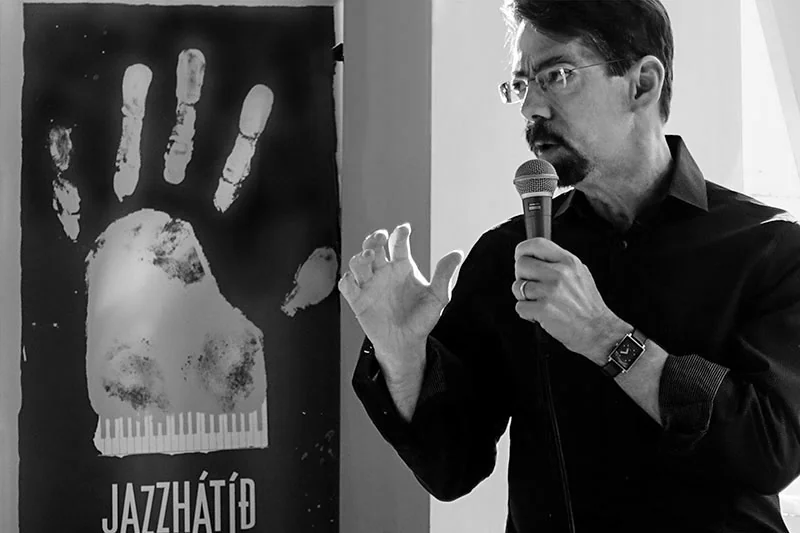
Image from Wikipedia
Image from Wikipedia
Fred Hersch – the lyrical architect of modern jazz piano
A master of nuance between jazz, classical, and improvisational freedom
Fred Hersch is one of the most influential voices in contemporary jazz piano. Born in 1955 in Cincinnati, the American has established himself in the New York jazz scene as a pianist, composer, bandleader, teacher, and collaborative thinker. His playing combines impressionistic color, form-conscious improvisation, and a refined classical sensitivity, setting him apart from many of his contemporaries for decades. ([fredhersch.com](https://fredhersch.com/about/?utm_source=openai))
Early shaping and musical identity
His stylistic origins point to a rare dual talent: Fred Hersch thinks of jazz as a composer and improvises like a chamber musician. Wikipedia describes him as a pianist and composer associated with the New York jazz scene who considers himself a border crosser between jazz and classical and was influenced by Bill Evans. This influence explains the floating tone of his playing, which often shines rather than pushes and gives space to every chord. ([en.wikipedia.org](https://en.wikipedia.org/wiki/Fred_Hersch?utm_source=openai))
His biography is also a story of artistic perseverance. His official website describes Hersch as a creative force active for more than three decades, working as an improviser, composer, educator, bandleader, collaborator, and recording artist. Added to this is a remarkable personal openness: His memoir recounts musical highs, health crises, and his status as the first openly gay, HIV-positive jazz musician to create public visibility. ([fredhersch.com](https://fredhersch.com/about/?utm_source=openai))
The path to great recognition
Fred Hersch's career evolved not through spectacular effects but through steadily growing authority. He established himself at the forefront of the international jazz scene through trio work, solo concerts, and a multitude of duo partnerships. The official biography refers to him as a 17-time Grammy nominee and highlights awards like the Doris Duke Artist Award, multiple Jazz Pianist of the Year titles from the Jazz Journalists Association, and the selection of the Fred Hersch Trio as number one in the DownBeat Critics Poll 2019. ([fredhersch.com](https://fredhersch.com/about/?utm_source=openai))
The major press also found strong words for his playing early on. Vanity Fair called him "perhaps the most excitingly innovative jazz pianist of the last decade," while The New Yorker honored him as a "living legend." Such assessments are not merely praises but mark his rank as a musician who has significantly influenced the present of jazz piano. ([vanityfair.com](https://www.vanityfair.com/culture/2010/06/full-cd-stream-exclusive-jazz-pianist-fred-herschs-triumphant-return?utm_source=openai))
Discography: Solo, trio, and duo as a sonic diary
Fred Hersch's discography reads like a chronicle of musical maturity. His website and ECM highlight several key works: the duo album The Song Is You released in 2022 with Enrico Rava, the 2023 release Alive at the Village Vanguard with esperanza spalding, and the solo album Silent, Listening from 2024. In 2025, The Surrounding Green with Drew Gress and Joey Baron followed, described as an essential addition to the piano trio canon. ([fredhersch.com](https://fredhersch.com/about/?utm_source=openai))
Hersch's solo works hold a special significance in this development. The official site lists twelve solo recordings in his catalog, and Silent, Listening marks his solo label debut at ECM. The album represents an aesthetic of concentration: free forms, controlled silence, fragile lines, and a soundscape that unfolds more of inner landscapes than mere virtuosity. ([fredhersch.com](https://fredhersch.com/about/?utm_source=openai))
His collaborations with other great names also showcase the breadth of his musical thinking. Duos and projects with Anat Cohen, Bill Frisell, Julian Lage, Chris Potter, Joe Lovano, Miguel Zenón, Kurt Elling, Renée Fleming, and many others are featured. These collaborations demonstrate how comfortably Hersch can bridge vocal music, chamber jazz, standards, and free improvisation. ([fredhersch.com](https://fredhersch.com/about/?utm_source=openai))
Style: impressionistic, transparent, harmonically sophisticated
Anyone who listens to Fred Hersch immediately recognizes the balance between clarity and risk. His improvisations are never merely decorative; they develop motif logic, harmonic tension, and a fine sense of phrasing. The press describes his music as close to chamber music, airy, and marked by classical sensitivity, with the ECM-typical sound ideal further highlighting its transparency. ([apnews.com](https://apnews.com/article/22e0fe3b382d1b402564084b6673a5cb?utm_source=openai))
This stylistic ideal is particularly audible on Silent, Listening. AP describes how Hersch works in high and low registers, with restrained dynamics, carefully placed individual notes, and a tendency towards floating, melancholic soundscapes. The result is not a demonstrative fireworks display but a concentrated form of tension arising from touch, silence, and resonance. ([apnews.com](https://apnews.com/article/22e0fe3b382d1b402564084b6673a5cb?utm_source=openai))
The Surrounding Green also maintains this language but is more strongly driven by the trio concept. ECM highlights the tightly knit three-way communication and describes Hersch's own compositions as lyrically intense, with sophisticated harmonies, counterpoint, and an irresistible Latin groove in "Anticipation." This shows an artist who never rests on the elegance of the familiar but continuously questions forms anew. ([ecmrecords.com](https://ecmrecords.com/product/the-surrounding-green-fred-hersch-drew-gress-joey-baron/?utm_source=openai))
Composer, teacher, and cultural authority
Fred Hersch is not only an interpreter but also an important compositional voice in jazz. The official biography notes a Guggenheim Fellowship in composition and references large-scale projects like Leaves of Grass, a setting of Walt Whitman's poetry for two voices and instrumental octet. The fact that this work opened the season of Jazz at Lincoln Center attests to his standing beyond the classic club context. ([fredhersch.com](https://fredhersch.com/about/?utm_source=openai))
His artistic authority also reaches into the next generation. In several current event announcements, Hersch is described as a teacher of a generation of pianists that includes names like Brad Mehldau, Sullivan Fortner, and Jason Moran. This pedagogical influence makes him a key figure in modern jazz: not just as a musician but also as a formative reference for playing culture and musical thought. ([fredhersch.com](https://fredhersch.com/discography/the-surrounding-green/?utm_source=openai))
Current projects, tours, and new releases
In 2025 and beyond, Fred Hersch continues to maintain an active presence. The official website announces tour dates for solo and trio programs through 2026, including performances in the USA and international dates. Particularly important: Silent, Listening remains highlighted as his current album on his website, while ECM emphasizes The Surrounding Green as his third ECM album and confirms its 2025 release. ([fredhersch.com](https://fredhersch.com/?utm_source=openai))
The present of his career is thus not museum-like but alive and productive. Hersch continues to work in formats that consolidate his strengths: solo, trio, and selected collaborations with strong musical personalities. That is where his ongoing relevance for modern jazz lies: he remains open, alert, and stylistically unpredictable without ever losing the melodic core. ([fredhersch.com](https://fredhersch.com/tour?utm_source=openai))
Cultural influence and legacy
Fred Hersch's influence lies less in flashy trends than in the sustainability of his aesthetic. He represents a jazz piano that understands harmony as a narrative means and improvisation as a form of thinking. His albums, his work with singers and instrumentalists, as well as his presence as a teacher and author, make him an authority whose impact reaches far beyond the discography. ([fredhersch.com](https://fredhersch.com/about/?utm_source=openai))
Additionally, his biographical role model status is significant. As an openly gay, HIV-positive musician, Hersch has created visibility and expanded the conversation about identity, dignity, and artistic independence in jazz. This dimension makes his art not only musically significant but also culturally groundbreaking. ([fredhersch.com](https://fredhersch.com/about/?utm_source=openai))
Fred Hersch is thus a musician for listeners who seek depth, form awareness, and true emotional substance. Those who love jazz piano will find with him not a superficial aesthetic but an artist who charges every note with experience, taste, and intellectual presence. His concerts remain more than performances: they are concentrated encounters with one of the finest minds in modern jazz. ([fredhersch.com](https://fredhersch.com/?utm_source=openai))
Conclusion
Fred Hersch captivates with his rare combination of lyrical sensitivity, harmonic intelligence, and distinctive stage presence. He embodies a form of jazz that does not need to be loud to have a deep impact, which, particularly in reduction, unfolds enormous expressive power. Those who experience him live encounter an artist at the pinnacle of his mastery. ([fredhersch.com](https://fredhersch.com/about/?utm_source=openai))
A concert by Fred Hersch is always an invitation to listen more closely: to the spaces in between, to subtle dynamics, to the art of perfect dialogue. That is why he remains one of the most exciting pianists of his generation – and an experience not to be missed live. ([ecmrecords.com](https://ecmrecords.com/product/the-surrounding-green-fred-hersch-drew-gress-joey-baron/?utm_source=openai))
Official channels of Fred Hersch:
- Instagram: no official profile found
- Facebook: https://www.facebook.com/fredherschmusic
- YouTube: no official profile found
- Spotify: https://open.spotify.com/artist/7w7DFqQNjVMW5NRvjM8JPx
- TikTok: no official profile found
Sources:
- Fred Hersch – Official Website
- Fred Hersch – About / Official Biography
- Fred Hersch – ECM releases Fred’s solo label debut
- Fred Hersch – Silent, Listening
- Fred Hersch – The Surrounding Green
- ECM Records – Silent, Listening
- ECM Records – The Surrounding Green
- AP News – Music Review: Jazz pianist Fred Hersch creates subdued, lovely colors on 'Silent, Listening'
- Vanity Fair – Full-CD Stream Exclusive: Jazz Pianist Fred Hersch's Triumphant Return
- The New Yorker – Fred Hersch, “Alone at the Vanguard”
- Wikipedia – Fred Hersch