Gordon Kampe
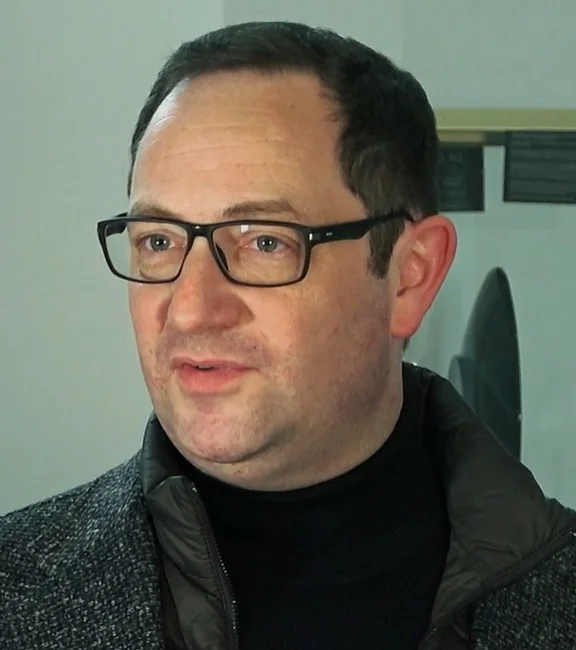
Image from Wikipedia
Image from Wikipedia
Gordon Kampe: The Unconventional Composer Bridging the Present, Music Theatre, and Ironical Energy
An Artist Portrait Full of Wit, Resistance, and Compositional Imagination
Gordon Kampe, born in 1976 in Herne, is one of the most distinctive voices in contemporary German music. His path did not follow a linear elite biography; instead, it began with an apprenticeship as an electrician before he studied composition with Hans-Joachim Hespos, Adriana Hölszky, and Nicolaus A. Huber. This biographical tension continues to shape his music career today: a grounded craftsmanship, aesthetic individuality, and an unmistakable sense for theatrical emphasis. ([gordonkampe.de](https://gordonkampe.de/vita/))
Biography: From the Ruhr Area to the Centers of New Music
Kampe's artistic development begins in the Ruhr area and culminates in an environment particularly influential for experimental composition and music theatre. After completing his electrician training, he obtained his high school diploma and began studying composition in Rostock in 1998, later continuing in Essen at the Folkwang University. This blend of practical experience and advanced compositional study creates the fertile ground for music that never becomes academically stagnant but emerges physically, directly, and often with surprising candor. ([gordonkampe.de](https://gordonkampe.de/vita/))
From an early stage, it was evident that Kampe was not seeking a smooth career path but rather productive friction. His works have been performed at significant venues and festivals, including the Bayreuth Festival, Salzburg Festival, Deutsche Oper Berlin, Staatsoper Hamburg, Musiktheater Wien, Staatsoper Stuttgart, Aalto-Theater Essen, Donaueschingen Music Days, Ultraschall Berlin, eclat Festival, Warsaw Autumn, Wittener Tage für neue Kammermusik, and Ruhrtriennale. This presence firmly anchors him in the European landscape of new music. ([gordonkampe.de](https://gordonkampe.de/vita/?utm_source=openai))
Career: Awards, Institutions, and Academic Authority
Gordon Kampe has established himself not only as a composer but also as a cultural institutional figure of influence. His awards include the Stuttgart Composition Prize in 2007 and 2011, the Ernst von Siemens Music Foundation Composer Prize in 2016, the Rome Prize at Villa Massimo, and the Schneider-Schott Prize in 2016. Since 2017, he has been a professor of composition and music theory at the Hamburg University of Music and Theatre; since 2024, he has also been directing the national competition "Jugend komponiert." ([gordonkampe.de](https://gordonkampe.de/vita/))
These positions lend authority to his work that extends far beyond individual premieres. Kampe serves simultaneously as a composer, teacher, mediator, and aesthetic debate partner. His membership in the Junge Akademie of the Berlin-Brandenburg Academy of Sciences and the Leopoldina further underscores this status. Today, anyone discussing contemporary German opera and music theatre cannot overlook his name. ([gordonkampe.de](https://gordonkampe.de/vita/?utm_source=openai))
Musical Signature: Heterogeneous, Theatrical, Precise
Kampe's style thrives on contrasts. His works combine new music, operatic gestures, popular rhythms, linguistic wit, and often a consciously exaggerated sound dramaturgy. The nmz describes in its reception of Dark Lux a "pleasure in bending and denting," speaking of monster music, folk song simulations, comedic cadences, and tarantellas dancing on volcanoes. This strikes at the core of his composition: Kampe does not think in pleasing surfaces but in sonic role changes, frictions, and pointed breaks. ([hoerbar.nmz.de](https://hoerbar.nmz.de/2021/06/dark-lux-luxnm/))
At the same time, he masters the balance between structure and theatrical effect. In reviews of Die Kreide im Mund des Wolfs, it is highlighted how Kampe navigates between new music, expansive operatic gestures, popular dance rhythms, and brutal releases. In Sasja, descriptions note a very lyrical, colorful, and extroverted score that works with percussive energy and long arcs. His music is never merely decorative but dramaturgically precisely constructed. ([die-deutsche-buehne.de](https://www.die-deutsche-buehne.de/kritiken/hamburg-gordon-kampe-kreide-im-mund-des-wolfs/))
Music Theatre as the Core of His Discography
A glance at his works reveals the centrality of music theatre for Kampe. Prominent titles include Dogville, Sasja und das Reich jenseits des Meeres, immmermeeehr, Die Kreide im Mund des Wolfs, Gefährliche Operette, Immer noch Loge, WUT, Schummellümmelleichen, Kannst du pfeifen, Johanna, and Mein Fleisch. These pieces range from children's and youth formats to opera, chamber opera, monodrama, and experimental operetta. ([gordonkampe.de](https://gordonkampe.de/musik/))
This very diversity makes his discography so exciting. Kampe composes for different ensembles, from small groups to large orchestras, from vocal music to grand theatrical forms. On his works page, there are scores with striking titles like Arien/Zitronen, Winzige Lieder, Dark-Lux-Suite, Krawall, tanzen!, or Fünf Lieder (vorwiegend nächtlich). The impression is that here works a composer who consistently thinks in terms of sound material, language, and theatrical impulse. ([gordonkampe.de](https://gordonkampe.de/musik/))
Critical Reception: Between Praise, Irritation, and Admiration
The music press often responds to Kampe with palpable fascination. The neue musikzeitung describes Die Kreide im Mund des Wolfs as a celebrated premiere, highlighting the psychological subtones of the score. Regarding Sasja, it speaks of a captivating family opera with shimmering, pulsating, and percussive music that only briefly fades in the underworld. This resonance shows that Kampe not only experiments but also connects theatrical impact with compositional substance. ([nmz.de](https://www.nmz.de/kritik/oper-konzert/wenn-der-putin-bariton-heisst-gordon-kampes-die-kreide-im-mund-des-wolfs))
The Deutsche Bühne also emphasizes in its critique of Die Kreide im Mund des Wolfs the short distances between new music, operatic gesture, and rhythmic impact. The Kurier praises Ich bin Vincent! for its disturbing, exciting theatre music that bridges free tonality and operatic melodies, translating emotions into sound. Such critiques paint the picture of an artist whose works are not meant to please but rather to demand attention. ([die-deutsche-buehne.de](https://www.die-deutsche-buehne.de/kritiken/hamburg-gordon-kampe-kreide-im-mund-des-wolfs/))
Cultural Influence: New Music with Pop Energy and Theatrical Intelligence
Gordon Kampe belongs to a generation of composers who consciously blur the boundaries between high culture, pop references, theatre, and performative gesture. The nmz describes his aesthetic as "refreshingly anarchic" and speaks of a poetry of the heterogeneous between classical music tradition, popular culture, fiction, and lived reality. This explains why his music is so present in opera houses and contemporary music discourse alike. ([nmz.de](https://www.nmz.de/menschen/portraets/verpixeltes-paralleluniversum-auf-krawall-gebuerstet?utm_source=openai))
His works are often pedagogically, socially, or literarily charged, without losing their musical accessibility. WUT, Kannst du pfeifen, Johanna, or immmermeeehr demonstrate how adeptly Kampe writes for young audiences without reducing artistic ambition. This is precisely his strength: he combines accessibility with compositional complexity and provides a stage for contemporary music that functions intellectually, emotionally, and theatrically at the same time. ([nmz.de](https://www.nmz.de/kritik/oper-konzert/liebliches-gebiet-fuer-ein-raues-gefuehl-gordon-kampes-wut-bei-den-salzburger))
Conclusion: Why Gordon Kampe Remains So Exciting Today
Gordon Kampe is exciting because he understands composition not as an abstract discipline but as a vibrant, contradictory, and sensually charged music theatre. His career showcases the journey from craftsmanship to art, from provocation to recognition, and from score to stage. Anyone seeking contemporary music that remains bold, intelligent, and surprising will find a distinctive voice in Kampe. ([gordonkampe.de](https://gordonkampe.de/vita/))
His works unleash their full power before an audience: in the tension between voice, text, scene, and sound body, in the energy of the premiere, and in the immediacy of the live experience. Experiencing Gordon Kampe live means understanding new music as an event. This is precisely where his special allure lies. ([nmz.de](https://www.nmz.de/kritik/oper-konzert/wenn-der-putin-bariton-heisst-gordon-kampes-die-kreide-im-mund-des-wolfs))
Official Channels of Gordon Kampe:
- Instagram: No official profile found
- Facebook: No official profile found
- YouTube: No official profile found
- Spotify: No official profile found
- TikTok: No official profile found
Sources:
- Gordon Kampe – Vita
- Gordon Kampe – Music
- Wikipedia – Gordon Kampe
- nmz HörBar – Gordon Kampe: DARK LUX – Lux:NM
- nmz – Death as a Dandy: Sasja
- nmz – When Putin is Called Baritone
- nmz – Fury at the Salzburg Festival
- Kurier – I Am Vincent!
- Die Deutsche Bühne – The Chalk in the Wolf's Mouth
- nmz – Still Loge
Upcoming Events
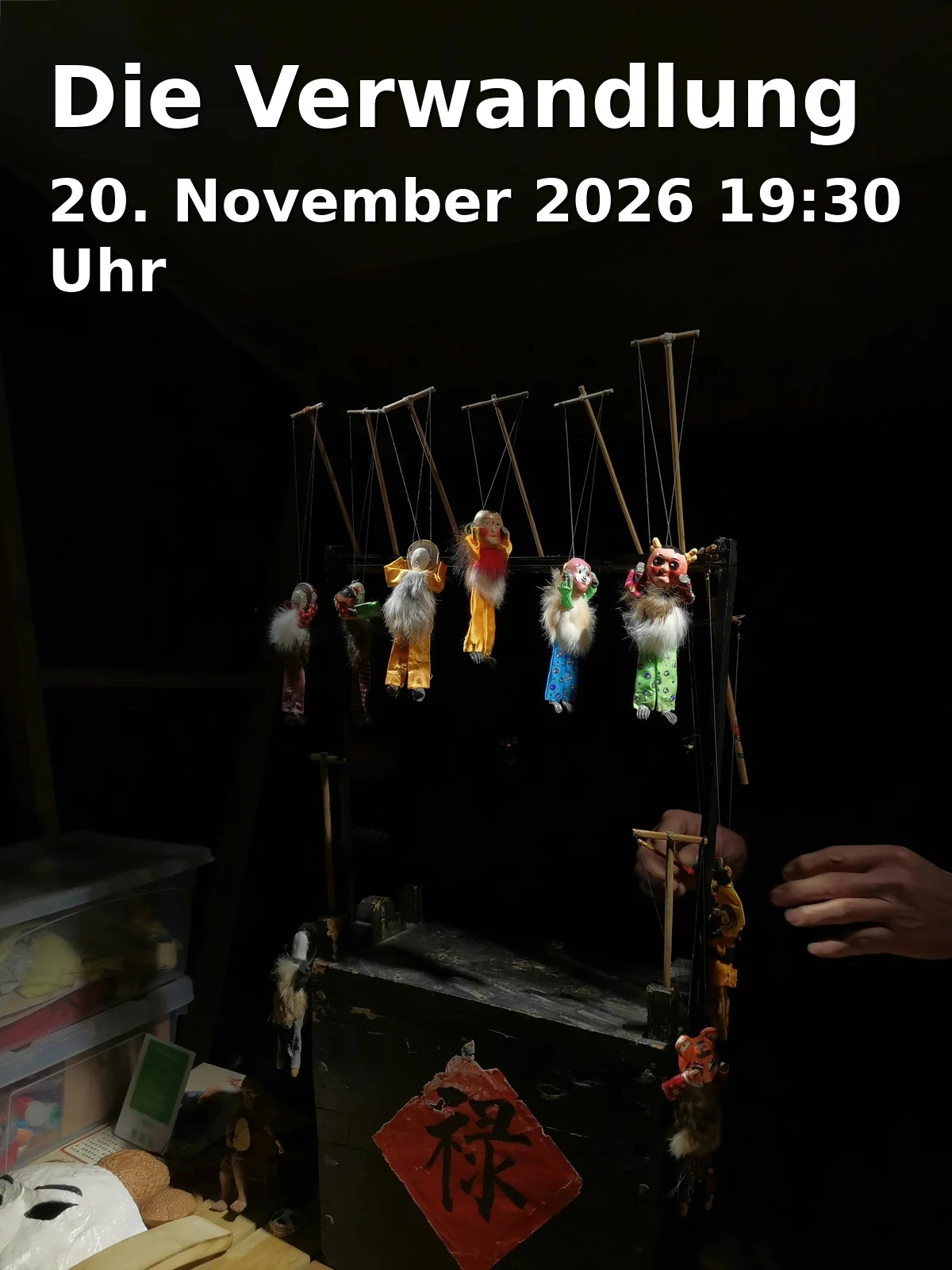
The Metamorphosis (Guest Performance)
The Metamorphosis (Guest Performance)
The Metamorphosis
The Metamorphosis
The Metamorphosis