
Hubertus Meyer-Burckhardt
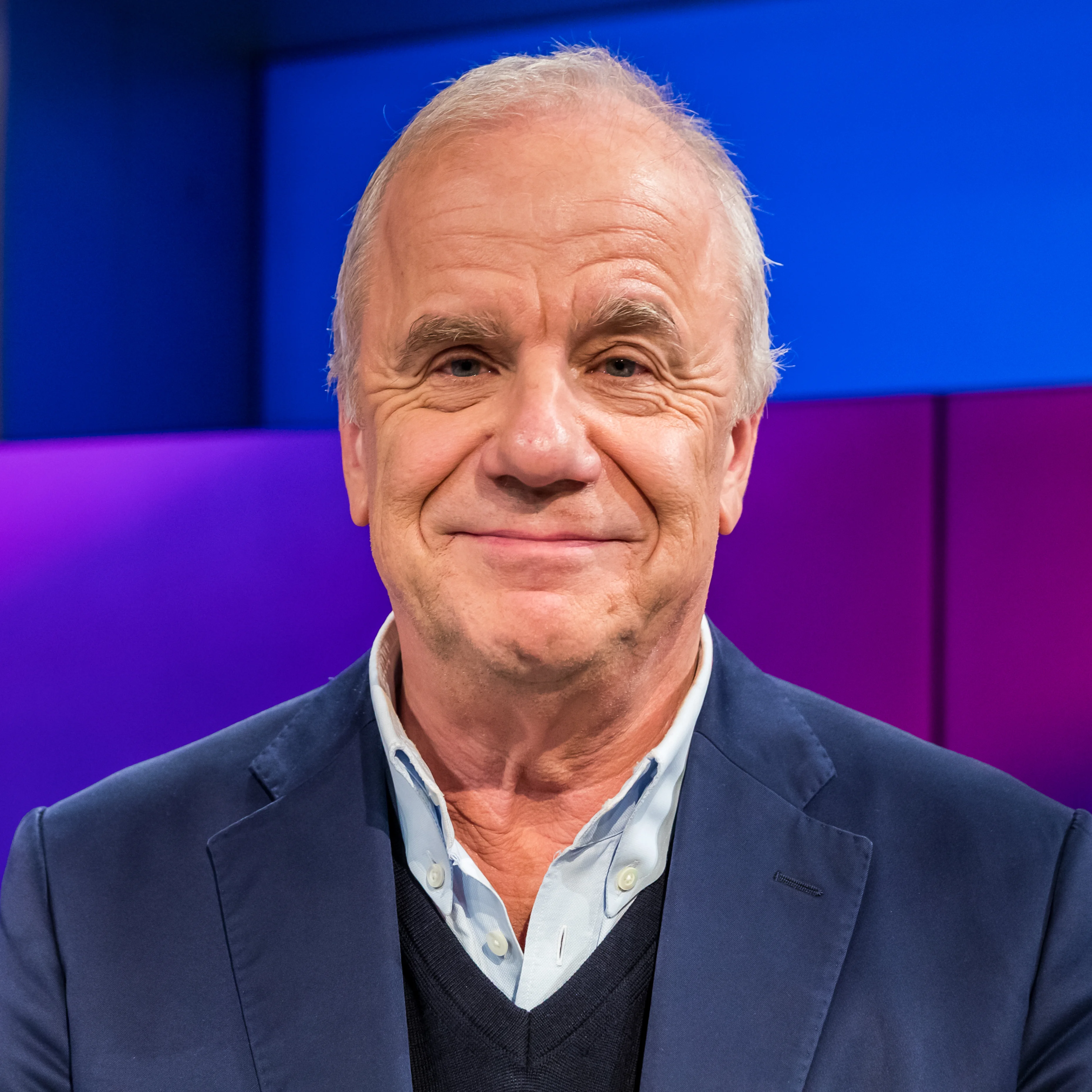
Image from Wikipedia
Image from Wikipedia
Hubertus Meyer-Burckhardt – the Sovereign Storyteller Between Television, Journalism, and Literature
A Concise Portrait of a Media Personality with Integrity, Timing, and Narrative Power
Hubertus Meyer-Burckhardt, born on July 24, 1956, in Kassel, is one of the most distinctive faces in the German media landscape. He became known as a television host, producer, journalist, media executive, and writer. His career combines analytical precision with stage presence, journalistic acumen, and a keen instinct for social issues. ([de.wikipedia.org](https://de.wikipedia.org/wiki/Hubertus_Meyer-Burckhardt))
Biographical Roots: Kassel, Education, and the Path into Media
Meyer-Burckhardt grew up as an only child in Kassel, where he graduated from the Friedrichsgymnasium in 1975. He then studied history and philosophy in Berlin and Hamburg, later following up with training at the University of Television and Film in Munich. This academic combination explains the unique blend of reflection, structure, and narrative elegance that shapes many of his works to this day. ([de.wikipedia.org](https://de.wikipedia.org/wiki/Hubertus_Meyer-Burckhardt))
From an early age, he navigated the intersections of culture, dramaturgy, and production. Between 1979 and 1981, he worked as an assistant director at the Thalia Theater in Hamburg and the State Theatres of Berlin, notably under Boy Gobert and Hans Hollmann. Afterwards, he deepened his film education in Munich and transitioned into the professional media world, where he would later make his mark as a producer, manager, and host. ([de.wikipedia.org](https://de.wikipedia.org/wiki/Hubertus_Meyer-Burckhardt))
Career Start: Production, Management, and the Overview Behind the Scenes
His career initially took off not in front of the camera but in production and leadership roles. From 1984, Meyer-Burckhardt worked for TC-E, as Creative Director for the advertising agency BBDO in Düsseldorf, and for the new German film company in Munich. In 1993, he founded Akzente Film with ndF, becoming its managing partner. ([de.wikipedia.org](https://de.wikipedia.org/wiki/Hubertus_Meyer-Burckhardt))
In the 1990s and early 2000s, he evolved into a pivotal figure in German TV production. For ARD, he developed and hosted Sowieso – Die Sonntagsshow in 1994, for which he received the Adolf Grimme Prize. Concurrently, he made a name for himself as a producer of demanding television formats, such as Das Urteil, which won multiple awards. ([de.wikipedia.org](https://de.wikipedia.org/wiki/Hubertus_Meyer-Burckhardt))
Breakthrough as a Host: The NDR Talk Show as a Stage for Personality
Meyer-Burckhardt gained widespread recognition as the host of the NDR Talk Show, initially from 1994 to 2001 with Alida Gundlach. Since January 2008, he has co-hosted the show with Barbara Schöneberger, and in October 2023, the duo hosted the 1000th episode. This stands as a testament to a talk culture that combines entertainment, journalistic vigilance, and controlled spontaneity. ([de.wikipedia.org](https://de.wikipedia.org/wiki/Hubertus_Meyer-Burckhardt))
In this format, his particular strength shines through: he never comes across as loud, but is always present; never lecturing, yet clear in leading discussions. In a television world often reliant on effects, he remains committed to an approach that takes conversation, atmosphere, and substance seriously. His role in shaping the talk show into a constant presence in German television underscores his authority as a host. ([de.wikipedia.org](https://de.wikipedia.org/wiki/Hubertus_Meyer-Burckhardt))
Work Between Broadcasters and Companies: Media Manager with a Strategic Profile
Beyond hosting, Meyer-Burckhardt also influenced major media structures. He served on the board of Axel Springer AG, later on the board of ProSiebenSat.1 Media AG, and in 2006 switched to the Polyphon Group in Hamburg as Managing Director. He remained in leadership until 2013 and continued working as a producer for Polyphon until the end of 2019. ([de.wikipedia.org](https://de.wikipedia.org/wiki/Hubertus_Meyer-Burckhardt))
These positions portray a career type that does not merely present content but also engages with production logics, broadcaster strategies, and format development. Meyer-Burckhardt thus operated at a critical junction of the German media industry: between creativity, economics, and journalistic responsibility. This forms a significant part of his authority. ([prosiebensat1.com](https://www.prosiebensat1.com/en/newsroom/hubertus-meyer-burckhardt-to-leave-executive-board-of-prosiebensat1-media-ag-en-338820))
Literary Development: From Producer to Bestselling Author
As a writer, Meyer-Burckhardt has transferred his media biographical experiences into literary language. His debut novel Die Kündigung was published in 2011, followed by Die kleine Geschichte einer großen Liebe (2014), Meine Tage mit Fabienne (2016), Frauengeschichten – Was ich von starken Frauen gelernt habe (2017), Diese ganze Scheiße mit der Zeit: Meine Entdeckung des Jetzt (2019), and Zehn Frauen. Meyer-Burckhardts Frauengeschichten (2022). In 2025, his autobiography titled Die Sonne scheint immer. Für die Wolken kann ich nichts. was also published. ([de.wikipedia.org](https://de.wikipedia.org/wiki/Hubertus_Meyer-Burckhardt))
This latest book encapsulates much of what defines his public persona: wisdom in life, humor, a culture of memory, and a strong bond to biographical stories. The publisher describes the work as an autobiographical exploration of the driving forces in one’s life; simultaneously, it emphasizes that Meyer-Burckhardt remembers his grandmother as a formative figure in his role as a TV producer, bestselling author, and host of the NDR Talk Show. ([penguin.de](https://www.penguin.de/autoren/hubertus-meyer-burckhardt/527012))
Current Projects and Presence 2024/2025: Readings, Time Travels, and New Appearances
Currently, Meyer-Burckhardt remains very active in the cultural and events scene. Publisher entries document numerous readings and discussions about Die Sonne scheint immer. Für die Wolken kann ich nichts. scheduled for 2025 and 2026 in cities like Oldenburg, Jesteburg, Schleswig, Löhne, and others. This shows that his literary work lives not only in the book but also on stage and in direct exchange with audiences. ([penguin.de](https://www.penguin.de/autoren/hubertus-meyer-burckhardt/527012))
Additionally, there’s his NDR series Meyer-Burckhardts Zeitreisen. Auf historischer Spurensuche, for which episodes are documented in 2023 and 2024. In this series, he leads with historical guides through Northern Germany, combining research strength with narrative access. The format aligns perfectly with his profile as someone who does not treat history as museum-like, but rather understands it as a living narrative form. ([de.wikipedia.org](https://de.wikipedia.org/wiki/Hubertus_Meyer-Burckhardt))
Discography in a Broader Sense: Media Works, Books, and Influential Formats
In the classical musical sense, Hubertus Meyer-Burckhardt does not have a discography. Therefore, for cultural journalistic classification, his body of work from television, film, radio, podcasts, and literature is crucial. This includes Sowieso – Die Sonntagsshow, the NDR Talk Show, the podcasts Meyer-Burckhardts Frauengeschichten, and the aforementioned books, which have solidified his public profile over the decades. ([de.wikipedia.org](https://de.wikipedia.org/wiki/Hubertus_Meyer-Burckhardt))
His filmography also shows a remarkable tension arc: from early TV productions like Trickser and Das Urteil to later works such as Meine fremde Freundin, Getrieben, and Das Versprechen, as well as historical NDR documentaries. This selection illustrates a career that cannot be reduced to a single medium but unfolds its impact across different formats. ([de.wikipedia.org](https://de.wikipedia.org/wiki/Hubertus_Meyer-Burckhardt))
Style, Attitude, and Cultural Influence
Meyer-Burckhardt represents a media understanding that prioritizes conversational culture, care, and content depth over mere effect. His work as a host thrives on controlled calmness, his books on personal memory, and his producer activity on the ability to translate materials into viable forms. Thus, a profile emerges that does not assert authority but consistently delivers it over the years. ([de.wikipedia.org](https://de.wikipedia.org/wiki/Hubertus_Meyer-Burckhardt))
His cultural influence lies particularly in the connection between popular television and reflective journalism. With the NDR Talk Show, he reaches a broad audience, while his books and podcasts focus more on intimacy, observation, and biographical resonance. This dual motion makes him an important voice in German media culture: publicly present, yet never arbitrary. ([de.wikipedia.org](https://de.wikipedia.org/wiki/Hubertus_Meyer-Burckhardt))
Awards and Recognition
The list of his awards is lengthy and underscores the breadth of his work. This includes the Honorary Badge of the City of Kassel, five Golden Lions, the Bavarian Television Award, an Emmy nomination, and several Adolf Grimme Prizes. Later, further honors came, including the Hamburg Producer Prize for Meine fremde Freundin and the media award Goldener Kompass. ([de.wikipedia.org](https://de.wikipedia.org/wiki/Hubertus_Meyer-Burckhardt))
Such awards not only mark individual works but also a long-standing commitment to quality. Over decades, Meyer-Burckhardt has established himself as a producer, host, and author in various genres, while building an extraordinarily stable public profile. In the fast-paced media world, this is no given but a testament to professionalism and consistency. ([de.wikipedia.org](https://de.wikipedia.org/wiki/Hubertus_Meyer-Burckhardt))
Conclusion: A Media Professional with a Literary Soul
Hubertus Meyer-Burckhardt remains intriguing because he integrates multiple roles at the highest level: the host, the producer, the journalist, and the author. His career narrates a story of change, discipline, and curiosity, but also of a rare ability to connect significant public exposure with a personal touch. Anyone wishing to understand German media history of the past three decades cannot overlook him. ([de.wikipedia.org](https://de.wikipedia.org/wiki/Hubertus_Meyer-Burckhardt))
His live readings and stage appearances particularly demonstrate how profoundly his presence impacts beyond television. Experiencing him live means hearing a storyteller who transforms experience, charm, and integrity into a concentrated evening. This is where his unique radiance lies: in the art of not only reporting stories but making them tangible. ([penguin.de](https://www.penguin.de/autoren/hubertus-meyer-burckhardt/527012))
Official Channels of Hubertus Meyer-Burckhardt:
- Instagram: no official profile found
- Facebook: no official profile found
- YouTube: no official profile found
- Spotify: no official profile found
- TikTok: no official profile found
Sources:
- Wikipedia – Hubertus Meyer-Burckhardt
- Penguin Random House – Hubertus Meyer-Burckhardt (Author)
- Penguin Random House – Die Sonne scheint immer. Für die Wolken kann ich nichts.
- Penguin Random House – Reading and Conversation with Hubertus Meyer-Burckhardt
- ProSiebenSat.1 Media SE – Hubertus Meyer-Burckhardt to Leave Executive Board
- Penguin Random House – Event Overview Hubertus Meyer-Burckhardt