
Isabelle Huppert
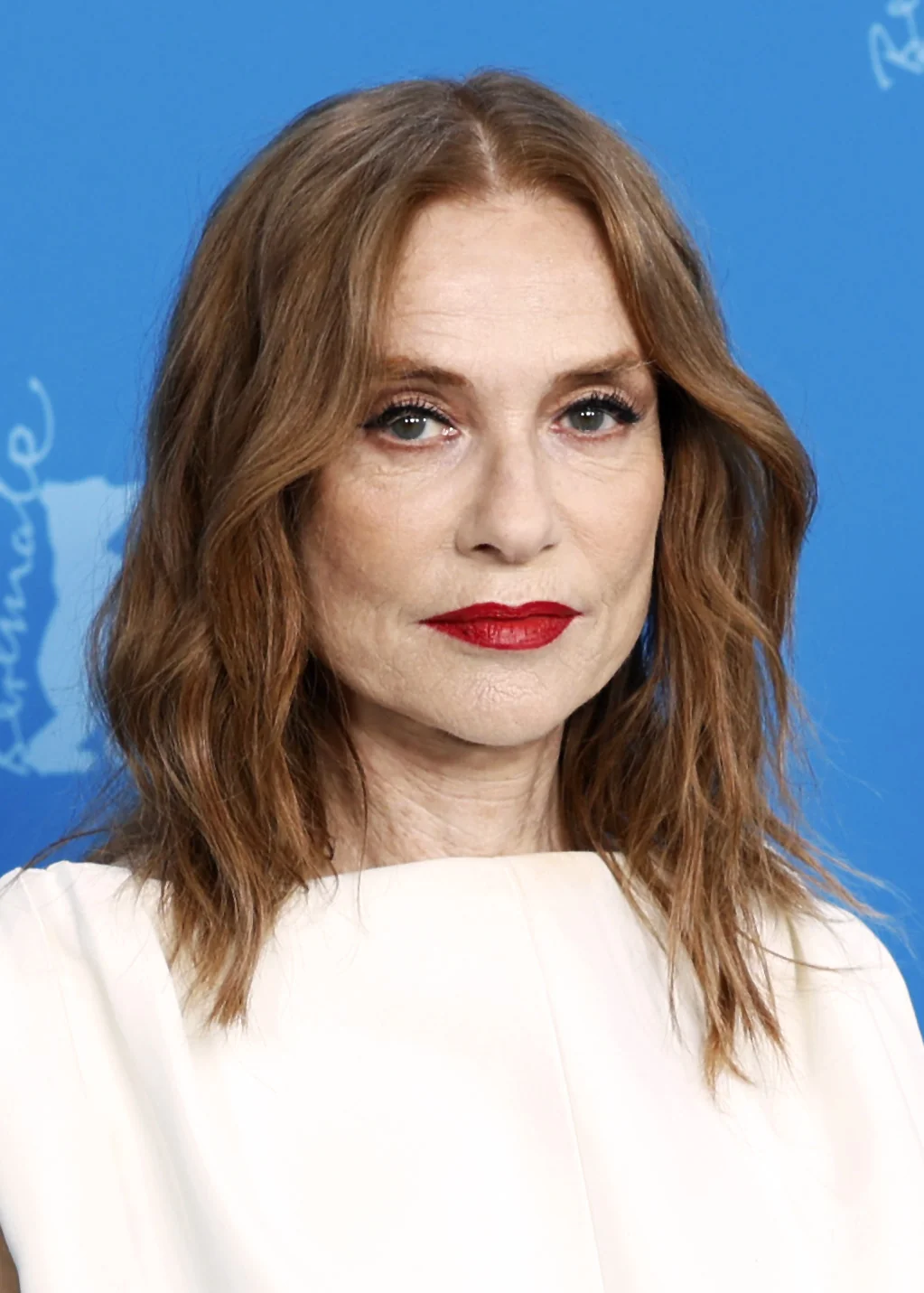
Image from Wikipedia
Image from Wikipedia
Isabelle Huppert – An Icon of French Cinema Between Precision, Risk, and International Renown
The Grand Screen of Isabelle Huppert: An Acting Career of Extraordinary Brilliance
Isabelle Huppert has been one of the defining faces of French and international cinema since the 1970s. Born on March 16, 1953, in Paris, she early on developed that unmistakable blend of quiet control, inner tension, and psychological depth that characterizes her roles to this day. Her music career does not exist – but her musical career on screen, if one understands her artistic development as a continuous art of transformation, is among the most remarkable European careers of all time. ([britannica.com](https://www.britannica.com/biography/Isabelle-Huppert))
Early Years and the Path to French Cinema
Huppert's entry into acting began early and with an almost self-evident consistency. According to Munzinger, starting in 1972, Huppert took on her first stage roles and film engagements; thus, the foundation of her career was not built on a sudden star moment but on continuous work, discipline, and growing presence. The SCHIRN describes her international breakthrough with Claude Goretta's La Dentellière from 1977, which initially brought her attention and shortly afterward the BAFTA for Best Newcomer. This early phase shaped the profile of an actress who does not rely on external effects, but on precise inner movement. ([munzinger.de](https://www.munzinger.de/register/portrait/biographien/Isabelle%2BHuppert/00/18442))
Breakthrough, Chabrol, and the Art of the Ambiguous Character
Huppert gained worldwide fame through her collaboration with Claude Chabrol, which became one of her most artistically fruitful connections. Britannica points out that she won Best Actress at Cannes for Violette Nozière in 1978, marking the beginning of a long collaboration shaped by Chabrol. In these roles lies a central feature of her career: Huppert does not play simple heroines, but women on the fringes of moral certainties, characters with secrets, fractures, and contradictory impulses. This is exactly where her authority as a performer unfolds. ([britannica.com](https://www.britannica.com/biography/Isabelle-Huppert))
An Actress of Nuances: Style, Technique, and Stage Presence
The press describes Huppert as a defining force in French cinema, whose appearance remains recognizable yet feels different in every role. In an interview, she emphasized that she does not create characters through an invented biography, but through the moment, instinct, and the concrete scene. This method explains her famous stage presence: She does not work with demonstrative emotionality, but with restraint, precise articulation, and a performance that allows the inner self to emerge. In film history, she is thus a master of controlled intensity. ([diepresse.com](https://www.diepresse.com/5292692/isabelle-huppert-ich-muss-meine-figuren-nicht-verstehen))
International Recognition and Extraordinary Awards
Huppert's awards mark a career of rare consistency and breadth. Her list of honors includes, among others, two César Awards, a BAFTA, a Golden Globe, two prizes at Cannes, two Volpi Cups in Venice, and a Silver Bear in Berlin. Particularly outstanding is her status as the most nominated actress for the César Award with 17 nominations. Such numbers represent not just success but sustainable relevance over decades – a rare form of authority in European auteur cinema. ([en.wikipedia.org](https://en.wikipedia.org/wiki/List_of_awards_and_nominations_received_by_Isabelle_Huppert))
Key Films and Cinematic Milestones
Among the most frequently mentioned stations of her filmography are The Lacemaker, A Woman’s Affair, Beast, The Piano Teacher, 8 Women, Gabrielle – Love of My Life, Secret State Affairs, Copacabana, Valley of Love, Things to Come, Elle, and A Woman with Enchanting Talents. Britannica adds that Huppert was also extremely productive in English-language cinema, with well-known titles such as Heaven's Gate, The Bedroom Window, Amateur, I Heart Huckabees, The Disappearance of Eleanor Rigby, Louder Than Bombs, Greta, Frankie, and Mrs. Harris Goes to Paris. This range showcases her special ability to switch between auteur cinema, international arthouse, and broader audience films without losing her profile. ([munzinger.de](https://www.munzinger.de/register/portrait/biographien/Isabelle%2BHuppert/00/18442))
Critical Reception: A Master of Antiheroines
Film critics have repeatedly described Huppert as a specialist for complex, morally ambiguous, or vulnerable-dominant women. Britannica highlights that her strength lies in roles with questionable morals, citing Madame Bovary as an example of one of the most discussed performances of her career. The press similarly expresses that Huppert manages to remain unmistakable in every role, while never being the same. Her characters never seem merely played but exist within the tension of distance, vulnerability, and unwavering presence. ([britannica.com](https://www.britannica.com/biography/Isabelle-Huppert))
Cultural Influence: A Style Figure of European Auteur Cinema
Huppert's influence extends far beyond individual films. She has shaped the style of French cinema, not as a decorative diva, but as a radical interpreter of ambivalence, silence, and inner hardness. The SCHIRN refers to her collaboration with Claude Chabrol and Michael Haneke, two directors with whom she has created central works of European cinema. Particularly in these contexts, she became a projection surface for modern images of femininity: cool and vulnerable, controlled and endangered, intellectual and emotionally open at the same time. ([schirn.de](https://www.schirn.de/schirnmag/isabelle-huppert/))
Current Projects and Artistic Presence
Even in the 2020s, Huppert remains a highly active artist. The Festival d’Avignon will feature her in 2026 in the production Oiseau with Han Kang, Julie Deliquet, and Hyeyoung Lee, while agency reports point to a staged reading from Han Kang's novel I Do Not Bid Farewell at the Cour d’Honneur of the Palais des Papes. Moreover, Huppert was present in 2025 and 2026 in several prestigious contexts, including festival appearances and an announced role in Asghar Farhadi's Parallel Tales, which is set to have its world premiere at Cannes in 2026. This current presence demonstrates that Huppert does not work with nostalgia but with continued artistic presence. ([festival-avignon.com](https://festival-avignon.com/en/artists/isabelle-huppert-11058))
Conclusion: Why Isabelle Huppert Continues to Fascinate
Isabelle Huppert remains one of the most fascinating actresses of her generation because she eludes any simple attribution. Her career combines international recognition, cinematic historical significance, and a rare formal discipline that transforms every role into an event. Those who experience Huppert encounter not only a great actress but an artist who has redefined the interplay of identity, power, and vulnerability over decades. Anyone who can see her live on stage or in cinema should seize that opportunity. ([britannica.com](https://www.britannica.com/biography/Isabelle-Huppert))
Official Channels of Isabelle Huppert:
- Instagram: No official profile found
- Facebook: No official profile found
- YouTube: No official profile found
- Spotify: No official profile found
- TikTok: No official profile found
Sources:
- Britannica – Isabelle Huppert
- Wikipedia – Isabelle Huppert
- Munzinger Online – Isabelle Huppert
- SCHIRN Kunsthalle Frankfurt – Isabelle Huppert
- Die Presse – Isabelle Huppert: "I Do Not Have to Understand My Characters"
- Festival d’Avignon – Isabelle Huppert
- AJU PRESS – Isabelle Huppert, Lee Hye-young to read from Han Kang novel at Avignon Festival
- Wikipedia – List of awards and nominations received by Isabelle Huppert
- Wikipedia – Parallel Tales
- Thessaloniki Film Festival – Press Conference with Isabelle Huppert
- Wikipedia: Image and text source
Upcoming Events
The Richest Woman in the World
The Richest Woman in the World
THE RICHEST WOMAN IN THE WORLD – Obenkino Cottbus
The Richest Woman in the World
The Richest Woman in the World
The Richest Woman in the World – Obenkino Cottbus
The Richest Woman in the World
The Richest Woman in the World – OmU at Obenkino Cottbus
The Richest Woman in the World