
Kai Grehn
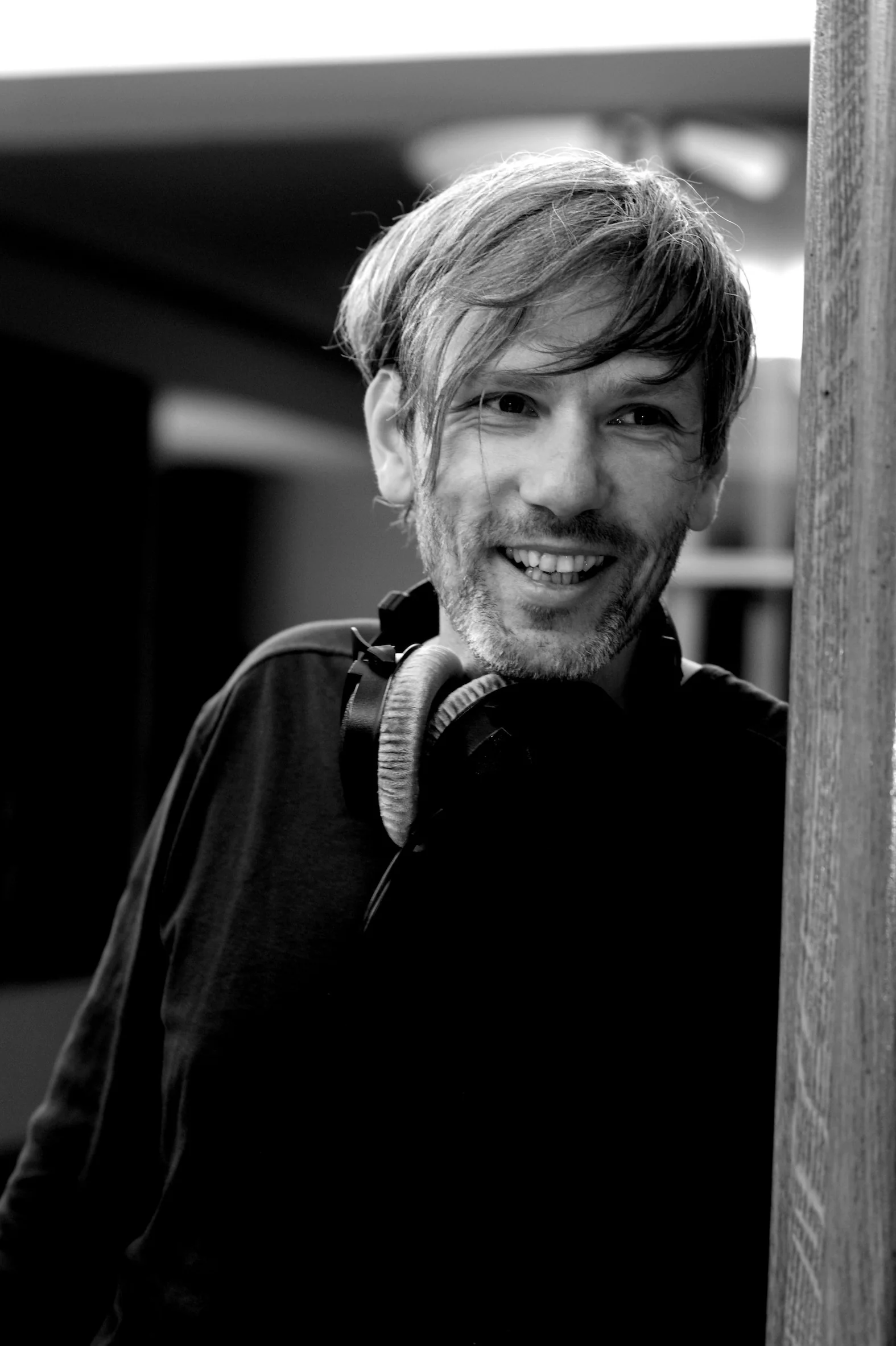
Image from Wikipedia
Image from Wikipedia
Kai Grehn – Literary Audio Play Art Between Directing, Language, and Sound
A Boundary Walker Connecting Audio Play, Literature, and Soundscapes
Kai Grehn, born in 1969 in Grevesmühlen and raised in East Berlin, is one of the most distinctive voices in the German-speaking audio play and literary scene. His artistic career combines authorship, directing, translation, and acoustic dramaturgy into a unique profile. Those who engage with Kai Grehn discover not a classical musician but an interdisciplinary storyteller who shapes language, voice, and sound into his own artistic cosmos. ([kaigrehn.de](https://www.kaigrehn.de/vita/?utm_source=openai))
Biography: From East Berlin to His Own Sound Aesthetics
Grehn did not follow a conventional academic path but initially gathered practical experience as a postal deliverer, editorial assistant, and directing assistant at the Tanztheater Skoronel. He then studied theater direction at the Berlin University of the Arts Ernst Busch, one of the most influential training institutions for performing arts in Germany. This biographical blend of everyday experience, theater practice, and academic directing education forms the basis for his later highly precise audio play and stage aesthetics. ([kaigrehn.de](https://www.kaigrehn.de/vita/?utm_source=openai))
Since then, Grehn has worked as an author, director, and translator. He publishes prose and plays and has translated texts by William Blake, Tadeusz Borowski, William S. Burroughs, Bianca Casady, Nick Cave, Emily Dickinson, Walt Whitman, Orson Welles, and Antoine de Saint-Exupéry into German. This scope particularly shows his interest in literature as acoustic and dramatic material: not merely as a template but as a living composition of voice, rhythm, and atmosphere. ([kaigrehn.de](https://www.kaigrehn.de/vita/?utm_source=openai))
The Breakthrough via Audio Play
His artistic profile sharpened through more than 70 audio play works, which have been awarded both nationally and internationally. Grehn treats audio plays not as a secondary form of theater but as an independent art form with its own dramaturgy, musicality, and sense of space. In his works, literary sources, vocal direction, sound design, and music merge into a dense, often hypnotic form of storytelling. ([kaigrehn.de](https://www.kaigrehn.de/vita/?utm_source=openai))
Some of his more well-known productions include works based on Rainer Maria Rilke, Michael Ende, Emily Dickinson, Hilde Domin, Nick Cave, and Ryūnosuke Akutagawa. The selection of material demonstrates Grehn's interest in poetic condensation, existential language, and radically subjective worldviews. His direction is never decorative but always focused on concentration, resonance, and inner movement. ([kaigrehn.de](https://www.kaigrehn.de/radio/hoerspiel/das-grosse-michael-ende-hoerbuch/?utm_source=openai))
Current Projects and Artistic Presence 2024/2025
In the years 2024 and 2025, Grehn remained productive and visible. His official website lists under news items such as THE SICK BAG SONG, DO YOU LIKE EMILY DICKINSON?, THE CAUSE OF JEANNE D'ARC, and the world premiere of LA MORT DE LA MER by CocoRosie. Additionally, THE SICK BAG SONG was awarded the German Audiobook Prize in 2024 and the New York Festivals Gold Tower Award in 2025; THE CAUSE OF JEANNE D'ARC placed first in the hr2 audiobook best list in 2026. ([kaigrehn.de](https://www.kaigrehn.de/?utm_source=openai))
His working method becomes particularly evident where he connects music, literature, and staging. For his audio play productions, he collaborated with artists and projects such as alva noto, Bohren & Der Club of Gore, Anne Clark, CocoRosie, Käptn Peng, Murat Parlak, Ryuichi Sakamoto, Tarwater, Tuxedomoon, Nouvelle Vague, and others. These collaborations show that Grehn's works go far beyond classical literary audio plays, impacting open, experimental sound spaces. ([kaigrehn.de](https://www.kaigrehn.de/vita/?utm_source=openai))
Discography in a Broader Sense: Audio Play Works, Audiobooks, and Sound Staging
There is no classic discography in the pop or rock sense for Kai Grehn. His body of work unfolds more in audio play and audiobook productions, in acoustic stage projects, and in literary sound works. Notable titles include On the Disadvantage of Being Born, The Life of a Fool, The Great Michael Ende Audiobook, Just a Rose as Support, and The Sick Bag Song. ([kaigrehn.de](https://www.kaigrehn.de/radio/hoerspiel/vom-nachteil-geboren-zu-sein/?utm_source=openai))
These works demonstrate a consistent artistic development: moving away from mere text adaptation towards an autonomous audio art. Grehn conceptualizes voice as an instrument, language as material, and direction as composition. The result is an oeuvre that can stand up to the intensity of great albums, even though it originates from a different artistic tradition. It is precisely this that gives it special relevance for a broad culturally interested audience. ([kaigrehn.de](https://www.kaigrehn.de/vita/?utm_source=openai))
Style and Artistic Signature
Grehn's style is marked by density, precision, and atmospheric depth. His productions work with literary substance as well as with pauses, sound colors, noises, and musical transitions. In his understanding, the audio play becomes a form of composition in which language not only tells stories but also sounds, breathes, and contradicts. ([kaigrehn.de](https://www.kaigrehn.de/radio/hoerspiel/vom-nachteil-geboren-zu-sein/?utm_source=openai))
The selection of his authors and projects indicates a strong interest in existential themes: death, memory, resistance, spirituality, marginality, and poetic self-assertion. This is precisely where the impact of his works arises. They possess a clear authority as they combine intellectual depth with emotional directness, without ever tipping into the merely superficial or sensational. ([kaigrehn.de](https://www.kaigrehn.de/radio/hoerspiel/vom-nachteil-geboren-zu-sein/?utm_source=openai))
Cultural Influence and Recognition
Grehn's significance also lies in his role as a mediator between literature, theater, radio, and music. He translates texts into new acoustic contexts, thereby opening up spaces for listeners who would otherwise have little contact with experimental audio art. His awards and placements demonstrate that this work is recognized not only in specialized circles but also generates a broad cultural journalistic echo. ([kaigrehn.de](https://www.kaigrehn.de/?utm_source=openai))
As a cultural figure, Kai Grehn represents an art of attentive listening. His works show that narrative art today is not limited to the written word but gains new intensity through the interplay of voice, music, and staging. This places him among those artists who expand the concept of audio art and give it contemporary relevance. ([kaigrehn.de](https://www.kaigrehn.de/vita/?utm_source=openai))
Conclusion: Why Kai Grehn Remains Fascinating
Kai Grehn is fascinating because he does not just manage literature but transforms it into sound. His works possess artistic coherence, narrative force, and an unusually high sensitivity to musical structure. Those who want to experience audio play, literature, and sound in an uncompromising form will find one of the most interesting names in contemporary German-speaking culture in Grehn's work. Experiencing him live or in a performance is especially worthwhile, as his art reveals its full tension in space. ([kaigrehn.de](https://www.kaigrehn.de/vita/?utm_source=openai))
Official Channels of Kai Grehn:
- Instagram: No official profile found
- Facebook: No official profile found
- YouTube: https://www.youtube.com/user/KosmonautNr1
- Spotify: No official profile found
- TikTok: No official profile found
Sources:
- Kai Grehn – Official Website
- Kai Grehn – Biography
- Kai Grehn – Imprint
- Kai Grehn – Biography PDF
- Kai Grehn – The Life of a Fool
- Kai Grehn – On the Disadvantage of Being Born
- Kai Grehn – The Great Michael Ende Audiobook
- Kai Grehn – Just a Rose as Support
- Kai Grehn – The Sick Bag Song
- Wikipedia: Kai Grehn