
Ludwig Erhard
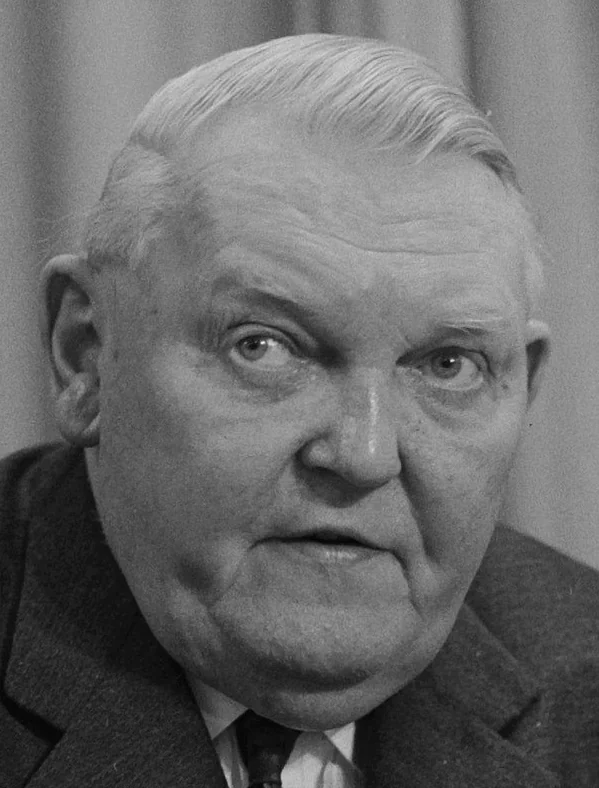
Image from Wikipedia
Image from Wikipedia
Ludwig Erhard: The Architect of the Economic Miracle and the Social Market Economy
A German Shaper Between Theory, Power, and New Beginnings
Ludwig Erhard is one of the most significant political figures in the Federal Republic of Germany. The economist and later Chancellor combined economic scientific analysis with political pragmatism, becoming the face of an era associated with reconstruction, prosperity, and a new political order. Born in 1897 in Fürth and dying in 1977 in Bonn, his name is closely linked to the concept of the Social Market Economy. ([britannica.com](https://www.britannica.com/biography/Ludwig-Erhard?utm_source=openai))
Early Years and Intellectual Shaping
Erhard's journey did not begin in the halls of power but in a bourgeois, craft-oriented environment in Fürth. The experience of World War I, the economic upheavals of the interwar period, and his academic education as an economist shaped his perspective on the market, competition, and social security. During these years, he developed a mindset that relied not on ideology but on practical order. ([deutsche-bundeskanzler.de](https://www.deutsche-bundeskanzler.de/erhard_ludwig.shtml?utm_source=openai))
As a manager in his father's business, Erhard also gained concrete entrepreneurial experience before the Great Depression brought the business to a halt in 1928. This biographical break is important because it deepened his later understanding of stability, purchasing power, and economic responsibility. His economic argumentation drew from both theory and experience. ([deutsche-bundeskanzler.de](https://www.deutsche-bundeskanzler.de/erhard_ludwig.shtml?utm_source=openai))
The Political Breakthrough After 1945
After World War II, Erhard moved into a key position for West Germany's new beginning. In 1949, he became Federal Minister for Economics and remained in this role until 1963; from 1957 to 1963, he also served as Vice Chancellor. During this phase, he became the defining voice of a market economy intended to combine economic freedom with social compensation. ([britannica.com](https://www.britannica.com/biography/Ludwig-Erhard?utm_source=openai))
Erhard's name is particularly associated with the economic policy reforms of the post-war period, often described as the foundation of West Germany's economic upswing. The Foundation House of History and the official biographies emphasize his role as a key figure of the early Federal Republic and as a decisive actor in establishing a stable economic order. At the same time, the extent of his contribution to the so-called Economic Miracle remains a topic of historical debate. ([britannica.com](https://www.britannica.com/biography/Ludwig-Erhard?utm_source=openai))
Chancellor and Power Center of the Republic
In 1963, Erhard succeeded Konrad Adenauer as the second Chancellor of the Federal Republic of Germany. His chancellorship lasted until 1966 and took place during a time of increasing external and internal political tensions. Erhard attempted to continue the political order's course but increasingly faced political resistance that limited his scope for action. ([deutsche-bundeskanzler.de](https://www.deutsche-bundeskanzler.de/erhard_ludwig.shtml?utm_source=openai))
Even during his time as CDU party chairman from 1966 to 1967, he remained a central figure in the post-war debate. His political language was clear, factual, and geared toward economic reason, yet this very sobriety made him vulnerable in a more power-politics-driven environment. The historical assessment of his chancellorship is therefore nuanced: prominent as a symbol, complex in political enforcement. ([deutsche-bundeskanzler.de](https://www.deutsche-bundeskanzler.de/erhard_ludwig.shtml?utm_source=openai))
The Social Market Economy as a Lasting Legacy
Erhard is still referred to as the father of the Social Market Economy. This model connects free pricing, competition, and private initiative with social responsibility, a state regulatory framework, and the claim to societal participation. The Bavarian Ministry of Economic Affairs describes his regulatory foundations as still effective for prosperity and social peace today. ([stmwi.bayern.de](https://www.stmwi.bayern.de/publikationen/ludwig-erhard-biografie/?utm_source=openai))
This synthesis made Erhard significant in the long term. He did not see the economy as an end in itself but as a system that should bring together performance, stability, and social balance. In German memory culture, his name stands not only for economic upturn but also for the quest for a fair economic framework after the catastrophe of war. ([britannica.com](https://www.britannica.com/biography/Ludwig-Erhard?utm_source=openai))
Political Style, Public Impact, and Trademark
Erhard's public impact was based on objectivity, authority, and an unusually strong media presence for an economic politician. His political personality was less charismatic in the classic sense and more reassuring due to competence and recognizability. His trademark, smoking cigars, became part of his visual identity as early as 1930. ([britannica.com](https://www.britannica.com/biography/Ludwig-Erhard?utm_source=openai))
This blend of intellect, political responsibility, and personal recognizability made him an icon of the early Federal Republic. Erhard symbolized the attempt to translate economic rationality into a democratic state model. Therefore, his biography not only tells the story of a politician but also of the development of a new political culture in post-war Germany. ([bundeskanzler.de](https://www.bundeskanzler.de/bk-de/kanzleramt/bundeskanzler-seit-1949/ludwig-erhard?utm_source=openai))
Historical Context and Cultural Impact
In historical retrospect, Erhard is among the figures around whom the success narrative of the Federal Republic revolves. The term "Economic Miracle" is hardly thinkable without his name, even though research views the contribution of individual actors in this process with nuance. His significance lies not only in concrete decisions but also in the institutional and ideological shaping of a model that had lasting impacts. ([britannica.com](https://www.britannica.com/biography/Ludwig-Erhard?utm_source=openai))
His influence extends beyond daily politics. Erhard shaped the political discourse where growth, social security, and order were discussed as interconnected goals. This connection of economic expertise and state responsibility makes him one of the most persistently prominent figures in German contemporary history. ([britannica.com](https://www.britannica.com/biography/Ludwig-Erhard?utm_source=openai))
Assessment of His Legacy
The memory of Ludwig Erhard lives on in biographies, state institutions, and historical research. Official representations particularly highlight his role as Minister of Economics, Chancellor, and architect of the Social Market Economy. That his legacy is still discussed today demonstrates his enduring relevance to issues of state, market, and social compensation. ([deutsche-bundeskanzler.de](https://www.deutsche-bundeskanzler.de/erhard_ludwig.shtml?utm_source=openai))
It is precisely this blend of political power, economic theory, and social impact that makes Erhard captivating. Anyone wishing to understand the history of the Federal Republic cannot overlook him: his ideas, his reforms, and the debate about their actual impact. Ludwig Erhard remains a key figure in the German post-war narrative and a name that still stands for economic revival. ([britannica.com](https://www.britannica.com/biography/Ludwig-Erhard?utm_source=openai))
Conclusion
Ludwig Erhard fascinates as a politician, economist, and symbol of an entire era of rebuilding. His biography connects personal experience, theoretical clarity, and the ambition to create a stable order from ruins. Anyone studying the history of the Federal Republic should not only read about Erhard but also discover him as a central figure of German post-war thought. ([britannica.com](https://www.britannica.com/biography/Ludwig-Erhard?utm_source=openai))
Official Channels of Ludwig Erhard:
- Instagram: no official profile found
- Facebook: no official profile found
- YouTube: no official profile found
- Spotify: no official profile found
- TikTok: no official profile found