
Milan Begović
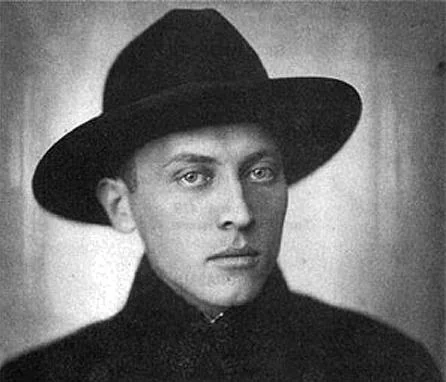
Image from Wikipedia
Image from Wikipedia
Milan Begović – The Croatian Master Between Lyricism, Drama, and Literary Modernism
An author who shaped Croatian literature with sensuality and theatrical instinct
Milan Begović (* January 19, 1876 in Vrlika; † May 13, 1948 in Zagreb) is considered one of the most prominent Croatian writers, playwrights, translators, and poets of the 20th century. His biography intertwines the world of literature with theater practice, linguistic finesse, and remarkably assured dramaturgy. Begović worked under several pseudonyms, including Xeres de la Maraja, Tugomir Cetinski, and Stanko Dušić, and developed a body of work that mediates between modernity, psychology, and stage effect. ([en.wikipedia.org](https://en.wikipedia.org/wiki/Milan_Begovi%C4%87?utm_source=openai))
He emerged early as an author whose writing exhibited not only literary ambition but also theatrical intuition. The history of Croatian literature positions him as a formative voice of modernity, whose influence extended far beyond the borders of Croatia. In particular, his dramas and librettos made him a figure who remarkably combined literature, theater, and musical form. ([en.wikipedia.org](https://en.wikipedia.org/wiki/Milan_Begovi%C4%87?utm_source=openai))
Biography: From Vrlika to Zagreb and into Literary Memory
Begović was born in Vrlika, attended high school in Split, and studied in Zagreb, Vienna, and Italy. His education fused natural sciences with humanities, laying the foundation for the later versatility of his writing. After his studies, he worked in theater operations in Hamburg and Vienna, which significantly shaped his later dramaturgical precision. ([it.wikipedia.org](https://it.wikipedia.org/wiki/Milan_Begovi%C4%87?utm_source=openai))
From 1920 onward, he worked as a teacher at an acting academy in Zagreb while also writing theater reviews for magazines. Between 1927 and 1929, he led the Croatian National Theater in Zagreb but was later ousted from the position for political reasons. These stages illustrate an author who not only wrote but also knew and shaped the institutional side of theater up close. ([it.wikipedia.org](https://it.wikipedia.org/wiki/Milan_Begovi%C4%87?utm_source=openai))
The political aftermath of his life was difficult: After World War II, he was accused by the Association of Croatian Writers of collaborating with the Independent State of Croatia, resulting in his death in 1948 without any public honors. This biographical rupture is as much a part of his historical image as his literary significance. Today, he is commemorated at the Mirogoj cemetery in Zagreb. ([en.wikipedia.org](https://en.wikipedia.org/wiki/Milan_Begovi%C4%87?utm_source=openai))
The Literary Breakthrough: Poetry, Modernity, and Psychological Intensity
Begović began his writing career as a poet and attracted attention with early poetry collections. His work Knjiga Boccadoro from 1900 is regarded as an important step in renewing Croatian poetry; Život za cara from 1904 and later Izabrane pjesme from 1925 are also central lyrical milestones in his oeuvre. His language combined emotional directness with formal control and a modern imagery for that time. ([it.wikipedia.org](https://it.wikipedia.org/wiki/Milan_Begovi%C4%87?utm_source=openai))
Literary critics highlight that Begović renewed Croatian poetry thematically and rhythmically, contributing to the modernist phase. His poems exhibit a strong subjectivity, a sense of sound, and a fine sensitivity to inner tensions. This very shift between intimacy and stylistic discipline made him a recognizable author. ([it.wikipedia.org](https://it.wikipedia.org/wiki/Milan_Begovi%C4%87?utm_source=openai))
Drama as the Core of His Work: Stage, Conflict, and Emotional Intensity
Begović's impact as a playwright was especially lasting. His best-known works include Svadbeni let, Božji čovjek, Pustolov pred vratima, Bez trećega, and Kasnija komedija des Lebens, all regarded as important milestones in his dramatic oeuvre. The theater practice he gained during his years in Hamburg and Vienna sharpened his insight into scene building, dialogue management, and the intensification of conflicts. ([it.wikipedia.org](https://it.wikipedia.org/wiki/Milan_Begovi%C4%87?utm_source=openai))
His dramas were also recognized outside of Croatia because they centered modern themes, relationship dynamics, and strong female characters. Reception often emphasizes that Begović linked the psychology of his characters with a keen sense of theatrical effect. The result is a body of work that relies less on decorative language and more on precise tension management. ([it.wikipedia.org](https://en.wikipedia.org/wiki/Milan_Begovi%C4%87?utm_source=openai))
Matica hrvatska and other cultural-historical sources demonstrate that his plays remain present on stages and in academic contexts up to the present day. Ongoing engagement with Pustolov pred vratima and Bez trećega shows how vibrant his dramatic structures remain. Begović is therefore not merely a classic but an author whose theatrical texts continue to be interpretatable and performable. ([matica.hr](https://www.matica.hr/vijenac/779/pustolov-bez-strasti-35768/?utm_source=openai))
Libretto, Translation, and Literary Versatility
In addition to lyric poetry and drama, Begović also worked as a translator and librettist. He is particularly known for his collaboration on Ero s onoga svijeta, often referred to internationally by the title Ero the Joker, for which he provided the texts. In doing so, he touched on a domain where language, music, and theatrical form immediately interconnect. ([en.wikipedia.org](https://en.wikipedia.org/wiki/Milan_Begovi%C4%87?utm_source=openai))
This versatility forms an essential part of his authority. Begović was not a writer with just one register but an artist who deftly navigated novel, narrative, poetry, theater, and opera text with a sure sense of style. This breadth justifies his place in the history of South Slavic literature. ([en.wikipedia.org](https://en.wikipedia.org/wiki/Milan_Begovi%C4%87?utm_source=openai))
Work and Reception: Why Milan Begović is Still Read Today
Key titles of his work that are frequently mentioned include Knjiga Boccadoro, Život za cara, Male komedije, Dunja u kovčegu, Pustolov pred vratima, Bez trećega, and Put kroz Italiju. Research particularly highlights the blend of modernity, erotic tension, social observation, and scenic precision in these texts. Begović didn't just write stories; he crafted dramatic situations with almost musical timing. ([en.wikipedia.org](https://en.wikipedia.org/wiki/Milan_Begovi%C4%87?utm_source=openai))
Culturally, he remains a significant figure: His works mark a transition from late classical patterns to a psychologically and formally more agile modernity. Matica hrvatska continues to dedicate events, publications, and critical discussions to him, which underlines his status as a canonical author. Such activities show that Begović is firmly anchored in the literary memory of Croatia. ([matica.hr](https://www.matica.hr/zbivanja/znanstveni-kolokvij-dramski-pisac-milan-begovic-4147/?utm_source=openai))
Current Projects and Publications
Since Milan Begović passed away in 1948, there are currently no new projects, albums, or publications in the strict sense. The contemporary relevance of his name arises from revivals, academic colloquia, literary-historical editions, and the ongoing reception of his texts. Therefore, the search for current music projects or publications does not lead to contemporary artistic activities but rather to a classical literary legacy. ([en.wikipedia.org](https://en.wikipedia.org/wiki/Milan_Begovi%C4%87?utm_source=openai))
Style, Language, and Cultural Influence
Begović's style is characterized by clarity, psychological intensity, and a pronounced sense of stage. His texts work with emotional tension, precise constellations, and a language that functions both lyrically and dramatically. In this connection lies his particular cultural value: He wrote literature that can be read, performed, and interpreted. ([it.wikipedia.org](https://it.wikipedia.org/wiki/Milan_Begovi%C4%87?utm_source=openai))
His influence is particularly evident in the Croatian theater tradition and in the literary modernism of the country. Academic colloquia, reprints, and ongoing articles in cultural magazines confirm that his characters, conflicts, and themes continue to resonate. Thus, Begović remains an author who not only has historical significance but also functions as an aesthetic reference. ([matica.hr](https://www.matica.hr/zbivanja/znanstveni-kolokvij-dramski-pisac-milan-begovic-4147/?utm_source=openai))
Conclusion: A Classic with Vibrant Stage Power
Milan Begović is fascinating because his work elegantly transcends the boundaries between lyricism, drama, and music theater while remaining stylistically precise. He merges literary modernism with scenic intelligence, emotional directness with formal discipline, and cultural depth with enduring stage impact. Anyone wishing to understand Croatian literature cannot overlook him. ([en.wikipedia.org](https://en.wikipedia.org/wiki/Milan_Begovi%C4%87?utm_source=openai))
His texts demonstrate how powerful literature can be when it is psychologically sharp, linguistically artful, and theatrically conceived. Precisely for this reason, re-engaging with his dramas, poems, and librettos remains worthwhile to this day. Milan Begović remains a name that should not only be read but rediscovered in the cultural memory. ([matica.hr](https://www.matica.hr/knjige/autor/206/?utm_source=openai))
Official Channels of Milan Begović:
- Instagram: no official profile found
- Facebook: no official profile found
- YouTube: no official profile found
- Spotify: no official profile found
- TikTok: no official profile found
Sources:
- Wikipedia - Milan Begović
- Wikipedia (in English) - Milan Begović
- Matica hrvatska - Scientific Colloquium: Dramatist Milan Begović
- Matica hrvatska - Milan Begović
- Matica hrvatska - Pustolov bez strasti
- Matica hrvatska - In Harmony with the Times
- Matica hrvatska - How Othello Inhabited the Adventurer
- Matica hrvatska - Novel Writer in the Shadow of a Dramatist
- Biografija.com - Milan Begović
- Wikipedia: Image and text source