
Nino Haratischwili
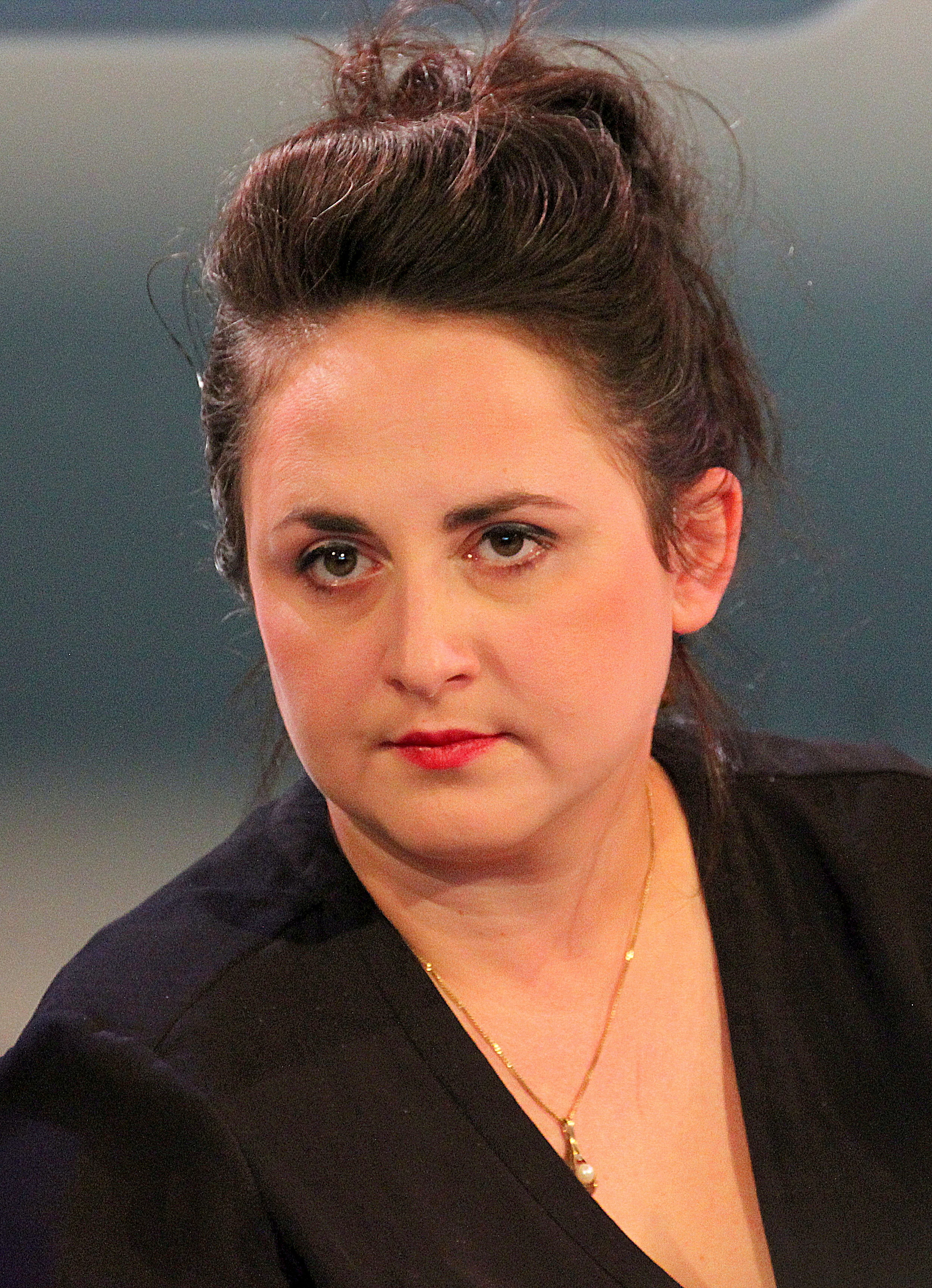
Image from Wikipedia
Image from Wikipedia
Nino Haratischwili: The Great Storyteller Between Georgia, Germany, and European Present
An Artistic Biography Full of Origin, Conflicts, and Literary Power
Nino Haratischwili is one of the most distinctive voices in contemporary German-language literature. Born on June 8, 1983, in Tbilisi, her work combines Georgian influences, German linguistic artistry, and a keen eye on history, power, and memory. As a playwright, director, and novelist, she has carved out a position that extends far beyond national literary borders. Her creations represent narrative ambition, political sensitivity, and a rare emotional intensity.
Biographical Roots: Tbilisi, Germany, and the Experience of Disruption
Haratischwili's biography is closely tied to the political upheavals in the post-Soviet space. During the civil war in Georgia, she lived in Germany from 1995 to 1997, but she returned to Tbilisi at the age of 14. This experience of being in between, of being in transit, and of multiple identities shapes her literature to this day. In official portraits, she describes herself as a boundary-crosser between cultures that she perceives as opposing.
From an early age, she developed an artistic practice that intertwines literature and theater. Between 2000 and 2003, she studied film directing at the State School of Film and Theater in Tbilisi. She then moved to Hamburg, where she studied directing at the Theater Academy from 2003 to 2007. This training laid the foundation for a career in which dramaturgical precision and narrative power work closely together.
The Path to the Stage: Theater Work and Artistic Handwriting
Even as a teenager, Haratischwili was artistically active. From 2000 to 2003, she led the free German-Georgian theater group "Fliedertheater," performing at Georgian theaters and in guest appearances in Germany. This early practice shaped her understanding of ensemble work, scenic tension, and socially charged storytelling. Her career began not with a literary breakthrough, but with intense theater experience between two language and cultural worlds.
Since her studies, she has directed numerous premieres, including at Kampnagel and the Thalia Theater in Hamburg. Concurrently, she has written her own plays, often addressing themes of war, identity, family, and power dynamics. Her signature is characterized by large emotional arcs, clear character development, and a political depth that informs both her plays and novels. Haratischwili develops material not as mere action, but as multi-layered analyses of the present.
Literary Breakthrough with Novels of International Rank
Her first novel Juja was published in 2010. This was followed by further books that solidified her reputation as an extraordinary storyteller. She achieved international breakthrough with The Eighth Life (For Brilka), released in 2014 and translated into 25 languages. The novel became known as a cross-generational family epic that retells European history from a Georgian perspective, linking private destinies with political upheavals.
Official publisher statements and press comments describe this work as a novel of extraordinary power and narrative breadth. In receptions, Haratischwili repeatedly appears as an author who connects historical violence, familial disruptions, and individual spaces of freedom with great literary sovereignty. It is precisely this connection between historical depth and emotional resonance that makes her prose both accessible and demanding.
Important Works and Thematic Lines
Key works include, alongside Juja and The Eighth Life (For Brilka), The Lack of Light, The Cat and the General, and the play Löwenherzen. In these texts, themes such as flight, war, guilt, memory, and female self-assertion recur. Haratischwili is less interested in linear storytelling than in the interweaving of family history, experiences of European upheaval, and moral responsibility.
Her approach to characters living under political systems, patriarchal structures, and historical violence is particularly strong. Her plays and novels give these characters not only a voice but also contradiction, ambivalence, and dignity. This creates a literature that does not simplify but deepens, translating societal experience into personal urgency.
Awards, Recognition, and Cultural Authority
Haratischwili has received numerous awards. Her honors include the Rolf-Mares Prize, the Adelbert von Chamisso Promotion Prize, the Independent Publishers' Prize, the Anna Seghers Prize, the Bertolt Brecht Prize, the Schiller Memorial Prize, and the Carl Zuckmayer Medal. For Löwenherzen, she received the Mülheimer KinderStückePrize in 2021. Her novel The Cat and the General was on the shortlist for the German Book Prize in 2018.
These accolades confirm not only literary quality but also her position as an author with cultural and political weight. Haratischwili's visibility both in Germany and internationally relates to her ability to convey complex historical experiences in strong, readable, yet artistically ambitious forms. Her authority stems from her work, presence, and consistency.
Musicality of Language, Rhythm of Dramaturgy
Although Haratischwili is not a musician in the strict sense, her prose and drama possess a pronounced musicality. Sentence rhythm, tension build-up, and the condensation of emotional motives resemble precisely composed scores. Particularly in her large novels, recurring themes develop like motifs that connect characters, times, and spaces. This aesthetic structure gives her work tremendous pull.
Her theater work also follows a clear dramatic rhythm. Conflicts gradually build up, dialogues carry subtext, and characters often move within systems that resemble orchestrated fields of force. Haratischwili does not write ornamentally but with controlled intensity. The result is an artistic development that combines formal discipline with emotional openness.
Current Projects and Late Work Phase
In 2024 and 2025, Haratischwili remains active. According to official publisher information, Löwenherzen will be published in 2024, and in connection with her theater work, the trilogy about strong female characters continues. The Verlag der Autoren mentions PHÄDRA, IN FLAMES as the first part of a trilogy and announces KLYTÄMNESTRA as the concluding third part for spring 2025. With this, Haratischwili continues her engagement with mythology, power, and gender relations in a contemporary form.
Additionally, there will be readings, discussion formats, and public appearances, such as at the Federal Meeting of the Free Performing Arts in Berlin in 2025. This presence emphasizes that Haratischwili is not only an author but also a public intellectual and cultural political voice. Her current projects directly connect to the central questions of her work: What stories shape societies? How does memory remain alive? And how does experience become literature?
Cultural Influence and Literary Relevance
Haratischwili's work has enriched German-language literature with a transnational perspective that intertwines Georgia, Europe, and post-Soviet history. Her novels and plays open up a space of experience where family, war, exile, and female self-determination do not appear separately but as interwoven forces. This is precisely where her cultural significance lies: she tells world history not abstractly but from the perspective of existential closeness.
For readers seeking literary depth, historical tension, and strong characters, Nino Haratischwili is one of the most important names of our time. Those who read her texts or follow her productions experience an author with extraordinary stage presence, narrative authority, and an unmistakable voice. Her work remains compelling because it connects grand history with human vulnerability and never loses emotional accuracy.
Conclusion: Why Nino Haratischwili Remains Captivating
Nino Haratischwili is fascinating because she combines biography and history, intimacy and political dimension, theater and prose in a rare density. Her works show how literature shapes memory and how art makes social experience readable. This sustainable power lies in her ability to create not only books and plays but also cultural resonance spaces. Anyone wishing to deepen their understanding of her themes should read her works, follow her stage productions, and not miss her public appearances.
Official Channels of Nino Haratischwili:
- Instagram: no official profile found
- Facebook: no official profile found
- YouTube: no official profile found
- Spotify: no official profile found
- TikTok: no official profile found
Sources:
- Wikipedia – Nino Haratischwili
- Penguin Random House – Nino Haratischwili
- Aufbau Verlag – Nino Haratischwili
- Verlag der Autoren – Nino Haratischwili
- Frankfurter Verlagsanstalt – Portrait Nino Haratischwili
- Institut Pierre Werner Luxembourg – Nino Haratischwili
- Körber-Stiftung – Time of Exile: Interview with Nino Haratischwili
- State of Rhineland-Palatinate – Carl Zuckmayer Medal, Biography Nino Haratischwili
Upcoming Events
The Eighth Life (For Brilka)
The Eighth Life (For Brilka)
The Eighth Life (For Brilka)
The Eighth Life (For Brilka)
The Eighth Life (For Brilka)
The Eighth Life (For Brilka)
The Eighth Life (For Brilka)
The Eighth Life (For Brilka)