
Paul Gulda
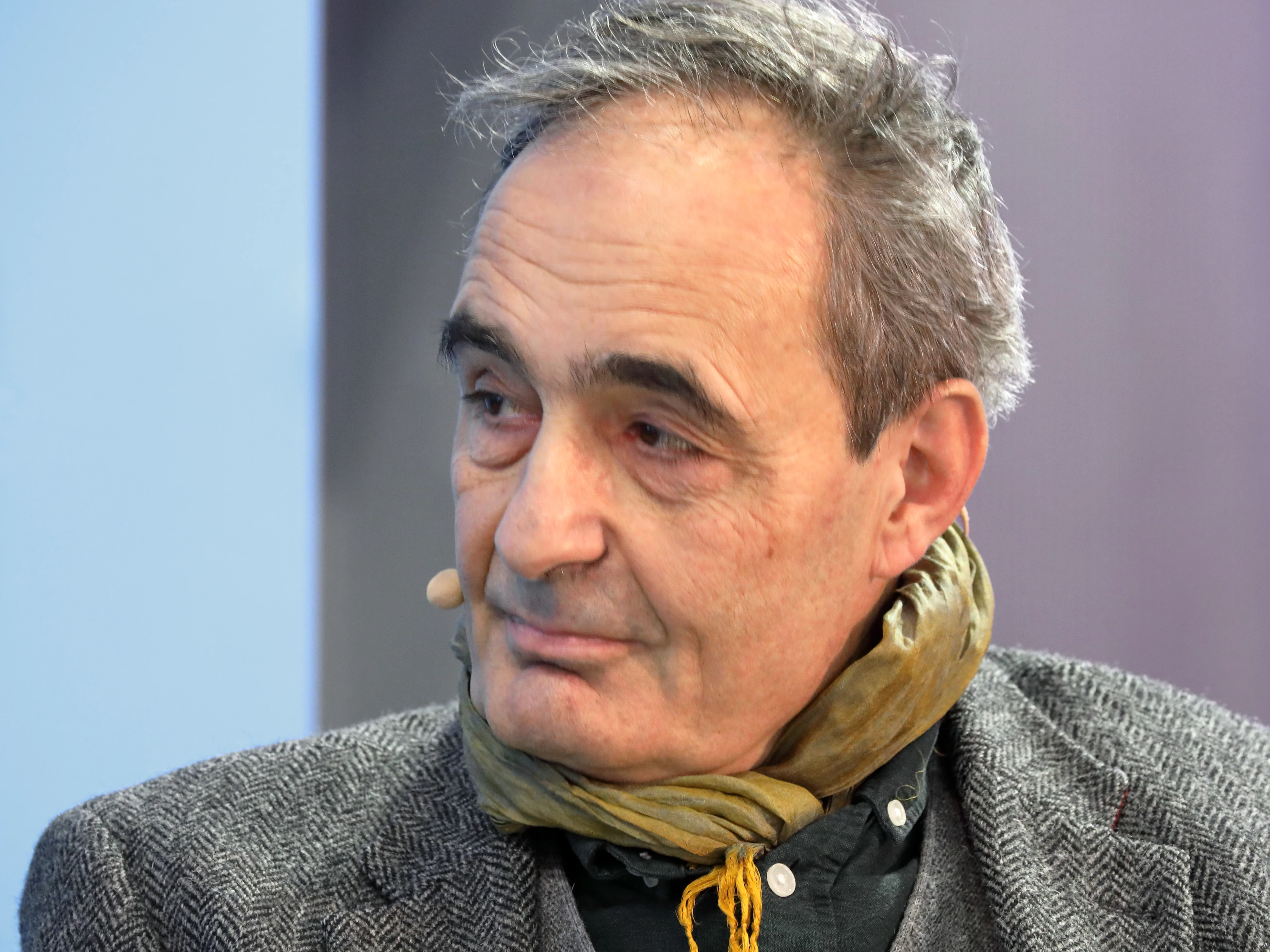
Image from Wikipedia
Image from Wikipedia
Paul Gulda
A Pianist Between Tradition and Innovation: Paul Gulda Connects Classical Music, Improvisation, and Cultural Dialogue
Paul Gulda, born on October 25, 1961, in Vienna, is regarded as a pianist, composer, and conductor who productively transcends the boundaries between classical music, improvisation, and various cultural influences. His musical career is rooted in the Vienna School, characterized by an intense artistic development that began early with lessons from significant figures and has unfolded on international stages. He is known as a versatile soloist and chamber musician, an inquisitive sound researcher from harpsichord to clavichord, and a creator of literary-musical evenings. His discography, featuring around thirty releases, documents this range and establishes him as a distinctive voice in the Austrian and European music scene.
Early Years and Education: Viennese Influence, International Perspectives
Coming from an artistic family, Paul Gulda received his early musical education at a young age. He learned piano initially from Fritz Pauer and Roland Batik – two teachers with a jazz background, who integrated improvisation, phrasing, and rhythmic boldness into his technique. A decisive influence came from his father, the pianist Friedrich Gulda, whose uncompromising dedication to music and stylistic openness were formative. Additionally, Paul Gulda studied recorder and clarinet at the Musikhochschule (MDW) in Vienna, which deepened his understanding of breath, line, and articulation. Later studies included lessons with Leonid Brumberg, a close assistant to Heinrich Neuhaus, and final years of study with Rudolf Serkin in the USA – experiences that completed his pianistic training with a focus on sound culture, structural clarity, and interpretative depth.
Emergence as a Soloist and Chamber Musician: Stage Presence and Repertoire
Since the early 1980s, Paul Gulda has appeared internationally as a soloist and chamber musician. His stage presence is fueled by a natural legato tone, precise articulation, and a dramaturgically clever sense of tempo. Performances with leading ensembles – from the Vienna Philharmonic sound cosmos to symphony orchestras and traditional venues in Leipzig and Moscow – solidified his reputation as a reliable yet curious interpreter. In chamber music, he has collaborated with partners such as the Hagen Quartet and cellist Heinrich Schiff. These collaborations showcase his strengths in sonic interplay: he phrases with a chamber music breath, balances timbres, and sets thoughtful accents in the dialogue of voices.
Collaborations and Orchestras: From Vienna to the World
Among the conductors Gulda has worked with are Kurt Masur, Zubin Mehta, Yehudi Menuhin, and Wladimir Fedossejew. These encounters broadened his repertoire from classical to 20th-century music. His artistic development has always remained twofold: as a soloist who penetrates the score structurally, and as an ensemble partner who sharpens colors and agogics in the fine detailing of chamber music. This interplay of symphonic space and intimate dialogue has shaped his musical fingerprint over decades.
Composition, Stage Music, and Conducting: Extended Artistic Practice
Since the mid-1990s, Gulda has expanded his activities as a pianist to include composition and conducting. Notably, his stage music – including works by Howard Barker, Franz Xaver Kroetz, and Johann Nestroy – demonstrates his sensitivity to dramaturgical arcs, sound dramaturgy, and instrumental arrangement. He made his conducting debut in 1997, further refining his interpretative perspective and formal overview. This diverse practice is reflected in his programs: dramaturgically structured concert evenings, literary references, thematically cohesive cycles, and spontaneous improvisational moments create an organic whole.
Projects Between Classical and Tradition: “Haydn alla Zingarese” and “Roma Rhapsody”
With “Haydn alla Zingarese,” Paul Gulda developed a concept in the 1990s that brings the Hungarian-Slavic Roma tradition into a productive dialogue with Viennese classical music. This project was updated for the Haydn Year in 2009 and illustrates how Gulda's arrangements, program design, and piano timbre connect the structural spirit of Haydn with vibrant, modal, and rhythmic idioms. In 2011, he followed with “Roma Rhapsody,” an approach to Franz Liszt and gypsy music that highlights the interplay of virtuosity, rubato-inflected melody, and improvisational freedom. These works demonstrate Gulda's knowledge of music-historical contexts and underline his contribution to cultural dialogue.
Discography: From Naxos to Gramola – Documented Versatility
Paul Gulda's discography consists of around thirty recordings and documents his wide repertoire in solo, chamber, and crossover constellations. Early releases focus on composers such as Schumann (Kreisleriana, Blumenstück, Waldszenen) and Beethoven sonatas; chamber music recordings with the Hagen Quartet extend this focus to include significant romantic repertoire. Particularly outstanding in terms of program aesthetics is “Haydn alla Zingarese,” which makes audible the connection between classical form and Roma tradition and has been received as a careful project both in sound and editorially. More recently, Gulda has expanded his range: the album “Schubert & Burgmüller: Works for Arpeggione” (2022) showcases his refined stylistic sensitivity for historical instruments and idiomatic sound expression. The recordings highlight his ability to translate musical narratives into sound dramaturgy – a strength that has been repeatedly emphasized in reviews.
Improvisation, Style, and Artistic Development: Sound Expression Over Effect
A guiding motif in his artistic development is: Stylistic boundaries as a field of experimentation. His early exposure to jazz methodology – phrasing in off-beat, micro-rhythmic flexibility, harmonic expansion – manifests in his classical playing as elastic agogics, without compromising fidelity to the work. Gulda's interpretative style emphasizes intelligent articulation, clearly defined formal segments, and a dynamic “sound expression” that allows the thematic material to breathe organically. Instead of relying on external effects, he takes structure seriously: transitions gain weight, chapters gain definition. Thus forms an interpretation that is both technically grounded and narratively convincing.
Pedagogy, Masterclasses, and Mentoring: Experience Passed On
Alongside his concert career, Gulda's pedagogical work holds significant relevance: since the late 1990s, he has regularly given masterclasses in several countries, held teaching posts in Vienna, and is engaged in training the next generation. Since 2022, he has been teaching at the Friedrich Gulda School of Music in Vienna. His teaching blends decades of concert practice with expertise in style, sound balance, pedal technique, and musical rhetoric. In this process, not only technique is emphasized, but rather a reflective approach to music-making that brings together composition, interpretation, and personal signature.
Civic Engagement and Cultural Influence
Paul Gulda is involved in civic initiatives and views music as a medium of memory culture and dialogue. His participation in projects with Jewish musical traditions, his engagement with exile composers, and his commitment to historical reflection underscore the role of the artist as a cultural actor. This engagement reflects trust and responsibility toward the audience and history. Awards and public recognitions, as well as his continuous presence in institutions and festivals, bolster his authority as an artist, educator, and cultural mediator.
Current Projects 2024–2025: Concert Practice, Thematic Programs, Repertoire Maintenance
In 2024 and 2025, Paul Gulda will continue to shape the musical landscape with thematically intelligently structured programs that intertwine chamber music, song, and memory work. In December 2025, for instance, he will perform in Vienna with soprano Shira Karmon, interpreting songs by composers active in exile, as well as selections from their joint album “Spirit of Hope” (Gramola, 2021). Such evenings showcase curatorial competence, historical sensitivity, and lively performance practice. Concurrently, Gulda affirms his profile as a mentor and teacher – through masterclasses that integrate technique, interpretation, and improvisational impulses – and as a recording artist, whose discography has taken on new facets in the 2020s, including the Arpeggione productions.
Reception: Critique and Audience
Responses from the feuilleton and specialized press regularly emphasize Gulda's blend of precision, stylistic awareness, and narrative drive. Particularly his program ideas – the connection of classical music with folk music, of score interpretation with improvisational moments – are regarded as contributions to the vibrancy of the concert scene. His discography receives nuanced evaluations in terms of sound quality: transparency, chamber music balance, and structural clarity of the interpretations are praised. On stage, Gulda impresses with natural communication; in the studio, with careful sound presentation and fidelity to the score.
Conclusion: Why Listen to – and Experience – Paul Gulda?
Paul Gulda combines interpretative sovereignty, historical sensitivity, and contemporary relevance. His artistic development showcases a musician who thinks from the Viennese tradition but always leads beyond it: through improvisation, cross-genre projects, and the integration of cultural dialogues. His musical career is rich in moments where composition, arrangement, and interpretation intertwine. Those who attend his concerts experience classical works as breathing, living art – with a sense of form, color, and expression. Recommendation: listen live, feel the dramatic arcs, and discover the nuances of his sound expression – this is where the full allure of this artist unfolds.
Official Channels of Paul Gulda:
- Instagram: No official profile found
- Facebook: No official profile found
- YouTube: No official profile found
- Spotify: No official profile found
- TikTok: No official profile found
Sources:
- Paul Gulda – Official Website
- Paul Gulda – Discography (Official Website)
- Paul Gulda – Biography (Official Website)
- Wikipedia – Paul Gulda
- Friedrich Gulda School of Music Vienna – Faculty: Paul Gulda
- Exilarte: Concert Series “Echo of the Unheard” – Shira Karmon & Paul Gulda (December 18, 2025)
- Apple Music – Schubert & Burgmüller: Works for Arpeggione (cpo, 2022)
- Presto Music – Haydn alla Zingarese (Gramola)
- Bayerische Staatsoper – Biography Paul Gulda
- Wikipedia: Image and Text Source
Upcoming Events
6th Concert Friends of Music: Peter Hudler (Cello) & Paul Gulda (Piano)