
Robby Krieger
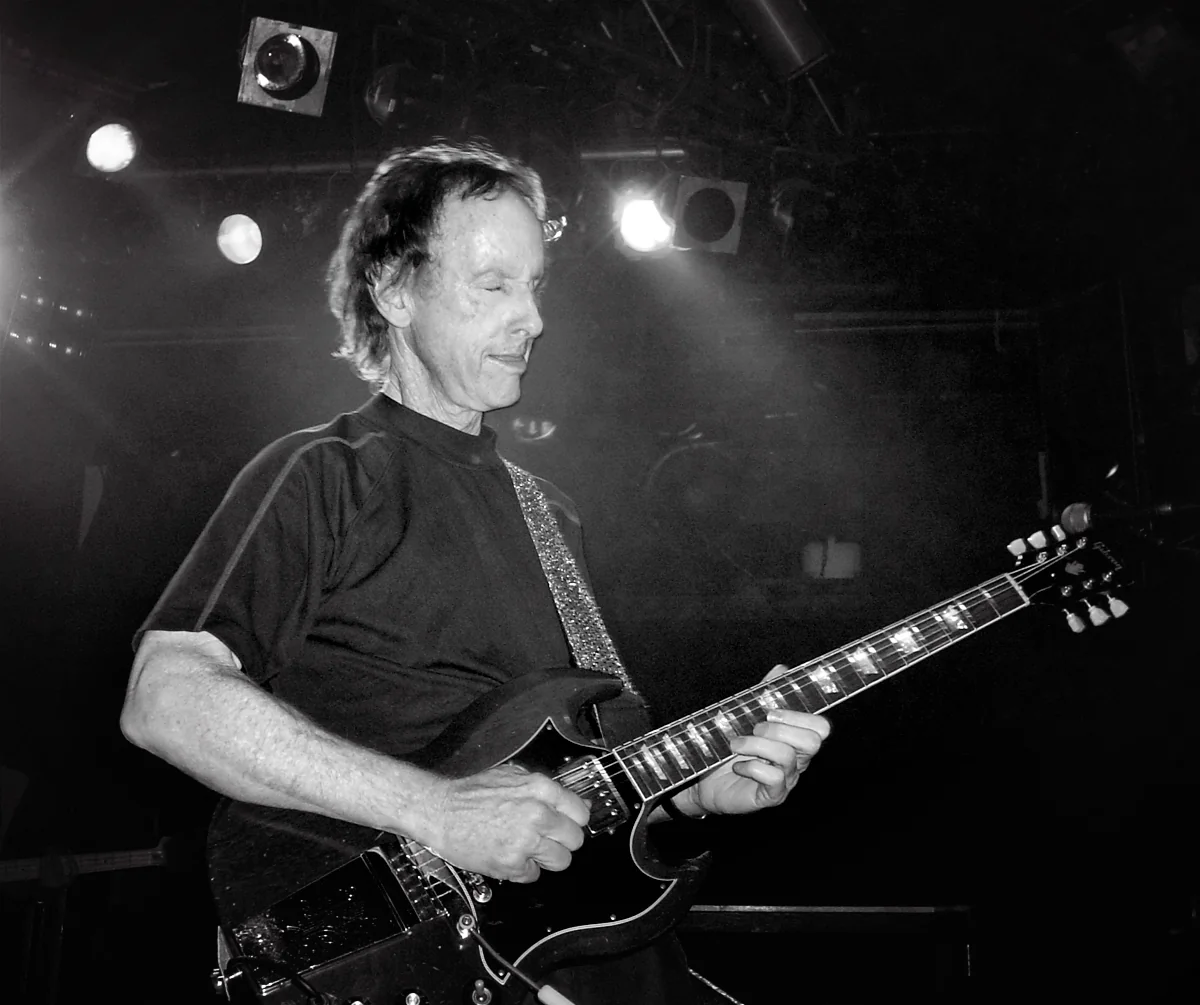
Image from Wikipedia
Image from Wikipedia
Robby Krieger – The Elegant Boundary Walker Between Rock, Jazz, and Psychedelia
A Guitar Voice That Made The Doors Unmistakable
Robby Krieger is one of those musicians whose signature can be recognized after just a few bars. As the guitarist and songwriter for The Doors, he shaped the sound of a band that became an icon of U.S. rock in the late 1960s. His playing combines melodic clarity, bluesy grounding, jazz harmonics, and a boldness for alienation into a style that continues to resonate today. The official biography describes Krieger as a musician from Los Angeles, born on January 8, 1946, who grew up early on with various influences from classical music, rock 'n' roll, blues, and flamenco. (robbykrieger.com)
Biography: From Los Angeles to the World of Rock
Robby Krieger grew up in Los Angeles, a city characterized by musical openness and cultural diversity. On his official website, he describes how he was initially shaped by classical music, then rock 'n' roll, later by blues, and finally by flamenco. He only began playing guitar at the age of 17, took flamenco lessons for a few months, and then moved among folk, blues, flamenco, and rock 'n' roll. This mix explains why his guitar tone with The Doors never aimed purely at virtuosity, but at atmosphere, tension, and musical narrative power. (robbykrieger.com)
Before rising to fame with The Doors, Krieger studied at UCLA and sought a musical path that transcended mere stylistic boundaries. His approach was open and experimental from the start: not a single genre, but the intersection of various traditions defined his thinking. This is exactly where the strength of his artistic development lies. Krieger represents a type of guitarist who does not seek to dominate but instead emphasizes composition, arrangement, and band dynamics. (robbykrieger.com)
The Breakthrough with The Doors
His international breakthrough came in the late 1960s with The Doors. The band formed in Los Angeles and quickly became one of the most influential formations of their time. The Wikipedia page highlights that after Morrison's death in 1971, Krieger continued as a trio with Ray Manzarek and John Densmore, releasing two more albums before the group disbanded in 1973. They reunited later for the 1978 release An American Prayer, which was based on poems recorded by Morrison. (en.wikipedia.org)
Krieger's unique standing within The Doors lies in his compositional versatility. On the official website, he emphasizes that a real band, for him, consists of musicians who develop arrangements together. This mindset defined The Doors: not just a frontman plus a backing band, but a collective with a clear sense of sound. Krieger significantly contributed with his intuition for harmonic shifts, musical spaces, and unconventional guitar figures, ensuring that The Doors were more than just a typical rock band. (robbykrieger.com)
Songwriting, Timbre, and Musical Development
Robby Krieger is not only a guitarist but also a songwriter with his own unique voice. His early formative experiences with flamenco and blues are reflected in the open chords, modal colors, and often flowing attack of his guitar language. In The Doors, he fused these influences with the somber, poetic aura of the band to create a distinctive soundscape. The official website text makes clear that Krieger understood early on how freely rock, jazz, and improvisational thinking could be combined. (robbykrieger.com)
His playing rarely comes across as demonstrative. Instead, it relies on musical dramaturgy: short motifs, colorful interspaces, targeted friction, and a sense of controlled openness. This is precisely why Krieger's style works so well in the context of The Doors, whose music often oscillated between hypnotic repetition and eruptive tension. In retrospect, he appears as a guitarist who expanded the language of rock without losing sight of song form. (robbykrieger.com)
The Solo Career: Jazz Rock, Instrumental Music, and Experiments
After The Doors, Krieger continued his work as a solo artist consistently. The discography on Wikipedia lists among other works Robbie Krieger & Friends (1977), Versions (1982), Robby Krieger (1985), No Habla (1989), Door Jams (1989), Cinematix (2000), and Singularity (2010). These releases show a musician who did not rely on the myth of a legendary band, but rather developed his solo profile over decades. (en.wikipedia.org)
Robbie Krieger & Friends was released in 1977 by Blue Note and marked the beginning of his solo work. The album was classified as a jazz-rock album and made it clear that Krieger wanted to continue the dialogue between improvisation, groove, and rock aesthetics. Later, he pursued instrumental works, such as Robby Krieger from 1985, which is documented as a purely instrumental jazz-rock album. These projects demonstrate his artistic consistency: less star system, more texture, more sound architecture. (en.wikipedia.org)
Current Projects and New Releases
Even at an advanced age, Robby Krieger remains active. His official website lists several concert dates for 2026, including a performance at the Grove of Anaheim, an 80th Birthday Concert at Whisky a Go Go, an engagement with Robby Krieger & The Sol Savages in Las Vegas, and another "London Fog" evening at Whisky a Go Go. This shows that Krieger not only maintains his legacy but continues to take it live, directly intertwining the past and present of his music career on stage. (robbykrieger.com)
Another important current chapter is the project Robby Krieger and the Soul Savages, which was introduced in 2024 by Rock Cellar Magazine as a new endeavor of The Doors guitarist. The article describes the release as a trippy, psychedelic affair featuring a strong ensemble of supporting musicians. Such projects reaffirm that Krieger continues to seek new forms without denying his core: guitar music with substance, atmosphere, and a personal touch. (rockcellarmagazine.com)
Discography and Critical Reception
The critical perception of Robby Krieger is closely tied to the history of The Doors, but his solo works deserve independent attention. The official biography and music history present him as a musician who was early on part of one of the most influential rock bands of the 1960s and who significantly shaped its catalog. Reviews repeatedly emphasize that The Doors, with their six studio albums featuring Jim Morrison, made a defining contribution to the history of West Coast rock. Krieger was a crucial building block of the sound that oscillated between psychedelia, blues, jazz, and dark poetry. (loudersound.com)
In later recognitions, his role as a guitarist and stylistic architect comes increasingly into focus. Contributions to the 60-year history of The Doors highlight the enduring significance of the band and portray Krieger as a musician who does not treat the legacy as a museum piece, but actively carries it forward. At the same time, reviews and interviews make it clear that his solo material remains appealing for listeners who appreciate instrumental rock music, jazz rock, and expansive guitar arrangements. Krieger's discography is thus not a side project but the continuation of an aesthetic idea. (rockcellarmagazine.com)
Cultural Influence: More than a Doors Guitarist
Robby Krieger has expanded the notion of what a rock guitarist can be. His style stands for not just brilliance but for musicality, a sense of form, and the ability to convey songs with fine, often surprising lines. It was especially in collaboration with Jim Morrison, Ray Manzarek, and John Densmore that a band sound emerged that is still regarded as a reference for psychedelic rock, poetic song form, and organic studio work. (robbykrieger.com)
His influence extends beyond the history of The Doors. Today, anyone discussing genre-defying guitar work, the connection between jazz feeling and rock dramaturgy, or the balance between song and improvisation quickly encounters Krieger's approach. The fact that he is still active as a live musician and pursuing new projects underscores his status as a living reference figure. He is not a nostalgist but an artist who bridges a historical legacy with a contemporary stage presence. (robbykrieger.com)
Voices of the Fans
The feedback on the official Facebook presence shows how strongly Robby Krieger continues to resonate. Comments range from enthusiasm about his stage presence to reverential reactions to his role in rock history. Fan voices praise the ongoing influence of The Doors, his live quality, and the unique aura of his performances, further confirming his status as a cult figure. (robbykrieger.com)
Conclusion: A Guitarist with Depth, Style, and Lasting Aura
Robby Krieger is fascinating because he can never be reduced to a single identity. He is a Doors legend, solo artist, jazz-rock thinker, guitarist with flamenco roots, and a musician who has shaped his career for decades with a sense of form and atmosphere. His discography shows development rather than repetition, and his stage presence exhibits experience rather than routine. Those who experience him live encounter not only history but a still-active artistic presence. (robbykrieger.com)
Robby Krieger remains a prime example of how deeply music history, stylistic awareness, and individual signature can converge. This is precisely why every look at his concerts, every re-listening to his recordings, and every encounter with an artist who has never understood rock as a rigid format is worthwhile. Those who experience his music live encounter a guitarist whose sound remains open, precise, and unmistakably resonant to this day. (robbykrieger.com)
Official Channels of Robby Krieger:
- Instagram: no official profile found
- Facebook: https://facebook.com/12442119074
- YouTube: no official profile found
- Spotify: no official profile found
- TikTok: no official profile found
Sources:
- Robby Krieger of The Doors - Official Website
- Robby Krieger - On A&M Records
- Wikipedia - Robby Krieger
- Wikipedia - Robbie Krieger & Friends
- Wikipedia - Robby Krieger (album)
- Rock Cellar Magazine - Out Now: Debut Album from Robby Krieger and the Soul Savages
- Louder - The Doors: Robby Krieger and John Densmore tell their wild story
- Vintage Guitar - Robby Krieger & The Soul Savages
- Wikipedia: Image and text source