Uwe Hoppe
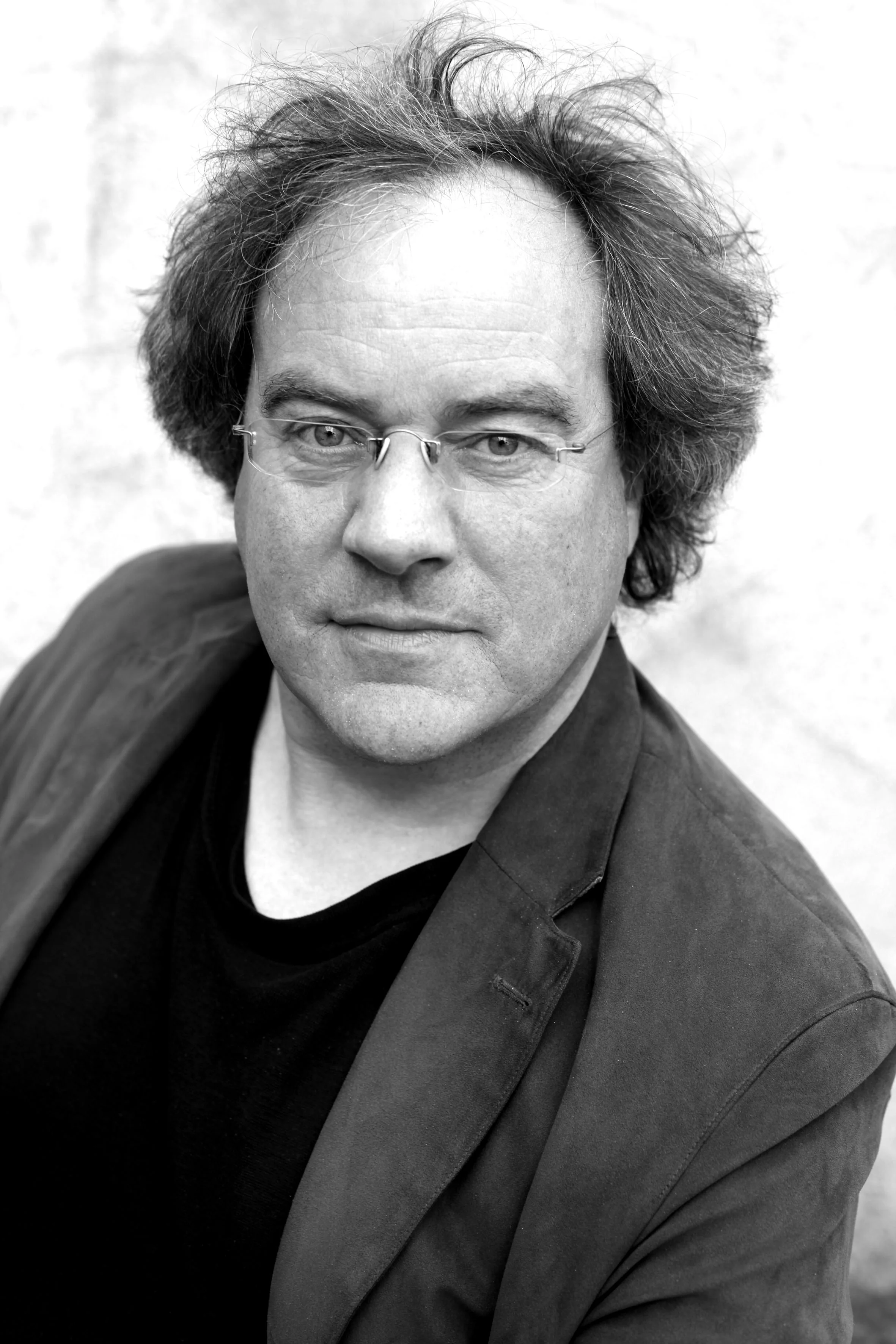
Image from Wikipedia
Image from Wikipedia
Uwe Hoppe: The Wagner Interpreter Who Has Infused Bayreuth with His Own Theatrical Spirit for Decades
An Extraordinary Theatrical Figure Between Drama, Directing, and Literary Radicalism
Uwe Hoppe, born on December 7, 1954, in Hondelage near Braunschweig, is one of those artistic personalities who does not content themselves with merely staging material. As a playwright, director, author, and actor, he has carved out a distinctive place in the German theater landscape, especially with his Wagner adaptations. Since 1982, these adaptations have been presented alongside the Bayreuth Festival in Bayreuth, shaping a unique and idiosyncratic chapter in the history of musical theater and performance. ([de.wikipedia.org](https://de.wikipedia.org/wiki/Uwe_Hoppe?utm_source=openai))
Early Influence: Theater as a Life Choice
Hoppe's biography tells of an early, almost fateful bond with the stage. Even as a child, he performed on stage; later, he dramatized and directed his own material as a teenager, developing a keen sense for theatrical emphasis early on. The Wikipedia account describes him as the third of four children in a working-class family; his father worked as a bricklayer, and his mother ran a laundry with him. This background grounds Hoppe's artistic career in a biographical reality far removed from any ivory tower romanticism. ([de.wikipedia.org](https://de.wikipedia.org/wiki/Uwe_Hoppe?utm_source=openai))
Especially notable is his early insight that theater would not only be a profession but also a form of expression and a space for life. At the age of five, he played the Seventh Heinzelmann, at ten he dramatized a novella by Johann Peter Hebel, and at fifteen he directed a Curt-Goetz film after seeing it on television. These early experiences showcase an artistic development that did not arise by chance but out of a consistent dedication to language, rhythm, and scene. ([de.wikipedia.org](https://de.wikipedia.org/wiki/Uwe_Hoppe?utm_source=openai))
The Path to Bayreuth: Founding the Studio Theater and Initial Successes
A decisive career step occurred in 1981 with the founding of the Studio Theater Bayreuth, together with Werner Hildenbrand, Eberhard Wagner, and Ilse Schörner. From this environment, Hoppe's typical working method developed: pointed material condensation, theatrical distillation of great sources, and a fine sense for the historical aura of Bayreuth. By the early 1980s, a stage had emerged that consciously positioned itself alongside the festival operations while also responding dialogically to them. ([de.wikipedia.org](https://de.wikipedia.org/wiki/Uwe_Hoppe?utm_source=openai))
In 1982, Hoppe wrote his first Wagner adaptation, Der Ring des Liebesjungen. The production was realized at the Steingraeber-Haus and was sold out throughout, according to Wikipedia; international journalists reported on it. That Hoppe was the first director to condense the Ring des Nibelungen into a single evening marks not only a dramatic point but also a significant intervention in Wagner's reception history. ([de.wikipedia.org](https://de.wikipedia.org/wiki/Uwe_Hoppe?utm_source=openai))
Wagner Adaptations as a Trademark of His Theatrical Aesthetics
Hoppe's fame is based on a special art of condensation. From the monumental Wagner cosmos, he shapes stage versions that do not diminish the impact of the works but instead transfer them into a new theatrical form. Works like Leubald, Tristan, der fliehende Irrländer und Isolde, Hojotoho!, Her den Ring, and Heda! Heda! Hedo! reveal a constant engagement with the Bayreuth master, but never as mere retellings, rather as independent directorial and dramaturgical efforts. ([de.wikipedia.org](https://de.wikipedia.org/wiki/Uwe_Hoppe?utm_source=openai))
Particularly revealing is his work in Sanspareil, where he revitalized a place that had not staged a play since the days of Margravine Wilhelmine with Leubald in 1992. Here, Hoppe's artistic signature becomes visible: He thinks not only in text and scene but also in places, history, and theatrical reappropriation. The stage for him becomes a cultural intervention, not merely a performance space. ([de.wikipedia.org](https://de.wikipedia.org/wiki/Uwe_Hoppe?utm_source=openai))
Other Stage Works, Libretti, and the Range of His Repertoire
Although Wagner adaptations form the center of his public perception, Hoppe's catalog displays a significantly broader range. His libretti include, among others, Stationen der Hoffnung, Miserere Domini, Die Schöne und das Scheusal, Glück im Pech, Spiel in der Liebe, Der Rote Traum, Viva la Diva, Dracula, and Wilhelmine, Liebe ist nur Fantasie. These titles demonstrate a profound sense for musical theater, literary material, and theatrical formats that range from pastoral mass to musical to semi-opera. ([de.wikipedia.org](https://de.wikipedia.org/wiki/Uwe_Hoppe?utm_source=openai))
His stage works also underscore the diversity of his endeavors. In addition to monodramas and free adaptations of Grimm and Shakespeare material, his directorial activity at venues such as the Theater der Altstadt in Stuttgart, the Studio Theater Bayreuth, or in Kulmbach exhibits a long practice of acting and directing theater. In 2018, he directed in Stuttgart among others Die Jungfrau von Orleans, Die schmutzigen Hände, and Mutter Courage und ihre Kinder, further sharpening his affinity for classical drama and political theater. ([de.wikipedia.org](https://de.wikipedia.org/wiki/Uwe_Hoppe?utm_source=openai))
Artistic Development: From Adaptation to Independent Handwriting
In Hoppe's career, the perspective shifts from mere adapter to independent author with a distinct handwriting. His works combine condensation, irony, and respect for the original without tipping into museal reverence. Especially in his treatment of Richard Wagner, one can observe how Hoppe creates a form from the grand music drama that remains accessible to contemporary audiences while preserving the cultural aura of the material. ([de.wikipedia.org](https://de.wikipedia.org/wiki/Uwe_Hoppe?utm_source=openai))
This artistic development is closely intertwined with the places and institutions that support his work. The Steingraeber-Haus, the Studio Theater Bayreuth, the Eremitage, and Sanspareil form a network of venues where Hoppe's theatrical projects have been anchored for decades. Thus, a continuum of tradition and presence emerges from musical history and new theatrical practice. ([de.wikipedia.org](https://de.wikipedia.org/wiki/Steingraeber_%28Klavierhersteller%29?utm_source=openai))
Awards, Reception, and Cultural Significance
The reception of his work has not been limited to regional attention. Wikipedia notes that his Wagner adaptation was sold out throughout 1982 and provoked international reporting, an early indication of the impact of his concept. Additionally, the Friedrich Baur Prize from the Bavarian Academy of Fine Arts, which Hoppe received in 2010, further underscores his cultural significance. ([de.wikipedia.org](https://de.wikipedia.org/wiki/Uwe_Hoppe?utm_source=openai))
His influence primarily lies in the friction between high culture and popular accessibility. Hoppe does not make a monument out of Wagner but rather a vibrant theatrical material that is remounted, spoken anew, and experienced afresh. This is precisely where his authority lies: he approaches the canon not with a respectful distance but creatively and discursively. ([de.wikipedia.org](https://de.wikipedia.org/wiki/Uwe_Hoppe?utm_source=openai))
Current Projects and Recent Works
Even recently, Hoppe remains active. His official website lists current dates and productions, including Flieg, Holländer, flieg!, Noch ’n Gedicht, Die Quizkönigin oder Nix Quiz waasma net, and Jedermann. The website also mentions the premiere of Die Quizkönigin oder Nix Quiz waasma net on January 8, 2022, and refers to venues such as the Theater der Altstadt in Stuttgart and the Studio Theater Bayreuth. ([uwehoppe.de](https://www.uwehoppe.de/))
This continuity is remarkable as it shows Hoppe's understanding of theater as a lasting working model. He does not rest on his early successes but continues to develop themes, forms, and adaptations. It is precisely the combination of classical material tradition, contemporary relevance, and site-specific performance practice that makes his artistic handwriting not only enduring but also vibrant. ([uwehoppe.de](https://www.uwehoppe.de/))
Style and Impact: Between Musical Theater, Literature, and Directorial Craft
Although Uwe Hoppe is not a musician in the strictest sense, music plays a central dramaturgical role in his work. His Wagner adaptations navigate the tension between opera, drama, and literary montage, resulting in a style that translates musical dramaturgy into theater. The proximity to large musical forms, to the arrangement of motifs, and to the precision of rhythm imparts a distinct inner tension to his works. ([de.wikipedia.org](https://de.wikipedia.org/wiki/Uwe_Hoppe?utm_source=openai))
His art thrives on condensation, character depiction, and a masterful handling of cultural heritage. This makes him equally interesting to music lovers, theater audiences, and Wagner researchers. Those who examine Hoppe's works experience not just a director and author's career but an independent form of cultural mediation where Bayreuth, literature, and musical theater interweave productively. ([de.wikipedia.org](https://de.wikipedia.org/wiki/Uwe_Hoppe?utm_source=openai))
Conclusion: Why Uwe Hoppe Remains Fascinating Today
Uwe Hoppe is fascinating because he does not merely manage great works; instead, he transforms them into the present. His career combines early passion, artisanal discipline, dramatic intelligence, and a precise sense for cultural spaces. Those who watch his works experience theater as a lively engagement with history, music, and identity. Anyone who has the chance to see one of his productions live should take it: Hoppe's stage shows how powerful classical material sounds when an artist reshapes it with courage, knowledge, and theatrical instinct. ([de.wikipedia.org](https://de.wikipedia.org/wiki/Uwe_Hoppe?utm_source=openai))
Official Channels of Uwe Hoppe:
- Instagram: No official profile found
- Facebook: No official profile found
- YouTube: No official profile found
- Spotify: No official profile found
- TikTok: No official profile found
Sources:
- Wikipedia – Uwe Hoppe ([de.wikipedia.org](https://de.wikipedia.org/wiki/Uwe_Hoppe?utm_source=openai))
- Uwe Hoppe – Official Website ([uwehoppe.de](https://www.uwehoppe.de/))
- Wikipedia – Studio Theater Bayreuth ([de.wikipedia.org](https://de.wikipedia.org/wiki/Studiob%C3%BChne_Bayreuth?utm_source=openai))
- Wikipedia – Der Ring des Nibelungen ([de.wikipedia.org](https://de.wikipedia.org/wiki/Der_Ring_des_Nibelungen?utm_source=openai))
- Wikipedia – Steingraeber ([de.wikipedia.org](https://de.wikipedia.org/wiki/Steingraeber_%28Klavierhersteller%29?utm_source=openai))
Upcoming Events
The Ring - rebooted

Public Rehearsal: The Confusions of the Pupil Törless