Experience Animals Live: Petting Zoo & Farm near Lindau
Experience Animals Live: Farms & Petting Zoos near Lindau (Excursion Tips 2026)
What does it feel like when a goat carefully nibbles food from your hand or a curious calf sniffs your jacket? If you are vacationing in Lindau in 2026 or live in the region, you can plan several animal-related excursions around Lake Constance: adventure farms with petting areas, a large domestic animal and wildlife park on the lakeshore, as well as a nature-oriented wildlife park above Bregenz. Depending on the location, feeding is either expressly allowed—or deliberately prohibited.
This guide provides you with reliable planning assistance for future visits: which animal experiences are suitable for families, what you should pay attention to regarding animal welfare, and how to organize your trip so that both children and animals remain stress-free.
Large Domestic Animal & Wildlife Park on Lake Constance: Close to Animals (with Feeding Rules)
For 2026, family and travel portals around Lake Constance often recommend a large domestic animal and wildlife park on the lakeshore, which showcases farm animals and other species in a spacious area. Some of these facilities advertise a very large variety (sometimes "over 200" species and breeds—according to operator information); however, for your planning, the concept is more important than the number:
- Wide range of animals: usually goats, sheep, pigs, cattle, poultry, as well as other domestic and small animals.
- Contact zones: In designated areas, visitors can get very close to the animals (not every enclosure is a petting enclosure).
- Feeding—if offered—controlled: There are often food portions available at the counter or from vending machines. This rule is a key point for animal welfare and hygiene.
If you are planning a day trip from Lindau in 2026, it is worth allowing for a realistic time buffer: children usually do not want to just "walk through," but prefer to observe for longer, return, ask questions, and wait for quiet moments when animals approach on their own.
Important: Plan so that you are flexible in bad weather. In animal parks, it can happen that animals temporarily retreat to stalls or shelter areas. This is not a "failure," but part of animal-friendly husbandry.
Family Farm between Lindau and Friedrichshafen: Barn, Petting Animals & Farm Life
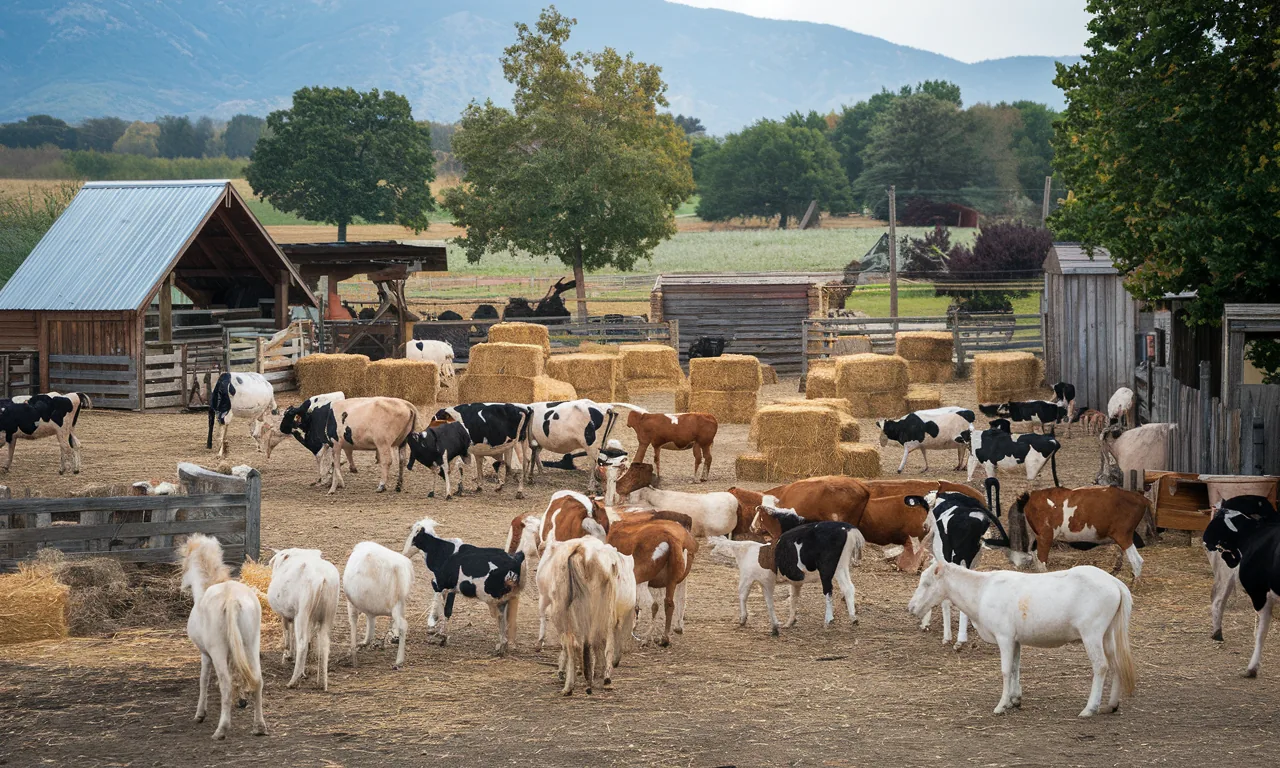
For families who want to experience real farm life in 2026, holiday and adventure farms between Lindau and Friedrichshafen (e.g., in the Kressbronn area) are a particularly suitable option. Typical features include:
- Active dairy farm with cows and calves (animal contact usually supervised and with clear rules).
- Additional animals such as donkeys, ponies, chickens, and small animals (e.g., rabbits/guinea pigs) in designated areas.
- Child-friendly infrastructure such as play areas, weather-protected zones, or a play barn (depending on the farm).
The added value of a farm visit in 2026 often lies in the small, planned moments: caring for animals, standing quietly in the barn, perceiving sounds, and asking questions—without the hustle and bustle of a large park. Many farms deliberately regulate petting and feeding strictly (e.g., only at certain times or only with farm-provided food), as this allows animals routine and peace.
If you are heading to a farm for a day trip, clarify in advance whether visitors are welcome without overnight stay and whether there are guided times. This way, you avoid arriving during a period when the farm is closed out of consideration for the animals and work.
Garden Island with Farm Park: Alpacas, Goats & Ponies (seasonal)
If you want to combine an animal experience with a park and garden visit in 2026, a garden island on Lake Constance with an integrated farm area is a logical stop. In such parks, the focus is usually not on farm work or agriculture, but on a family-friendly mix of nature, play areas, and animal enclosures.
Typical animals there include alpacas, ponies/miniature donkeys, goats, and other farm animals. Goat areas in particular are often designed so that there is a clearly separated petting area—and adjacent retreat areas where animals can withdraw.
For your 2026 planning, the seasonal factor is crucial: Some petting areas are not open year-round (e.g., during the colder months). Therefore, plan your visit for a period when the petting areas are accessible according to official visitor information.
When it comes to feeding, parks are especially strict: No food brought from outside. If feeding is allowed, then only with the food provided on site and only in the designated areas.
Alpine Wildlife Park near Bregenz: Observe Instead of Touching
For an excursion in 2026 that focuses on nature observation, a wildlife park above Bregenz is a good choice. Here, the emphasis is less on petting and more on experiencing native wild animals in an environment that feels much more natural than a classic petting zoo.
What you can typically expect there:
- Observe wild animals (e.g., deer and roe deer or wild boar—depending on the facility and season).
- Paths, views, and movement: The excursion combines animal observation with walking and panoramic views.
- Feeding rules: If feeding is allowed at all, then usually only under strict conditions. These rules serve animal health, natural behavior, and safety.
For children (and adults), this can be a valuable alternative in 2026: Instead of "touching animals," the focus is on "understanding animals"—with discussions about retreat areas, stress signals, and species-appropriate behavior.
Planning & Animal Welfare: Rules That Really Help in 2026
A successful animal outing in 2026 is not just about a nice destination, but about animal-friendly behavior. Many facilities and farms follow animal welfare guidelines and set additional house rules to protect animals from stress, inappropriate food, and too much proximity.
1) Feed only if it is expressly allowed
Brought bread, vegetable scraps, or pet food from the supermarket can cause digestive problems or hygiene issues. If a provider allows feeding, in 2026 use only the approved food and follow signs and instructions.
2) Petting is an offer—not a right
Even in the petting enclosure: animals decide about proximity. A good sign of an animal-friendly facility is retreat areas and the possibility for animals to withdraw. For children, the clear message helps: "We wait until the animal comes to us."
3) Hygiene protects everyone
Where animals and people come close together, washing hands (or disinfecting, if offered) is a sensible standard—especially before eating. This applies in 2026 in petting areas as well as on farms.
4) Dogs only where allowed
Dogs can stress animals, even if they are calm. Follow the respective visitor regulations (leash requirement/prohibitions) and, if in doubt, plan dog-free outings if you specifically want to visit petting areas.
5) Time visits so that animals have peace
If possible, choose quieter times in 2026 (e.g., earlier in the day or outside typical peak times). Less crowding usually means less stress for animals—and a better experience for you.
Short Checklist for Your Visit
- Check opening times and seasonal information for the desired animal offering (petting area/feeding) on the day of your visit.
- Plan for weatherproof clothing and, if necessary, a change of clothes for children (barn/enclosure areas can be muddy).
- Plan snack breaks outside the animal contact zones; wash hands afterwards.
- Do not bring your own food; use only approved food if offered.
- Explain simple rules to children in advance: move slowly, speak quietly, do not hold animals tightly.
Sources & Further Links
- Animal Welfare Act (TierSchG) – Laws on the Internet — legal framework for the protection of animals (retrieved on 2026-04-22)
- BMEL: Animal Welfare — classification and background on animal welfare and responsibility (retrieved on 2026-04-22)
- Robert Koch Institute (RKI): Vaccinations A–Z — general health information; useful for travel and family planning in the context of hygiene routines (retrieved on 2026-04-22)