
Dorothee Oberlinger
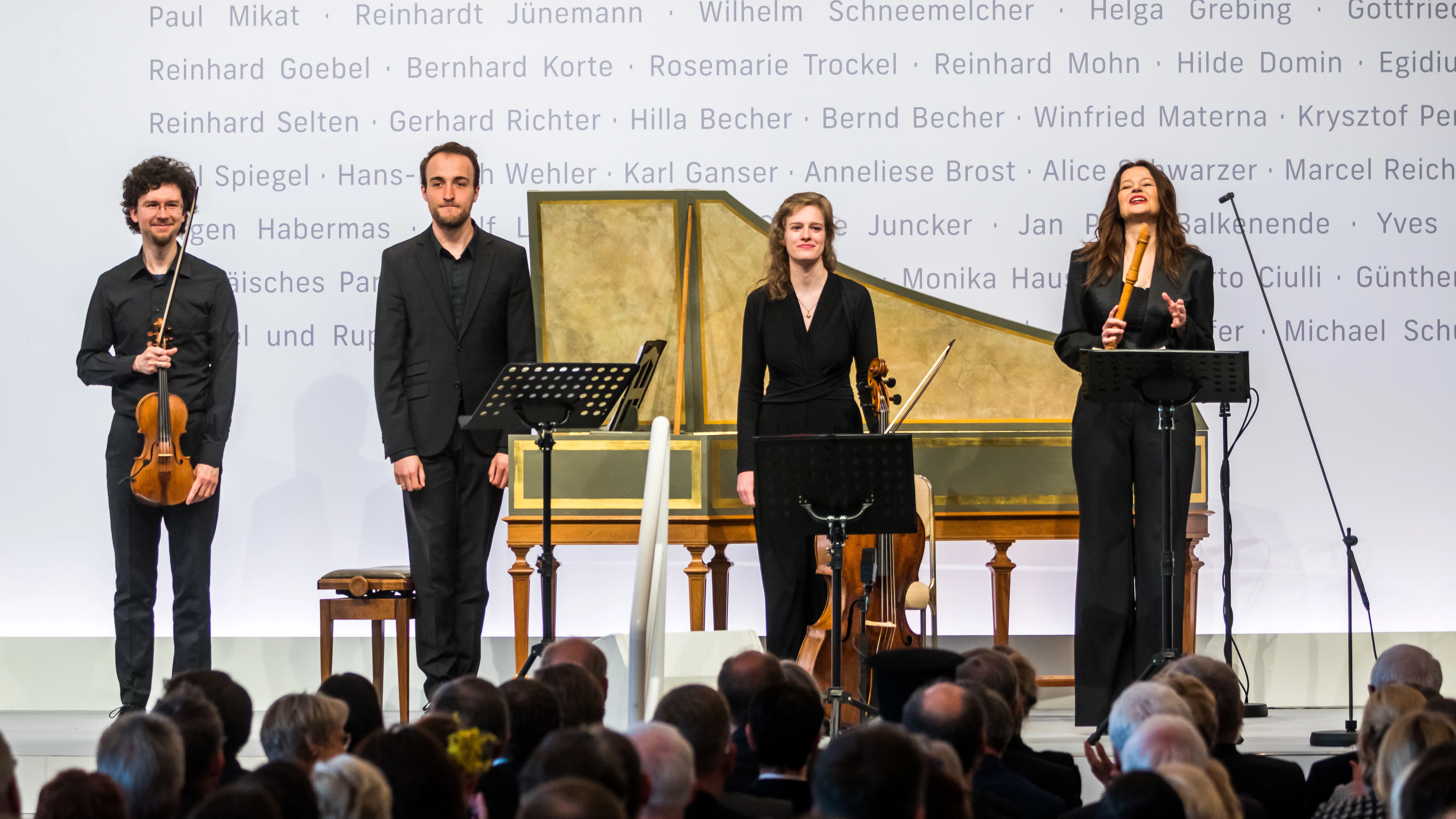
Image from Wikipedia
Image from Wikipedia
Dorothee Oberlinger – The Art of the Recorder at Its Highest Perfection
An Exceptional Figure Between Historical Performance Practice, Virtuosity, and Conducting Art
Dorothee Oberlinger is among the most influential musicians in the European early music scene. Born in Aachen in 1969, this German recorder player, conductor, and professor at the Salzburg Mozarteum has brought the recorder out of the educational periphery and given it a new, international radiance. Her music career combines technical brilliance, stylistic curiosity, and a stage presence that captivates both concert halls and opera and festival settings. Her profile is particularly evident in historical performance practice, which she does not perceive as a museum discipline but as a living musical language. ([konzerthaus.at](https://konzerthaus.at/language/en-US/Content/Abonnements/Portr%C3%A4ts202526/DorotheeOberlinger))
Biography: From Musical Foundations to an International Career
Oberlinger grew up in Aachen, developing a strong bond with music early on, which later culminated in an exceptionally consistent career. Her path into professional music was not linear; it came through various stages: she first studied music education and German before dedicating herself completely to the recorder. Her journey took her to Amsterdam and Milan for recorder studies, with a concert exam completed in Cologne. This education laid the foundation for a career in which historical source work, sound precision, and musical imagination are closely intertwined. ([dorotheeoberlinger.de](https://www.dorotheeoberlinger.de/pdf/musik%26theater.pdf?utm_source=openai))
The early influence of church music and the intellectual environment of her family, where her father served as a pastor, is reflected in her stylistic depth today. Oberlinger does not describe the recorder as a nostalgic instrument but as an expressive medium with a wide color palette: lively, percussive, lyrical, and expressive. This is the inspiration behind her artistic development. She represents a generation of musicians who not only reconstruct early music but also rethink it as contemporary art. ([donaukurier.de](https://www.donaukurier.de/lokales/ingolstadt/die-musikerin-spricht-im-interview-ueber-die-faszination-der-blockfloete-ihr-konzertprogramm-und-das-dirigieren-18019813))
The Breakthrough: The Recorder as a Characterful Solo Instrument
Oberlinger established herself as a soloist in a field long marked by prejudice. In interviews, she has repeatedly emphasized the central role of the recorder in the Baroque repertoire and how it can simultaneously be surprisingly virtuosic and expressive. This very attitude has made her a defining voice for her instrument: she has not only reinterpreted well-known works but has also expanded the repertoire through carefully curated programs that bring together historical practice, chamber music, and theatrical thinking. Her artistic signature emphasizes energy, differentiation, and a confident handling of historical sound ideals. ([donaukurier.de](https://www.donaukurier.de/lokales/ingolstadt/die-musikerin-spricht-im-interview-ueber-die-faszination-der-blockfloete-ihr-konzertprogramm-und-das-dirigieren-18019813))
The term "breakthrough" for Oberlinger describes less a single event and more a continuous ascent. The press early on praised her fluency and precision; simultaneously, she built an international reputation with numerous CD recordings. Her discography has demonstrated that, in her interpretation, the recorder is neither merely a special instrument nor a pedagogical relic, but an instrument of solo quality at the highest level. This blend of stylistic awareness and technical sovereignty has become the hallmark of her music career. ([dorotheeoberlinger.de](https://www.dorotheeoberlinger.de/pdf/musik%26theater.pdf?utm_source=openai))
Ensemble 1700 and the Rediscovery of Baroque Music
A central chapter of her career is her work with Ensemble 1700. With this ensemble, Oberlinger has realized numerous projects dedicated to the rediscovery and recontextualization of Baroque music. This involves not only well-known names like Vivaldi, Handel, or Telemann but also repertoire unearthed from manuscripts, archives, and musicological contexts. Through this work, her expertise as an interpreter, concert designer, and musical researcher is evident. ([tagesspiegel.de](https://www.tagesspiegel.de/potsdam/potsdam-kultur/operneinspielung-des-jahres-dorothee-oberlinger-freut-sich-uber-opus-klassik-11903987.html))
This was particularly evident in the revival of the opera buffa "I Portentosi Effetti della Madre Natura" by Giuseppe Scarlatti. Ensemble 1700 and Dorothee Oberlinger received the Opus Klassik in 2024 in the category of "Opera Recording of the Year" for this work. The ensemble was also honored in 2021 for "Polifemo." These accolades demonstrate that Oberlinger's work extends far beyond solo brilliance: she significantly shapes the reception of Baroque opera and concert culture in the 21st century. ([tagesspiegel.de](https://www.tagesspiegel.de/potsdam/potsdam-kultur/operneinspielung-des-jahres-dorothee-oberlinger-freut-sich-uber-opus-klassik-11903987.html))
Conductor with Historical Authority and Modern Presence
Another highlight of her artistic development is the transition from solo performance to conducting. Oberlinger made her conducting debut in 2017 at the Göttingen Handel Festival with "Lucio Cornelio Silla" and has continued down this path with works by Bononcini, Telemann, and Scarlatti. Since then, she has collaborated with orchestras such as the Wuppertal Symphony Orchestra, the Duisburg Philharmonic, and the Beethoven Orchestra Bonn. In 2025, she conducted additional significant orchestral projects, including those in Dresden and Zurich. ([dresdnerphilharmonie.de](https://www.dresdnerphilharmonie.de/en/dresdner-philharmonie/biographies/dorothee-oberlinger_2/))
Her work as a conductor is closely tied to historical performance practice, but it is never academically dry. Oberlinger combines structural thinking with theatrical tension, developing a directly vivid interpretation from sources, scores, and stylistic models. The fact that she will be portrayed at the Vienna Konzerthaus in the 2025/26 season as one of the most versatile and successful representatives of her field underscores her authority in the international music scene. The stage is for her not only a place of recreation but a space of interpretation. ([konzerthaus.at](https://konzerthaus.at/language/en-US/Content/Abonnements/Portr%C3%A4ts202526/DorotheeOberlinger))
Current Projects and Artistic Presence
In 2024 and 2025, Oberlinger remained active and productive. She led the Potsdam Sanssouci Music Festivals and themed the 2024 festival "Dance," interweaving historical dance forms, medieval songs, Baroque, and even references to popular culture within a larger context. In February 2025, she performed in Ingolstadt with the Georgian Chamber Orchestra, presenting a program of Italian Baroque music titled "La Follia – Noisy Pleasures." These projects reveal how consistently she intertwines repertoire delivery and dramaturgical design. ([tagesspiegel.de](https://www.tagesspiegel.de/potsdam/potsdam-kultur/warum-tanzt-der-mensch-vier-fragen-an-musikfestspielleiterin-dorothee-oberlinger-11031757.html))
Particularly noteworthy is her openness to new music. Oberlinger emphasized in an interview that she also plays contemporary works on the recorder. This attitude expands the perception of her instrument well beyond the historical niche. Thus, an artistic profile emerges that does not oppose tradition and present but rather connects them productively. This is one of her greatest strengths: the ability to make historical sound worlds relevant in today’s concert life. ([donaukurier.de](https://www.donaukurier.de/lokales/ingolstadt/die-musikerin-spricht-im-interview-ueber-die-faszination-der-blockfloete-ihr-konzertprogramm-und-das-dirigieren-18019813))
Discography, Awards, and Critical Reception
Dorothee Oberlinger's discography represents stylistically carefully curated projects with a clear aesthetic profile. One of her prominent releases is "The Passion of Musick," a recording featuring music from 17th-century England, created in collaboration with Vittorio Ghielmi and Ensemble 1700. This production opened the horizon on English Baroque music, Celtic-influenced soundscapes, and intricate forms of chamber music. It shows how conceptually Oberlinger thinks: each recording is part of a larger music historical narrative. ([dorotheeoberlinger.de](https://www.dorotheeoberlinger.de/pdf/The_Passion_of_Musick_Pressemitteilung.pdf?utm_source=openai))
The critical reception consistently highlights her precision, energy, and sense of stylistic authenticity. The Vienna Konzerthaus describes her as one of the most versatile and well-known representatives of historical performance practice; the press speaks of extraordinary fluency and technical clarity. Additionally, she has received awards such as the Opus Klassik and the Federal Cross of Merit First Class, which was bestowed on her in 2021 for her cultural contributions. Such honors not only mark personal achievements but also the cultural-political significance of her work. ([konzerthaus.at](https://konzerthaus.at/language/en-US/Content/Abonnements/Portr%C3%A4ts202526/DorotheeOberlinger))
Cultural Influence: More than a Recorder Player
Dorothee Oberlinger has freed the recorder from its traditional image and repositioned it as a concert instrument with expressive power. Her cultural influence is evident in how she captivates audiences, organizers, and the professional community alike with early music. She presents historical works not as obligatory material but as sensual, dramatic, and often surprisingly contemporary experiences. In doing so, she shapes not only repertoire and performance practice but also the listening experience of audiences. ([konzerthaus.at](https://konzerthaus.at/language/en-US/Content/Abonnements/Portr%C3%A4ts202526/DorotheeOberlinger))
Moreover, her role as an educator and mentor at the Salzburg Mozarteum complements this. There, she contributes to the promotion of young talent and the transmission of historically informed playing styles. This connection of stage, teaching, and artistic direction makes her authority particularly credible. Oberlinger embodies a music culture where knowledge, practice, and passion intertwine. ([en.wikipedia.org](https://en.wikipedia.org/wiki/Dorothee_Oberlinger?utm_source=openai))
Conclusion: An Artist Who Brings Early Music into the Present
Dorothee Oberlinger captivates because she connects historical performance practice with virtuosic contemporary artistry. She possesses the rare ability to turn the recorder into an instrument of dramatic tension, acoustic elegance, and intellectual depth. Her music career illustrates how far a consistently thought-through artistic development can lead: from soloist to conductor, from interpreter to curator of entire repertoires. Those who experience her live hear not only excellent technique but also a musical personality with style, vision, and presence. ([konzerthaus.at](https://konzerthaus.at/language/en-US/Content/Abonnements/Portr%C3%A4ts202526/DorotheeOberlinger))
Official Channels of Dorothee Oberlinger:
- Instagram: No official profile found
- Facebook: No official profile found
- YouTube: No official profile found
- Spotify: No official profile found
- TikTok: No official profile found
Sources:
- Dorothee Oberlinger – Official Website
- Dorothee Oberlinger / Ensemble 1700 – Press Release for "The Passion of Musick"
- Vienna Konzerthaus – Portrait of Dorothee Oberlinger
- Dresden Philharmonic – Biography of Dorothee Oberlinger
- Tagesspiegel – "Opera Recording of the Year": Dorothee Oberlinger Awarded Opus Klassik
- Tagesspiegel – Interview on the Potsdam Sanssouci Music Festivals 2024
- Donaukurier – Interview about the Recorder, Concert Program, and Conducting
- Donaukurier – Concert Report "Baroque in the Churches"
- Wikipedia: Dorothee Oberlinger
Upcoming Events
8th Subscription Concert
Sold Out! Pathways to Music: Musical Hike through Bad Arolsen [11]
Italian Festival: Münsterplatz Concert 2026
Italian Festival: Münsterplatz Concert 2026
Italian Festival: Münsterplatz Concert 2026
Baroque Festival - Concertare