Franz Liszt
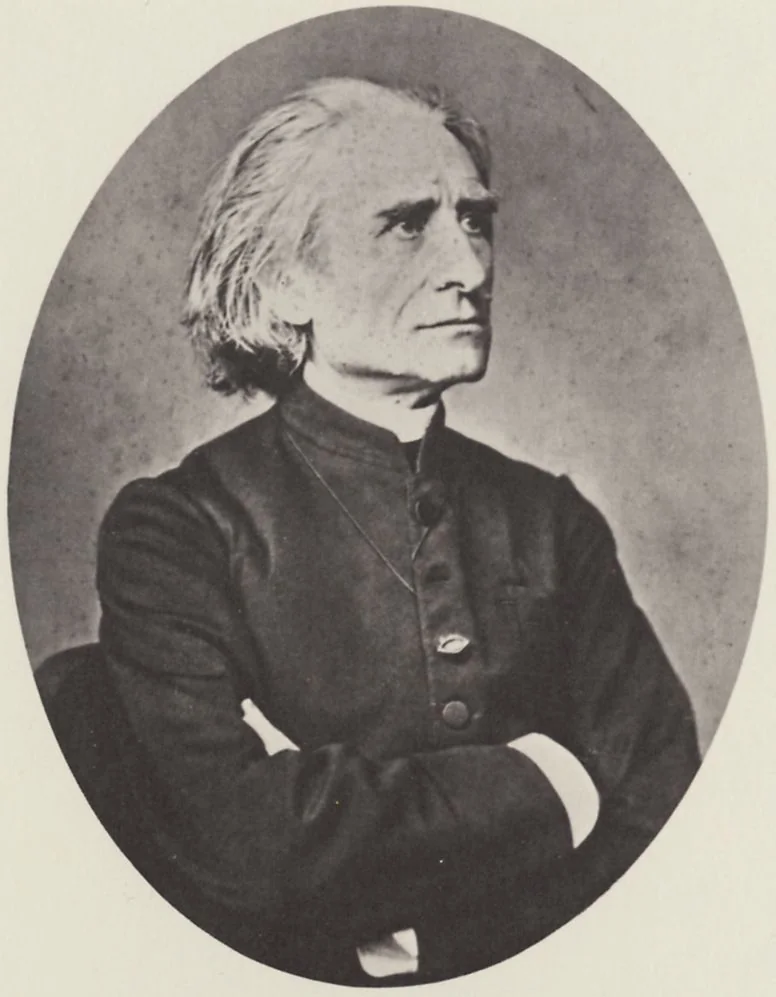
Image from Wikipedia
Image from Wikipedia
Franz Liszt: The Revolutionary of the Piano and Visionary of Romantic Music
An Artist Who Reinvented the Piano and Shaped the Concert Culture of His Time
Franz Liszt was much more than a virtuoso: he was a monumental figure of Romantic music, a composer of extraordinary productivity, a charismatic pianist, conductor, music teacher, and thinker who helped prepare the way for musical modernism. Born in 1811 in Raiding and passing away in 1886 in Bayreuth, he connected the brilliant world of concerts with the radical aspiration to fashion music as a spiritual and emotional art of great depth. His name today stands for stage presence, pianistic boundary-crossing, and artistic curiosity. (deutschegrammophon.com)
Early Years: A Child Prodigy with Remarkable Development Pace
Liszt's musical journey began remarkably early. Although he initially received only sporadic piano lessons, he amazed Vienna at the age of eleven, later also Paris and London, with a technical sovereignty that quickly made him one of the most striking young artists in Europe. Even in his youth, a connection of virtuosity, expressiveness, and artistic discipline formed that would define his entire musical career. (deutschegrammophon.com)
His early fame brought Liszt into contact with the key cultural centers of the 19th century. In Paris and other metropolises, he moved within an intellectual environment that expanded his conception of art and characterized him not only as a pianist but also as a musician with a literary and philosophical horizon. This influence explains why his later creations oscillated so strongly between stage, salon, concert hall, and intellectual program. (britannica.com)
The Breakthrough: Liszt and the Birth of the Piano Virtuoso
Liszt became the epitome of the Romantic piano virtuoso. His concerts were not merely performances but events that captivated the audience with an unprecedented blend of technical brilliance, physical energy, and dramatic intensity. Deutsche Grammophon describes his career as a success story that made him the most successful pianist in music history; at the same time, he remained an artist whose impact extended far beyond mere effect. (deutschegrammophon.com)
What made Liszt special was not just his technique but his attitude toward art. He combined the idea of the virtuoso with a higher cultural aspiration and transformed the concert into a place of almost theatrical musical narration. Thus, he shaped the idea of the modern soloist, who does not merely play but brings an entire artistic world to the stage. (deutschegrammophon.com)
Weimar: Composer, Conductor, and Driving Force of the New German School
In 1848, Liszt became the court conductor in Weimar, a crucial turning point in his career. There, he emerged not only as an interpreter but above all as a promoter of the music of his contemporaries, conducting works by Donizetti, Berlioz, Schumann, Wagner, and Verdi. Simultaneously, he led significant world premieres and established himself as one of the central figures of the musical avant-garde of his time. (deutschegrammophon.com)
In Weimar, Liszt's aesthetic program condensed. He became the most important protagonist of the New German School, as he pursued program music, symphonic form experiments, and new harmonic means with great consistency. In particular, his development of the symphonic poem gave orchestral music a new narrative and formal horizon, significantly influencing the history of instrumental music. (britannica.com)
The Œuvre: A Cosmos of Piano Literature, Orchestral Works, and Arrangements
With more than 1300 works and arrangements, Liszt is one of the most productive composers of the 19th century. A significant portion of his output consists of piano literature, in which he uniquely fused technical innovation, poetic design, and orchestral thinking. Works such as the Transcendental Etudes, the Années de pèlerinage, or his adaptations of themes by other composers exemplify how far Liszt expanded the piano as a medium of expression. (britannica.com)
As an orchestral composer, Liszt also set benchmarks. The symphonic poem became his most important genre innovation and made clear how closely he linked musical form with extra-musical content. His late works, in turn, often described in research and reception as bold, fragmentary, and forward-looking, demonstrate a composer who did not conclude music but opened it toward modernity. (liszt.org)
Style, Sound Language, and Artistic Development
Liszt's style thrives on contrasts: eruptive virtuosity and contemplative condensation, glittering surface and deep harmonic experimentalism. His compositions employ novel formal procedures, wide spans of tension, and a sound language that extends beyond the boundaries of high Romanticism. This mixture of technical daring and emotional intensity made him a defining reference point for later generations of pianists and composers. (deutschegrammophon.com)
His later creative phase is considered particularly interesting because it leaves behind the glory of the virtuoso career and develops a radically concentrated, often solitary musical language. Sources describe this period as one of maturity, melancholy, and artistic reduction, in which Liszt wrote works of astonishing modernity. This is precisely where his rank lies: he was not only the star of the 19th century, but also a pioneer of the 20th century. (liszt.org)
Impact and Cultural Influence to This Day
Liszt's influence extended far beyond his own era. He co-founded the General German Music Association, significantly shaping musical life institutionally, and advocated for the dissemination of new music as a conductor, teacher, and mentor. His authority was based not only on fame but on a rare combination of interpretative brilliance, organizational instinct, and compositional innovation. (deutsche-digitale-bibliothek.de)
Even today, Liszt remains culturally present. The Liszt Center Raiding and the Liszt Festival demonstrate how strongly his legacy continues to live on in the present: with new museum concepts, concert seasons, and programs that make Liszt as a virtuoso, composer, and human being experienceable. The planned and realized events for 2024/25 and 2025/26 highlight that Liszt's music is not museum-bound but continues to attract audiences as a living art. (lisztfestival.at)
Conclusion: Why Franz Liszt Continues to Electrify Today
Franz Liszt remains captivating because he united apparent contradictions: star and thinker, virtuoso and innovator, global success and artistic solitude. His discography in the broader sense, or his body of work, is a panorama of pianistic masterpieces, orchestral experiments, and intellectually charged late works that are still being rediscovered today. Those who listen to Liszt experience not just music but an entire era on the verge of transformation. (britannica.com)
Especially in live performances does Liszt's music unfold its full impact: as a dramatic gesture, as a colorful sound architecture, and as an expression of artistic freedom. His compositions demand interpreters with courage, technique, and vision – and that is precisely why they continue to fascinate on concert stages worldwide. Experiencing Franz Liszt means encountering Romantic music in its boldest, most brilliant, and most modern form. (lisztfestival.at)
Official Channels of Franz Liszt:
- Instagram: No official profile found
- Facebook: No official profile found
- YouTube: No official profile found
- Spotify: No official profile found
- TikTok: No official profile found
Sources:
Upcoming Events
From Shadows to Light - Franz Liszt
BEETHOVEN'S LEGACY – Two Centuries, Two Great Piano Sonatas
Guided Tour: In the Footsteps of Franz Liszt
Welte Concert: Liszt Students Play Liszt