
Gabriele Gysi
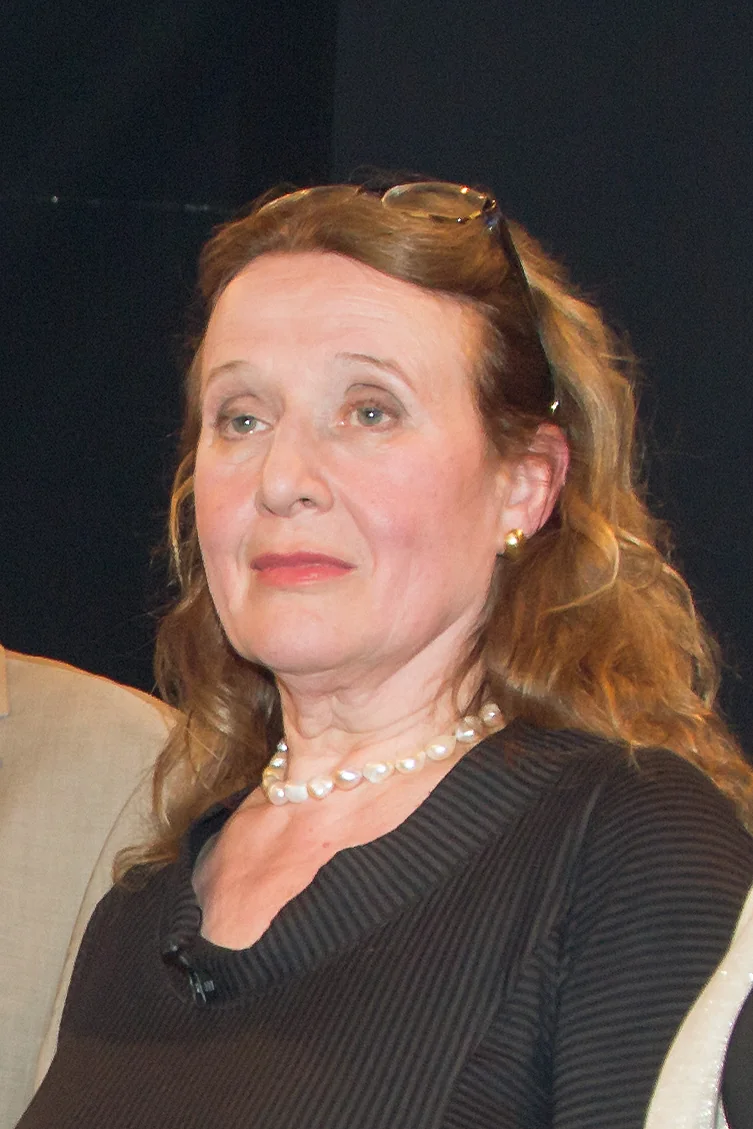
Image from Wikipedia
Image from Wikipedia
Gabriele Gysi – Actress, Director, Thinker: A Life of Art Between Stage, Film, and Contemporary History
A Voice of the Stage, Breathing Germany's History
Gabriele Gysi, born on July 13, 1946, in Berlin, is one of the defining personalities of German-speaking theater and film. Her career in music is nonexistent; her stage is acting – yet her stage presence, artistic development, and dramaturgical style possess that rhythmic precision typically associated with composition and arrangement. As an actress and director, she navigates smoothly between art and society, between East German theater tradition and unified German present. Those who follow her work experience an artist who combines engaged cultural criticism with a fine aesthetic sensibility, using her own biography as a resonance chamber for larger historical contexts.
From the prestigious acting school in East Berlin to the Volksbühne, from film character roles to leading dramaturgy: Gabriele Gysi exemplifies continuity, change, and the persistence of artistic integrity. Her work documents a struggle for truthfulness in performance, language, and staging; her recent readings and discussions further open the dialogue on memory, responsibility, and peace during turbulent times. This portrait traces her biography, career, and discography in the context of an overview of her work in film and theater – focusing on style, cultural influence, and current projects.
Early Years and Education: Background as Artistic Influences
Growing up in Berlin, Gabriele Gysi comes from a politically and culturally shaped family. Her path to the stage led to the State School of Acting in Berlin, where she acquired fundamental techniques: text work, speech training, scenic movement, and the interplay between voice and body. This solid education laid the foundation for her later artistic development, which is reflected in her intense work on roles, clear understanding of characters, and careful composition of figures. The great stages of the GDR, especially the Volksbühne, significantly influenced her early career, where a specific tone was nurtured between political sharpness and formal experimentation.
For her, the experience of working in the East means more than just biographical contextualization. It shaped an aesthetic that does not depict reality naturalistically, but rather structures, contradicts, and reflects it. In this theater culture, Gysi found a school of thought and performance that formed the resonance space for her later understanding of direction and dramaturgy. Concurrently, she worked for several years as a voice actress in radio plays and productions, further honing her sensitivity to text and her sense of auditory nuances.
Breakthrough on Stage: Volksbühne, Ensemble Work, and Directing Experiences
The name Volksbühne stands for ensemble spirit and artistic audacity. Gabriele Gysi performed in this environment before the Wall fell, which recalibrated the forces of language, body, and stage. The rehearsal process here was not merely a craft process, but a dialectical one: analysis, deconstruction, and reconstruction of the material. From this musicality of theater – the precise timing of cues, pauses, and counter-rhythms – emerged a significant stage presence. Additionally, she gained directing experience at venues like the Theater Karl-Marx-Stadt and the Volkstheater Rostock: places that formed a dense network of cultural education in the GDR and where she refined her dramaturgical and directorial styles.
Her work as a director sharpened her eye for structure, the arrangement of a production, and the economy of means: How do you lead an ensemble? How do you balance images, movements, text, and musical elements on stage? In these productions, Gysi's ability to make historical themes and classic texts relevant today was evident, without flattening their poetic substance. This artistic development ultimately led to a leading dramaturgical role at one of the most influential theaters in Germany.
Turnaround, Emigration, and Reorientation: Biographical Breaks and Artistic Continuity
In 1984, Gabriele Gysi left the GDR – a decision that marked a significant shift in her biography and artistry. The systemic change of 1989/90 framed her subsequent career in a now unified German cultural space that represented both opportunity and conflict. This biographical experience continues to resonate in her works: in readings, discussions, and publications that address issues of freedom, rights, responsibility, and memory. The artistic continuity remained unbroken: She continued to work for film and theater while also expanding her profile as a thinker in the public discourse.
In the 2000s, Gysi took on the role of chief dramaturge at the Volksbühne – a pinnacle of her theatrical expertise. Dramaturgy here meant more than just selecting plays; it also encompassed curatorial vision, discourse architecture, and fine-tuning of text and form. This role demanded authority, confidence, and trust in both the ensemble and the audience – competencies she brought from her long-standing practice as an actress and director.
Film Work and Roles: Precise Character Studies Instead of Showboating
Gabriele Gysi also leaves a significant mark in film. Since the 1970s, she has taken on roles that rely less on loud gestures and more on intonation, eye direction, and subtext. Her filmography includes works from the GDR era and the post-reunification period – a continuum that documents her adaptability. From early productions of the 1970s to significant television roles of the 1980s to film contributions in the new millennium, we see an actress who consistently allows character and social context to correspond.
Especially in character roles, she displays that inner dynamism that understands figures not as types but as human beings with histories. Her acting style involves clever reduction, precise timing, and economical gestures. The result is character profiles that stay in memory because they prioritize psychological depth over ostentatious effects. This care in representation signifies an artistic ethic that trusts the audience – while also offering them challenging experiences.
Discography as a Works Overview: Theater Productions, Filmography, Radio Art
Since Gabriele Gysi has not released any music albums, "discography" here serves as a catalog of her roles and productions. This includes theatrical works at significant houses, a series of film and television productions, and numerous radio contributions. Overall, a picture emerges of an artist who has worked in various media for decades – always with an eye on text quality, ensemble performance, and the impact of a piece on its audience. This oeuvre is embedded in the cultural history of both German states and continues to resonate in today's polyphonic cultural scene.
Her involvement in radio plays and readings also plays a significant role. Voice as an instrument, linguistic structure as "arrangement," and the delicate dynamics between the author's words and the interpreter's breath – all this makes radio art a central chapter in her craft. This work shaped her ability to achieve maximum impact with minimal resources and strengthened the precise articulation that underpins her overall work.
Style, Aesthetics, and Artistic Development: Precision, Attitude, Responsibility
In style analysis, the balance between intellectual sharpness and emotional delicacy stands out. Gabriele Gysi employs a style of performance and staging that works with clear form while remaining open to ambivalence. Like in a successful composition, she maintains tension arcs, varies motifs, and uses pauses as a dramaturgical tool. Not a musical composition in the strict sense, but a lively dramaturgy of speaking, silence, and glances – that is her distinctive tone.
Her expertise is reflected in her careful handling of text, her understanding of literary traditions, and her ability to read materials diagnostically. She gains experience in rehearsals, in leadership roles, and in dialogical work with directors and ensembles. Authority arises from the quality of artistic decisions – and from respect for the material. Trustworthiness is established through transparency in work, through her documented biography, and public reflection on art and society.
Cultural Influence: Memory Work, Civil Society, and the Art of Conversation
Gabriele Gysi is more than an actress in the narrow sense: she nurtures a culture of conversation that articulates the wounds and wonders of German history. In readings and public dialogues, she circles around topics such as freedom, peace, responsibility, and the authority of narratives. These appearances are not side notes but an integral part of her artistic development: she translates biographical experiences into social resonance and makes culture as a space for reflection tangible.
In doing so, she contributes to cultural self-understanding – not in a didactic way but invitingly. Her influence is evident where art is understood as a practice of civility: a way to endure ambiguities, shift perspectives, and articulate conflicts. Particularly in a polarized present, this approach gains relevance. Her voice reminds us that aesthetic form and democratic culture are not opposites but mutually dependent.
Current Projects 2024–2026: Book, Readings, Public Conversations
Recently, Gabriele Gysi has expanded her public work through a book that intertwines memory politics and personal experiences. Accompanying this are readings, discussions, and dialogues that encourage the audience to form their independent judgments. Several dates in the year 2025 and beyond in 2026 indicate a continued presence in the literary and cultural space. Her stage presence shifts from the classic acting role to moderated readings and curated conversations – a natural continuation of her dramaturgical competence.
Furthermore, she has participated in intensive conversation formats addressing geopolitical and cultural topics. These formats attest to how consistently she cultivates the art of dialogue and how she translates her experiences from theater and film into public discourse. The connection between artistic ethos and civic consciousness is what makes these recent projects particularly appealing.
Assessment and Reception: Critique, Discourse, Long-Term Impact
The critical reception of her work appreciates the accuracy of representation and the integrity of her stance. At theaters, in films, and during readings, a reliable standard of quality is evident: no sensationalism, but coherent dramaturgy, clear accents, and respect for text and audience. Her ability to make political and cultural contexts comprehensible, without flattening complexity, is also recognized. This blend of expertise and accessibility extends her authority far beyond the theater stage.
Long-term, Gabriele Gysi acts as a cultural translator between epochs and perspectives. Her artistic biography connects GDR experiences with contemporary unified Germany, ensemble culture with public discourse. In an era where attention spans are shrinking, she insists on the value of nuanced consideration – making it palpable. This is artistic responsibility: to counter quick judgments with careful observation.
Highlights and Milestones of Her Work: Theater, Film, Dramaturgy
Milestones include her formative years at the Volksbühne, productions at significant theaters, and a filmography that consistently demonstrates quality over decades. Added to this is her role as chief dramaturge: a position that unites artistic direction, institutional trust, and program responsibility. Altogether, the profile of an artist emerges who has worked deeply at all intersections of theater operations – performance, direction, dramaturgy.
Noteworthy is also the continuity in her public presence: readings, discussion series, interviews. These activities are not mere byproducts but a part of a stance that integrates art and society. Those who examine her work recognize an ongoing composition, where each section – from early acting school to current conversations – appears as a phrase of a larger whole.
Conclusion: Why Gabriele Gysi Matters Today
Gabriele Gysi combines the precision of acting with the breadth of thought. Her artistic development demonstrates how to weave role, text, and contemporary history into a coherent dramaturgy. Experience from ensemble work, directing, and dramaturgy makes her an authority in German-speaking theater – and her readings and discussions open spaces for debate and understanding. In a culture often reduced to slogans, she stands for accuracy, compassion, and the courage for nuanced judgment.
Those who experience her live encounter an art of presence: not a spectacle, but a culmination; not pathos, but attitude. It is precisely for this reason that it is worthwhile to attend her readings, discussions, and stage appearances. The invitation is to listen, to think along, to disagree – and to explore the resonance space between art and society together.
Official Channels of Gabriele Gysi:
- Instagram: No official profile found
- Facebook: No official profile found
- YouTube: No official profile found
- Spotify: No official profile found
- TikTok: No official profile found