
İbrahim Arslan
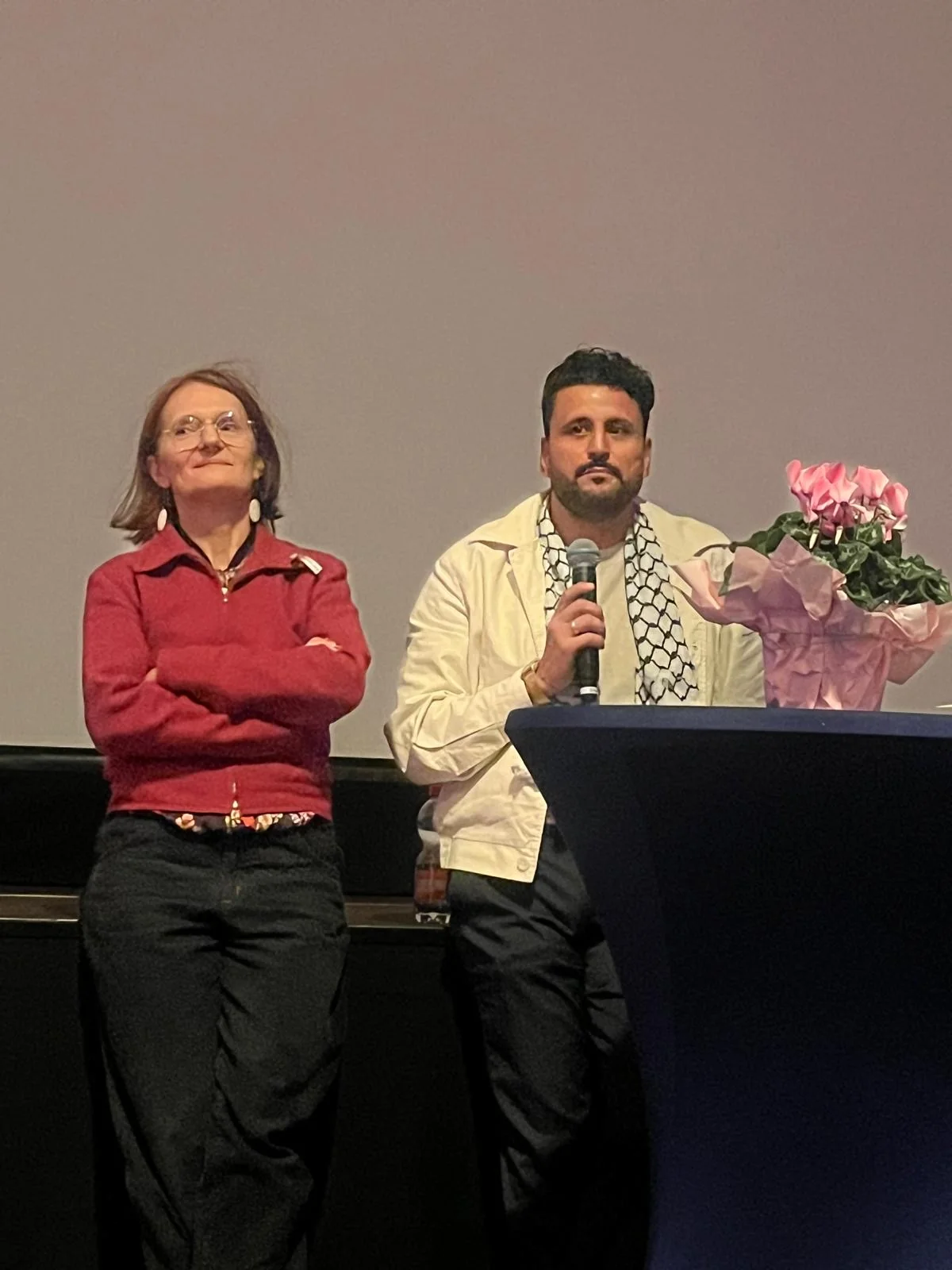
Image from Wikipedia
Image from Wikipedia
İbrahim Arslan: Voice of Remembrance, Symbol Against Forgetting
A Life Between Survival, Responsibility, and Public Memory Culture
İbrahim Arslan is one of the most prominent voices in German memory work. Born in 1985, he survived the arson attack in Mölln in 1992 as a child, in which three family members died and his life was forever shaped. From this existential experience, he developed a publicly visible role as an activist, political educator, and tireless advocate against racism and right-wing violence.
His biography does not represent a classical artistic career but rather the power of speaking, of testifying, and of political action. Arslan has transformed personal trauma into a form of public responsibility, embedding his perspective in schools, at conferences, and during memorial events. This is where his societal significance lies: he transforms memory into presence, biography into stance, and pain into enlightenment.
The Biography: From Survival to Public Engagement
The arson attack in Mölln in November 1992 marked the deepest cut in Arslan's life. He was severely injured at the time but lost his grandmother Bahide Arslan, his sister Yeliz Arslan, and his cousin Ayşe Yılmaz. This familial catastrophe is at the core of his later work, where he speaks not only as someone affected but as someone who keeps the consequences of racist violence visible over decades.
In 2000, he left the house of the attack with his family, thus also leaving the city of Mölln. Later, it became known that the city administration had archived numerous letters of solidarity to the survivors without the family being aware of it. These letters only became the starting point for renewed engagement with the attack, its aftermath, and the question of how society deals with the voices of those affected many years later.
Since 2007, Arslan has been active in anti-racism work. He speaks nationwide as a political education speaker and shares the perspective of those affected by right-wing violence. His work connects personal experience with historical context and makes it clear that memory is not merely retrospective but represents a democratic practice for the present.
“Möllner Speech in Exile”: Memory as Political Practice
A central project of his work is the event "Gedenken Mölln 1992 – reclaim and remember," organized since 2012. Together with his family and friends, Arslan developed an alternative form to the official commemoration. The focus is on the surviving families, their relatives, and the recognition of their perspective as the starting point for any serious memory work.
Since 2013, he has also been organizing the "Möllner Speech in Exile." This format has evolved into a new culture of remembrance that actively involves relatives of racist murders and attacks. Arslan's approach demonstrates how political education, civil society engagement, and collective memory can intersect when those affected demand the right to interpret their own history.
It is precisely in this persistent practice that the authority of his voice lies. Arslan does not speak abstractly about racism but from the long experience of a life shaped by right-wing violence. His public work conveys a clear message: Victims must not be pushed to the margins of the narrative but belong at its center.
The Documentary “The Möllner Letters” and the Return of a Repressed History
In 2025, the documentary “The Möllner Letters” premiered at the Berlinale. The film follows Arslan's family as they grapple with the rediscovered letters of solidarity and brings the traumatic history of the attack into a new present. The work emphasizes how much Arslan has become an important public figure in his search for memory, justice, and visibility.
The film also shows that Arslan's work goes far beyond personal processing. It opens up a broader view of German memory culture, highlighting state and societal shortcomings and the question of which voices are heard and which remain invisible for a long time. In this context, Arslan is perceived not only as someone affected but as a catalyst for changed memorial practices.
The reception of this project illustrates how strongly his story impacts cultural debates. Arslan represents a form of remembrance that remains uncomfortable because it names contradictions and does not reduce the victims of right-wing violence to symbolic gestures. This is what gives his biography an extraordinary social and moral depth.
Public Impact and Cultural Influence
Arslan's influence extends into educational work, political culture, and anti-racist practice. As a speaker at schools and events, he not only conveys knowledge about the Mölln arson attack but also about the continuities of right-wing violence in Germany. His work creates spaces where those affected become visible as acting subjects rather than mere objects of sympathy.
His stance has received broad recognition, as evidenced by several awards. In 2017, he was honored by the Alliance for Democracy and Tolerance as an Ambassador for Democracy and Tolerance. In 2023, he received the Human Rights Award from Pro Asyl and a commendation from Gegen Vergessen – Für Demokratie e.V., further underscoring his role as a formative voice in the struggle against racism.
Culturally, Arslan's work is significant as it fills a gap that has long existed in the German public. He reminds us that remembrance is not neutral, but always a matter of power, perspective, and responsibility. His biography thus exemplifies a generation of those affected who have taken the narrative of right-wing violence into their own hands.
Context: Why İbrahim Arslan is so Important Today
İbrahim Arslan is not a figure of quick applause but a voice of lasting relevance. His commitment connects personal tragedy with political education, historical experience with current enlightenment, and individual memory with collective responsibility. This is where the strength of his public presence lies.
Anyone engaging with him does not encounter a classical artist but a culturally and politically relevant contemporary witness and activist who has redefined the form of public narration. Arslan's work shows that memory is not completed but must be continuously earned anew. This makes him one of the most important voices in the German-speaking discourse on racism, remembrance, and democratic stance.
Conclusion: A Life that Keeps Memory in Motion
İbrahim Arslan embodies courage, dignity, and the power to transform violence into an unmistakable voice of resistance. His story is painful yet inspiring because it shows how personal experience can lead to social responsibility. What is especially fascinating about him is this mix of vulnerability and steadfastness, of memory and political clarity.
Those who experience Arslan's work live an intense form of testimony that transcends an ordinary reading or speech. His presence makes visible why memory culture must remain alive. Experiencing him means understanding a central part of contemporary German history in its human depth.
Official Channels of İbrahim Arslan:
- Instagram: no official profile found
- Facebook: no official profile found
- YouTube: no official profile found
- Spotify: no official profile found
- TikTok: no official profile found