
Jesse Davis
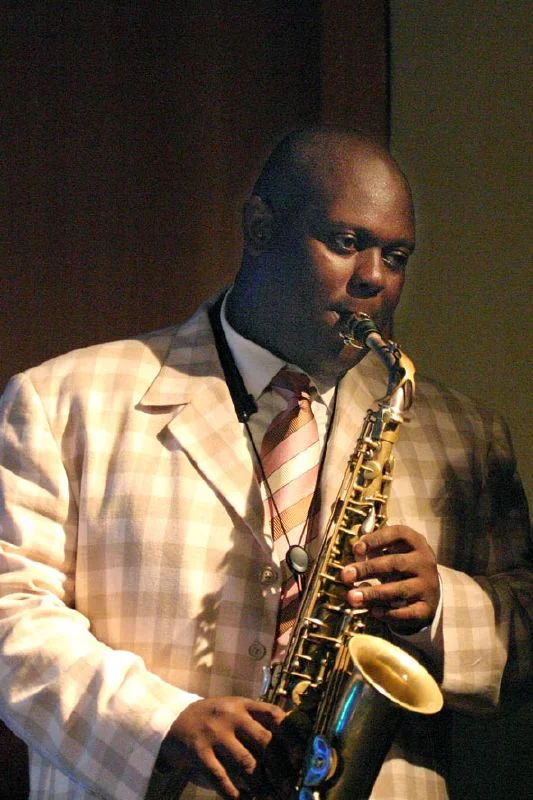
Image from Wikipedia
Image from Wikipedia
Jesse Davis – The New Orleans Alto Saxophonist with Bebop's Deep Tone and Modern Swing Sensibility
An Artist Portrait Between Tradition, Expressiveness, and Unbroken Joy of Playing
Jesse Davis is one of those jazz musicians whose name is spoken with respect and enthusiasm, especially among connoisseurs: an alto saxophonist from New Orleans, born on November 9, 1965, shaped by the city of jazz, by Ellis Marsalis, and by a musical language that combines bebop, blues, and the warm melodic narrative power of mainstream jazz. His career stands for substance over effect, for a deep anchoring in tradition, and for a personal voice that has persevered over decades. ([en.wikipedia.org](https://en.wikipedia.org/wiki/Jesse_Davis_%28saxophonist%29))
Biographical Roots: New Orleans as a Musical Home
The biography of Jesse Davis begins in New Orleans, a city where musical origin is never just origin but a stance. He studied at the New Orleans Center for Creative Arts with Ellis Marsalis, a decisive formative figure in his development, and later continued his education at Northeastern Illinois University. Early on, Davis combined technical discipline with an instinctive understanding of groove, phrasing, and melodic economy. ([en.wikipedia.org](https://en.wikipedia.org/wiki/Jesse_Davis_%28saxophonist%29))
The environment from which Davis emerged was one of the most vibrant jazz scenes in the USA. The Wikipedia biography refers to his rise as a "productive jazz career" and notes eight albums for Concord Jazz as well as collaborations with Jack McDuff and Illinois Jacquet. His recognition as "Most Outstanding Musician" by DownBeat in 1989 further underscores how early his artistic quality was perceived. ([en.wikipedia.org](https://en.wikipedia.org/wiki/Jesse_Davis_%28saxophonist%29))
The Breakthrough: A Saxophonist with a Clear Voice
Jesse Davis gained international recognition primarily as a musician who interprets the legacy of Cannonball Adderley and Charlie Parker not as something museum-like but as a vibrant continuation. The Washington Post described him in 1998 as the one who carries on Adderley's legacy most convincingly and praised his robust, swinging approach to the alto saxophone sound. This classification explains much about Davis's position in jazz: not avant-garde for the sake of provocation, but music that updates and emotionally opens up tradition. ([washingtonpost.com](https://www.washingtonpost.com/archive/lifestyle/1998/05/08/jesse-davis-first-insight/3e2e27f6-6135-4ada-9c05-f1663b2a6b85/))
His releases from the early 1990s also reflect this attitude. Titles like Horn of Passion, As We Speak, Young at Art, High Standards, and From Within showcase an artist who early on established himself with a strong band culture, fluid improvisation, and high-quality studio work. Notably, he consistently collaborated with renowned fellow musicians, including Mulgrew Miller, Brad Mehldau, Nicholas Payton, Ron Carter, and Lewis Nash. ([en.wikipedia.org](https://en.wikipedia.org/wiki/Jesse_Davis_%28saxophonist%29))
Musical Development: Between Bebop, Blues, and New Orleans Identity
Jesse Davis’s playing is often described through his tone: warm, round, powerful, and at the same time flexible enough not to lose contour in fast lines. The Bandcamp description of Reflections emphasizes his grounding in the Parker tradition and names Sonny Stitt and Cannonball Adderley as important references. It is precisely this lineage that explains why Davis's improvisations always retain a sung quality, even when the harmonic movement becomes more complex. ([jessedavislive.bandcamp.com](https://jessedavislive.bandcamp.com/))
Equally crucial is his connection to place. On Reflections, New Orleans is not used as folklore but as a living culture of memory: The musician speaks of the streets of his childhood, of familial loss, and of pieces that arise from personal experience. This is where the strength of Davis's art lies: His compositions carry narrative energy without losing the swing, and his solos often evolve from small melodic seeds into expansive, logically built arcs. ([jessedavislive.bandcamp.com](https://jessedavislive.bandcamp.com/))
Discography: Key Milestones as Leader and Sideman
As a bandleader, Jesse Davis has built an impressive, stylistically clear discography. The early Concord phase includes Horn of Passion (1991), As We Speak (1992), Young at Art (1993), High Standards (1994), From Within (1996), First Insight (1997), and Second Nature (2000), followed later by The Set-Up (2002) and Live at Smalls Jazz Club (2023). This list of works shows continuity: Davis never saw the album merely as a collection of tracks, but as a forum for interaction, repertoire development, and stylistic self-placement. ([en.wikipedia.org](https://en.wikipedia.org/wiki/Jesse_Davis_%28saxophonist%29))
The critically perhaps most pointed early reception came from Young at Art, which was classified as a "fine example of high-quality bebop," while also noting a closeness to Cannonball Adderley. Such reactions are enlightening as they describe Davis's artistic balance: He plays with historical knowledge but without nostalgic stasis; he interweaves standards, original compositions, and lyrical statements into a form that sheds new light on classic jazz values. ([en.wikipedia.org](https://en.wikipedia.org/wiki/Young_at_Art?utm_source=openai))
Davis also expanded his profile as a sideman. His discography features recordings with Roy Hargrove, Charles Tolliver, Cedar Walton, Gerald Wilson, and the ensemble The Jazz Networks. These collaborations demonstrate how much he was valued as a reliable voice of modern straight-ahead jazz in various contexts. It is particularly in these settings that his ability to fill solos with structure, tension, and melodic memorability becomes evident. ([en.wikipedia.org](https://en.wikipedia.org/wiki/Jesse_Davis_%28saxophonist%29))
Critical Reception: Recognition by the Press and Jazz Scene
The press early recognized Jesse Davis as a serious bearer of the jazz tradition. Geoffrey Himes wrote in the Washington Post that no one carries on Adderley's legacy more effectively than Davis; a statement that says much about his status in the 1990s. This assessment points not only to virtuosity but to an aesthetic stance: Davis plays rhythmically pointed, blues-infused, and harmonically alert—exactly in that intersection which has often been awarded to great alto saxophonists. ([washingtonpost.com](https://www.washingtonpost.com/archive/lifestyle/1998/05/08/jesse-davis-first-insight/3e2e27f6-6135-4ada-9c05-f1663b2a6b85/))
The English Wikipedia also mentions the DownBeat award in 1989 and documents his eight Concord albums as a manifestation of a productive career. Along with recurring presence in specialized media and concert reviews, this paints the picture of a musician who operates not through hype but through substance and consistency. This is what makes his authority in jazz credible. ([en.wikipedia.org](https://en.wikipedia.org/wiki/Jesse_Davis_%28saxophonist%29))
Current Projects: New Recordings and Renewed Presence in the Jazz Scene
In the most recent phase, Jesse Davis remains active and present. The Bandcamp album Reflections was released on April 3, 2026, and documents Davis in a quartet with Spike Wilner, John Webber, and Lewis Nash. The recording took place on March 2, 2025, in Long Island City, New York, exemplifying an artist who works with a clear signature in the current jazz scene. ([jessedavislive.bandcamp.com](https://jessedavislive.bandcamp.com/))
Even the list of documented album locations makes it clear that Davis remains productive: Reflections and Live at Small’s Jazz Club mark a new, live, and studio-oriented presence in his work. Additionally, a concert report from Stuttgart in 2024 has been noted in the jazz press, highlighting his ongoing international live presence. ([jessedavislive.bandcamp.com](https://jessedavislive.bandcamp.com/))
Artistic Significance: Tradition, Personality, and Stage Presence
Jesse Davis is a musician whose significance is revealed not in superlatives but in the consistency of his actions. His stage presence thrives on concentration, inner calm, and a tone that never veers into haste, even in fast passages. Especially in modern jazz, where technical superiority often sounds louder than musical narration, this form of maturity holds special value. ([jessedavislive.bandcamp.com](https://jessedavislive.bandcamp.com/))
His art shows how alive the line from New Orleans through bebop and hard bop to the present remains. Davis embodies a jazz that brings knowledge, experience, and feeling together: compositionally solid, improvisationally free, and historically aware. Those who listen to him don’t just experience an excellent alto saxophone but a musical personality that naturally connects the past and present. ([jessedavislive.bandcamp.com](https://jessedavislive.bandcamp.com/))
Conclusion: A Jazz Musician with Substance, Elegance, and True Depth
Jesse Davis remains intriguing because he does not chase trends but maintains his grounded jazz language. His playing carries the signature of New Orleans, the discipline of the great bebop line, and the warmth of a musician who takes every phrase seriously. For those seeking jazz with character, melodic intelligence, and stylistic class, they find in him an artist of lasting weight. ([jessedavislive.bandcamp.com](https://jessedavislive.bandcamp.com/))
Those who experience Jesse Davis live hear no demonstrative effect but a matured, communicative jazz with soul and structural awareness. This is where his fascination lies: in the ability to make tradition present. A concert by this saxophonist remains an event for all who wish to know how vibrant classic jazz can sound today. ([jessedavislive.bandcamp.com](https://jessedavislive.bandcamp.com/))
Official Channels of Jesse Davis:
- Instagram: No official profile found
- Facebook: No official profile found
- YouTube: No official profile found
- Spotify: No official profile found
- TikTok: No official profile found