
Julia Friedrichs
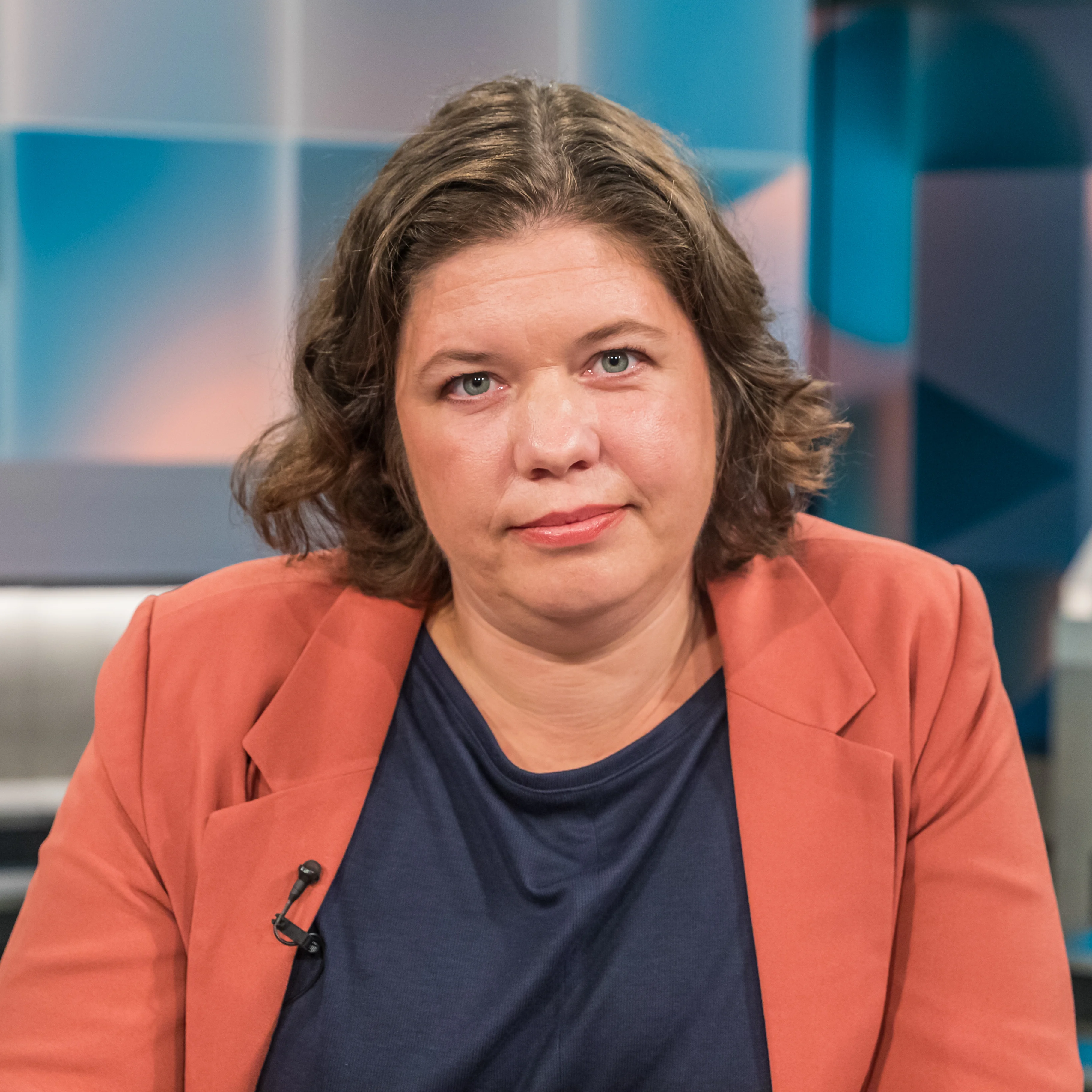
Image from Wikipedia
Image from Wikipedia
Julia Friedrichs: Reporter, Author, and One of the Most Precise Voices of Our Time
A Journalistic Career with Integrity, Observational Skills, and Cultural Relevance
Julia Friedrichs, born on December 15, 1979, in Gronau/Westfalen, is among the most prominent German journalists and authors of her generation. She works as a reporter and filmmaker, moving with great confidence between print, documentary, and non-fiction. Her topics revolve around power, inequality, ownership, labor, and social mobility. ([de.wikipedia.org](https://de.wikipedia.org/wiki/Julia_Friedrichs?utm_source=openai))
Her public impact derives from a rare blend of analytical sharpness and narrative closeness. Friedrichs enters environments and institutions that often remain isolated, making their dynamics accessible to a broad audience. This is precisely the strength of her journalistic style: she combines research with a clear cultural perspective. ([faz.net](https://www.faz.net/aktuell/feuilleton/buecher/sachbuch/julia-friedrichs-ideale-abseits-von-bequemen-wegen-11539137.html?utm_source=openai))
Biography: From Westfalen to the Republic of Big Questions
The biographical foundation of her work is quickly outlined, yet her impact is far-reaching. Growing up in North Rhine-Westphalia, Julia Friedrichs developed an early interest in social structures, power relations, and the question of how people in Germany live, work, and acquire wealth. The basic Wikipedia data and her own website identify her as a German journalist and author with a clear journalistic identity. ([de.wikipedia.org](https://de.wikipedia.org/wiki/Julia_Friedrichs?utm_source=openai))
She describes her self-understanding as an author, filmmaker, and journalist, primarily working for ZEIT, ARD, and ZDF. This triple role shapes her artistic development in a broader sense: Friedrichs thinks about topics not just as text but also as images, montages, and documentary narratives. This results in an unusually dense, multimedia form of modern non-fiction journalism. ([juliafriedrichs.de](https://www.juliafriedrichs.de/?utm_source=openai))
Career: Between Reporting, Film, and Non-Fiction
Friedrichs became known for reports that intervened where social order is negotiated: in elites, inheritance systems, family wealth, and work environments. FAZ described her specialty early on as entering areas of life and institutions that typically remain inaccessible. This observation strikes at the core of her career: Friedrichs works with closeness without relinquishing distance. ([faz.net](https://www.faz.net/aktuell/feuilleton/buecher/sachbuch/julia-friedrichs-ideale-abseits-von-bequemen-wegen-11539137.html?utm_source=openai))
As a filmmaker, she has also developed a distinctive profile. On her website, she cites productions like “Geheimsache Katar” and “The Truth About Our Agriculture” for ZDF; prior to that, she participated in the docupy films “Neuland,” “Heimatland,” and “Ungleichland.” These works demonstrate a consistent expansion of her repertoire: research becomes documentation, analysis transforms into narrative condensation. ([juliafriedrichs.de](https://www.juliafriedrichs.de/?utm_source=openai))
Additionally, she has an impressive list of awards. Friedrichs received, among others, the Grimme Prize, and in 2022, Medium Magazine named her Journalist of the Year in the category of reporting. Such honors attest not only to her reach but also to her authority in the field of investigative and socially critical journalism. ([juliafriedrichs.de](https://www.juliafriedrichs.de/?utm_source=openai))
Non-Fiction as Analytical Instruments: From Elite to Working Class
Julia Friedrichs is also a significant non-fiction author. Among her most notable books are “Gestatten: Elite,” “Wir Erben – What Money Does to People,” “User Manual for Werder Bremen,” and “Working Class.” Her books address social background, ownership, performance promises, and the reality of a society where economic inequality is becoming increasingly visible. ([juliafriedrichs.de](https://www.juliafriedrichs.de/?utm_source=openai))
Especially “Gestatten: Elite” marked an early bestseller success and made her perspective on power and privileges widely visible. Later works like “Wir Erben” and “Working Class” shifted the focus even more toward wealth distribution, class, and the conditions of living in Germany. In her journalistic narrative, these books become societal anatomies with a high degree of recognizability. ([juliafriedrichs.de](https://www.juliafriedrichs.de/?utm_source=openai))
The reception underscores this impact. The Goethe-Institut emphasized that “Working Class” seeks answers to the new world of work while also exposing blind spots. The commentary shows that Friedrichs not only describes but also sparks debates and places complex social realities within a larger cultural context. ([goethe.de](https://www.goethe.de/prj/jad/de/the/man/22289724.html?utm_source=openai))
Current Projects and Public Presence
In the years 2024 and 2025, Julia Friedrichs remained visible and relevant. On her official website, she cites her recent book “Working Class” and simultaneously refers to new film projects, including productions from ARD, ZDF, and WDR. This continuity makes it clear that she doesn’t focus solely on individual topics but works from a long-term thematic line. ([juliafriedrichs.de](https://www.juliafriedrichs.de/?utm_source=openai))
A particularly current focus is “Crazy Rich: The Secret World of the Super-Rich.” Berliner Zeitung reported on the book and its research into wealth, influence, and social inequality; the work was also picked up by Deutschlandfunk Kultur. With this, Friedrichs remains at the center of the public debate on wealth, power, and social tensions. ([berliner-zeitung.de](https://www.berliner-zeitung.de/panorama/julia-friedrichs-neues-buch-crazy-rich-ueber-superreiche-viele-vermoegende-fuehlen-sich-ungerecht-behandelt-li.2255055?utm_source=openai))
This timeliness is part of her journalistic brand. Friedrichs does not engage with fleeting trends but with themes of structural significance. This is precisely why her books and films do not appear as snapshots, but as precise measurements of a present that changes rapidly while remaining surprisingly stable in its inequality. ([juliafriedrichs.de](https://www.juliafriedrichs.de/?utm_source=openai))
Style, Method, and Cultural Influence
Friedrichs’ style combines research, empathy, and clear language. Her texts and films thrive on the ability to translate complex economic and social processes into concrete life stories. This creates a form of narrative journalism that does not instruct but makes visible. ([faz.net](https://www.faz.net/aktuell/feuilleton/buecher/sachbuch/julia-friedrichs-ideale-abseits-von-bequemen-wegen-11539137.html?utm_source=openai))
Her cultural influence lies in the consistency with which she raises questions of class, wealth, and social mobility. Whether elites, heirs, or the working world: Friedrichs does not provide simple answers but offers precise observations about systems in which background and opportunity distribution remain closely intertwined. This perspective makes her work highly relevant for readers, viewers, and debate cultures. ([goethe.de](https://www.goethe.de/prj/jad/de/the/man/22289724.html?utm_source=openai))
The reception in the press also confirms this role. FAZ emphasized her ability to penetrate closed spaces; other media described her books as analytical and socially insightful. Thus, the profile of an author emerges whose authority grows not from volume but from precision, topic selection, and the persuasive power of her research. ([faz.net](https://www.faz.net/aktuell/feuilleton/buecher/sachbuch/julia-friedrichs-ideale-abseits-von-bequemen-wegen-11539137.html?utm_source=openai))
Discography and Social Media: No Music, but a Clear Journalistic Trace
As Julia Friedrichs is not a musician, there is no discography in the musical sense. Instead, her bibliographic and film work constitutes the central catalog of her work: books, reports, and documentaries replace albums and singles. This gives rise to the substantial depth of her oeuvre. ([juliafriedrichs.de](https://www.juliafriedrichs.de/?utm_source=openai))
There was also no clearly verified official Instagram, Facebook, YouTube, Spotify, or TikTok account found in the web search for her official social media channels. Thus, based on the available sources, no official social media profiles are listed. Consequently, there is no section on “Fan Voices.” ([juliafriedrichs.de](https://www.juliafriedrichs.de/?utm_source=openai))
Conclusion: A Journalist Who Explains Germany and Makes Contradictions Visible
Julia Friedrichs is compelling because she does not treat the big social questions abstractly but translates them into concrete people, spaces, and power structures. Her books and films combine journalistic experience, professional precision, and a clear stance toward inequality and privileges. Those wanting to understand how Germany discusses work, inheritance, elite, and wealth will find one of the country's sharpest voices in her work. ([juliafriedrichs.de](https://www.juliafriedrichs.de/?utm_source=openai))
That is precisely why it is worthwhile to closely follow her publications, interviews, and documentaries. Julia Friedrichs remains an author who not only accompanies debates but shapes them. Her work invites closer examination — and listening where social reality often speaks most clearly. ([faz.net](https://www.faz.net/aktuell/feuilleton/buecher/sachbuch/julia-friedrichs-ideale-abseits-von-bequemen-wegen-11539137.html?utm_source=openai))
Official Channels of Julia Friedrichs:
- Instagram: No official profile found
- Facebook: No official profile found
- YouTube: No official profile found
- Spotify: No official profile found
- TikTok: No official profile found
Sources:
- juliafriedrichs.de – Official Website of Julia Friedrichs
- juliafriedrichs.de – Contact / Imprint
- Wikipedia – Julia Friedrichs
- Wikipedia – Biographical Basic Data and Work References
- FAZ – Julia Friedrichs: “Ideals: Away from Comfortable Paths”
- Goethe-Institut – “What Remains of the Middle Class”
- Tagesspiegel – Non-Fiction about Elite and Ascent
- Berliner Zeitung – “Crazy Rich” by Julia Friedrichs
- Deutschlandfunk Kultur – “Crazy Rich. The Secret World of the Super-Rich”
- Wikipedia: Image and Text Source