
Ludwig Thoma
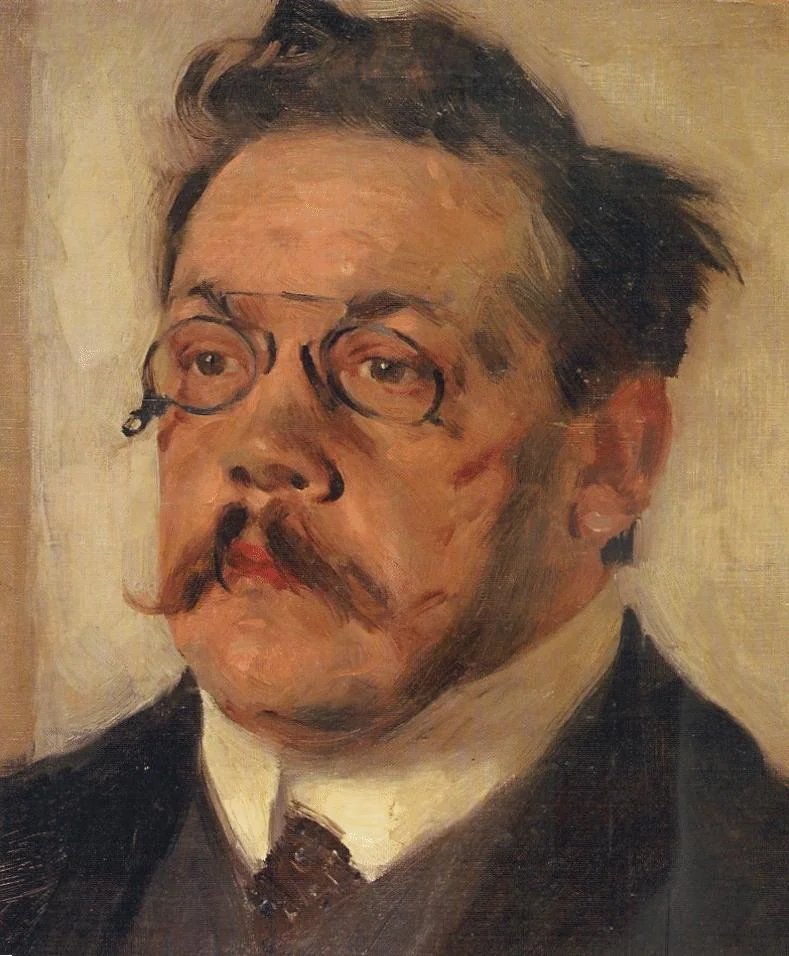
Image from Wikipedia
Image from Wikipedia
Ludwig Thoma – Satirist, Chronicler of Old Bavaria, and Controversial Voice of His Time
An Author Between Humor and Severity: How Ludwig Thoma Shaped Bavarian Everyday Life – and Why His Later Work Must Be Read Critically
Ludwig Thoma (1867–1921) stands as one of the most emblematic writers of the life world in Old Bavaria around 1900. His tales of naughty boys, rural novels, and folk-inspired comedies have deeply penetrated the cultural memory. With a keen eye, he dissected bureaucratic offices, clergy, and small-town morality, using dialect, punchlines, and precise depictions of milieu. However, the literary career of his words – his presence as a publicist, his artistic evolution from humorous realist to sharply polemic commentator – has a dark late phase: national conservative and anti-Semitic incendiary articles, which have prompted a fundamental reevaluation since the late 1980s. This portrait contextualizes his work, biography, cultural influence, and critical reception – clearly distinguishing literary achievement from political missteps.
Biographical Beginnings: Oberammergau, Forsthaus Vorderriß, and the School of Life
Born on January 21, 1867, in Oberammergau, Thoma grew up amidst the forest house, tavern, and boarding schools. Early on, he was shaped by agrarian work environments, the geographical constraints, but also the linguistic richness of the Alpine foothills. After a tumultuous school experience, he graduated from high school in 1886. This early socialization explains the authenticity of his characters' speech, the rhythmic placement of punchlines, and the ability to vividly arrange rural economy, village community, and bureaucratic authority. His experiences with teachers, clergymen, and authorities later provided dramatic material for comedy, prose sketches, and satire.
From Forestry Studies to Justice – and Onward to the Pen
Thoma's artistic development followed a winding path: studies in forestry and law in Aschaffenburg, Munich, and Erlangen, followed by years as a trainee and lawyer. The legal training – factual analysis, rhetorical condensation, succinct pleas – influenced the composition and arrangement of his prose texts. However, his desire for literature grew in the law firm. Around 1899, he was drawn irreversibly to journalism: The satirical weekly Simplicissimus became the catalyst, the feuilleton the stage, and the courtroom the backdrop for character psychology and conflict management.
Simplicissimus, Satire, and Breakthrough: The Art of the Bavarian Tone
As an author and at times chief editor of Simplicissimus, Thoma found his distinctive voice. He distilled everyday language into literary form, combined dialect color with dramatic economy, and worked with contrast and recurrence. Tales of naughty boys (1905) became a classic of Bavarian narrative prose, while the comedy Moral (1908/1909) served as a pointed unmasking of provincial morality rhetoric. The Munich Man in Heaven (1911) perfected comic timing: conceived musically in refrains, motivic variations, pauses, and surprising “cadence” humor. These works established him as a chronicler of Old Bavaria, portraying social roles – officials, tavern keepers, clergy, petty bourgeoisie – with a fine sensibility for language registers and group dynamics.
Diverse Genres and the "Discography" of Words: Prose Collections, Villager Tales, Theater
Thoma’s “discography” in the metaphorical sense encompasses novels, story cycles, and stage works. Key titles include The Local Railway (1901), Tales of Naughty Boys (1905), Andreas Vöst (1906), Aunt Frieda (1907), Moral (1909), A Munich Man in Heaven (1911), Jozef Filser's Correspondence (1912), Altaich (1918), Munich Women (1919), and The Jagerloisl (1921). As composer of his materials, he orchestrated milieus: village and office, local pub and sacristy, train compartment and courtroom. His dramaturgy employs clear guiding motifs – bureaucratic arrogance, hypocrisy, class habitus – and uses precisely set tension arcs leading to pointed conclusions. Success was evident in numerous later film adaptations and audio productions that preserved the “sound colors” of his idiom.
Style, Form, and Technical Finesse: Dialect as Score
Thoma's prose thrives on rhythmic language, on the interplay between narrative tone and character speech, on the blending of seriousness and grotesqueness. The dialect serves as an “instrument group” within a polyphonic arrangement; it provides authenticity, social marking, and comedic potential. Compositional-wise, Thoma utilizes clear structural forms: three-step punchlines, logic of escalation, and dramatic counterpoints. His stage works draw on traditional elements of folk theater – type comedy, situational comedy, direct address – and update them through sharply crafted dialogues that function like call-and-response patterns. In his rural novels, he intertwines milieu study and morality satire, generating emotional resonance through dense scene management.
War, Journalism, and Radicalization: The Problematic Late Phase
With World War I, Thoma's stance shifted: the left-liberal skeptic became a national conservative polemicist. In the final years of his life, he wrote numerous, some anonymous, leading articles for the Miesbacher Anzeiger, which were anti-democratic and anti-Semitic in nature. These texts – fully edited and attributed only since the 1980s/1990s – significantly shaped the critical rereading of his entire works. Cities and institutions reacted: a medal named after him was discontinued, and debates arose over honors, school names, and places of representation. His literary authority remains, but the historical findings demand a clear distance from the incendiary rhetoric of his late work.
Adaptations, Media History, and the "Sound" of Reception
Thoma's works have enjoyed a lasting stage and screen career: films from the 1920s to the 1970s, television adaptations, and cartoons (A Munich Man in Heaven). In audio dramas and reading versions – by publishers and later also in audio editions – the “sound” of his prose asserted itself: the alternation between narrator's voice and dialect, the precise timing of punchlines. This transferability explains the popularity in education, on amateur stages, and at local theaters – a cultural influence that extends far beyond Bavaria. At the same time, the audiovisual presence led to clichéd interpretations, against which serious editions and contextualized presentations strive for clarity.
Critical Reception: Balancing Between Canon and Correction
The literary quality of the early and middle works – linguistic precision, scenic density, sociological accuracy – remains unquestionable. The position in the canon is based on narrative precision, dramatic efficiency, and the artful use of dialect as an aesthetic medium. This stands in contrast to the problematic late journalism, which has irreparably damaged the credibility of his political voice. Today's research clearly distinguishes between phases of work, historically documents the incendiary language, and advocates for a context-sensitive reading: Thoma as a literary innovator of Bavarian satire – and as a cautionary example of how cultural capital can be politically misappropriated.
Cultural Influence and Present: Teaching Material, Local Discourse, Editorial Practice
In schools and on stages, Thoma's texts serve as a laboratory for linguistic education: dialect competence, ironic understanding, narrative technique. In regional discourse, they serve as an archive of everyday culture – from official language to tavern ambiance. Modern editions and annotated versions ensure historical context, mark problematic passages, and convey methodically how language shapes emotions. Reprints, audiobooks, and literary-didactic formats keep the reception alive and nuanced. Thus, Thoma remains part of a vibrant culture of memory that connects entertainment and enlightenment – without obscuring the shadow zones.
Conclusion: Why Ludwig Thoma Still Matters
Thoma fascinates because his narrative “arrangement” works: character speech in rhythm, punchline in slow motion, dialect as a rhythm device. His best texts are precisely composed, socially and psychologically sharp, and comically resonant. At the same time, his late work calls for a critical perspective. Those who read or stage Thoma today experience the power of his satire – and learn to resolutely separate rhetoric, resentment, and political instrumentalization. Live – in theater, in class, in readings – his work unfolds most strongly: as resonant literature that laughs, strikes, and provokes thought.
Official Channels of Ludwig Thoma:
- Instagram: No official profile found
- Facebook: No official profile found
- YouTube: No official profile found
- Spotify: No official profile found
- TikTok: No official profile found
Sources:
- Wikipedia – The Munich Man in Heaven
- Wikipedia – Ludwig Thoma (English)
- Historical Dictionary of Bavaria – Miesbacher Anzeiger
- Wikipedia – Miesbacher Anzeiger
- Penguin Verlag – Ludwig Thoma (Author Page)
- IMDb – Ludwig Thoma (Film Adaptations, Overview)
- Bandcamp – Tales of Naughty Boys (Audio Drama Version, Metadata)
- Wikipedia: Image and Text Source
Upcoming Events
Milkaus Film Café: A Munich Man in Heaven