
Masahiro Shinoda
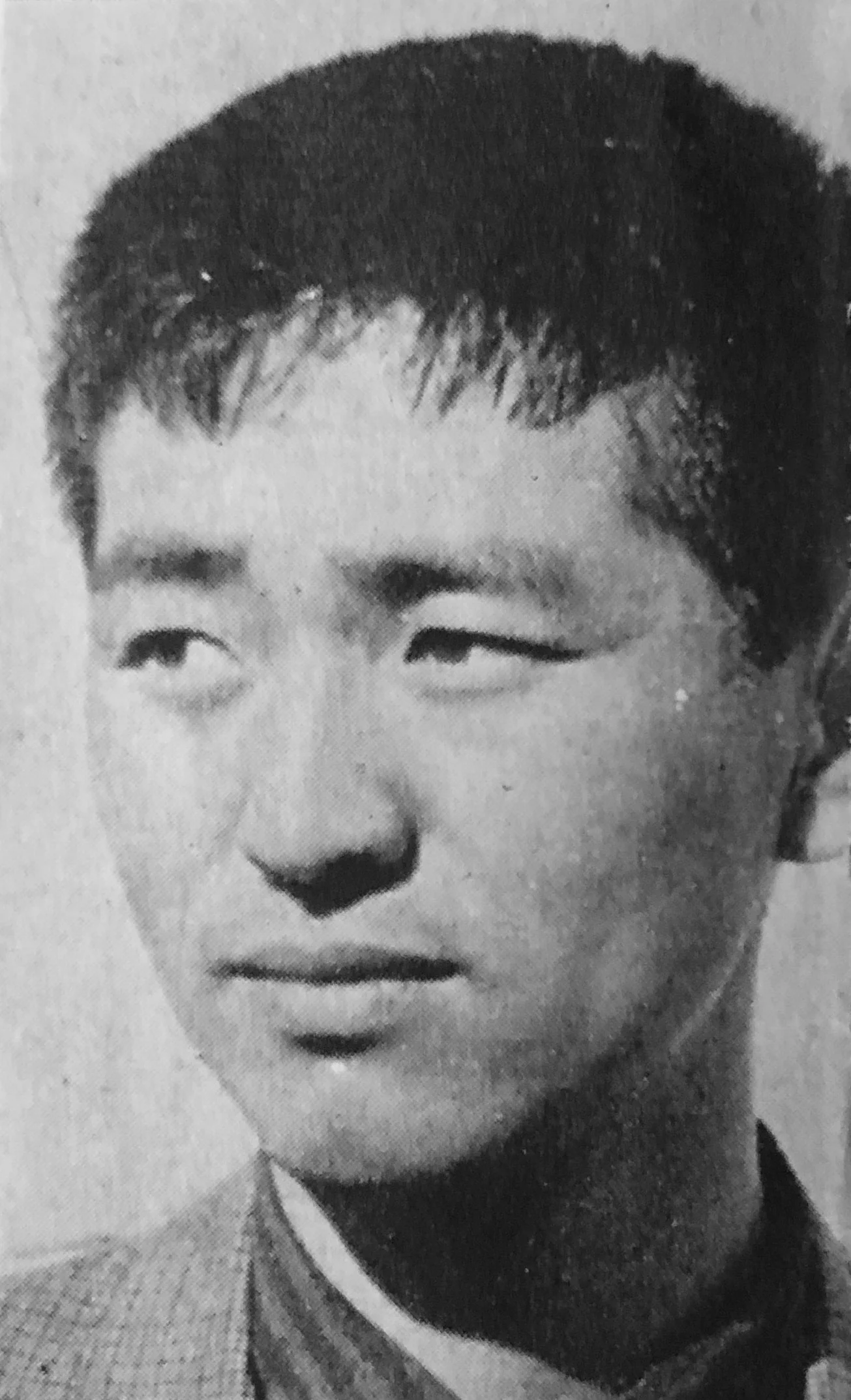
Image from Wikipedia
Image from Wikipedia
Masahiro Shinoda: The Elegant Rebel of Japanese Cinema
A Master of Form, a Chronicler of Transformations
Masahiro Shinoda was one of the defining voices of Japanese cinema in the 20th century. Born on March 9, 1931, in Gifu and passed away on March 25, 2025, in Tokyo, he evolved from a Waseda student of classical theater studies into a director whose work merged historical themes, social tensions, and stylistic boldness over four decades. His films combine formal precision with an intense engagement with Japanese history and social order. ([en.wikipedia.org](https://en.wikipedia.org/wiki/Masahiro_Shinoda))
Biography: From Gifu to Shochiku
Shinoda grew up in a time marked by war, defeat, and profound change. At Waseda University, he studied Japanese classical theater studies while also gaining recognition as a long-distance runner. It was the death of his mother that forced him to leave his original academic path and seek employment. In 1953, he joined the Shochiku studio, where he began a classical directing education, including working as an assistant to Yasujirō Ozu. ([japansociety.org](https://japansociety.org/news/in-memoriam-masahiro-shinoda-1931-2025-and-japan-society/))
From an early stage, it was clear that Shinoda would not simply conform to the rules of the studio system. In 1960, he made his first feature film, One-Way Ticket for Love, and quickly became a key figure of the Japanese New Wave in the 1960s. Together with Nagisa Ōshima and Yoshishige Yoshida, he represented a generation that renewed Japanese cinema from within. His transition to independence in 1966 was not a retreat but rather a consistent intensification of an already distinct artistic program. ([japansociety.org](https://japansociety.org/news/in-memoriam-masahiro-shinoda-1931-2025-and-japan-society/))
The Breakthrough: Japanese New Wave as an Aesthetic Challenge
Shinoda's early and middle works made him one of the most exciting directors of his time. Films like Pale Flower (1964), Assassination (1964), With Beauty and Sorrow (1965), and Samurai Spy (1965) combined genre forms with a radically stylized visual language. The BFI honors him as one of the leading figures of the 1960s, whose taste for artificiality and experimentation gave the most distinctive films of the New Wave their unmistakable tone. ([bfi.org.uk](https://www.bfi.org.uk/features/masahiro-shinoda-obituary-japanese-new-wave-director-pale-flower-silence))
Especially Pale Flower exemplifies Shinoda's signature: a yakuza-related crime world whose psychological coldness is broken by formal beauty and precise editing. The director was not interested in naturalistic representation but rather in a higher, condensed truth that emerges from reality while simultaneously transcending it. This attitude also shaped his engagement with politics, power, and the mechanisms of social control. ([bfi.org.uk](https://www.bfi.org.uk/features/masahiro-shinoda-obituary-japanese-new-wave-director-pale-flower-silence))
Independence and Artistic Maturation
After his break with Shochiku, Shinoda increasingly worked in an independent production environment, finding the freedom to combine historical and literary themes with experimental form. His collaboration with his later wife, actress Shima Iwashita, became as important for his cinema as his cooperation with avant-garde dramatist Shūji Terayama and composer Tōru Takemitsu. These constellations turned his films into interdisciplinary artworks that bridged theater, literature, music, and cinema. ([japansociety.org](https://japansociety.org/news/in-memoriam-masahiro-shinoda-1931-2025-and-japan-society/))
Particularly Double Suicide (1969) is considered a key work. The film is based on a Bunraku piece by Chikamatsu Monzaemon and unfolds a highly reflective, almost modernist visual dramaturgy. Shinoda begins with puppetry and gradually replaces the puppets with human actors while the puppeteers remain visible observers within the frame. This creates a distanced yet emotionally charged theater of cinema, making the plot readable as a socially determined fate. ([bfi.org.uk](https://www.bfi.org.uk/features/masahiro-shinoda-obituary-japanese-new-wave-director-pale-flower-silence))
Filmography: Important Films and Awards
Although Shinoda was not a musician, his body of work possesses a clear inner "discography" in the sense of a curated oeuvre revealed through significant highlights. Key titles include Pale Flower, Assassination, With Beauty and Sorrow, Samurai Spy, Double Suicide, The Scandalous Adventures of Buraikan, Himiko, Demon Pond, Sharaku, Owl’s Castle, Spy Sorge, and Takeshi. The festival history confirms this significance: Cannes featured Himiko in 1974, Chinmoku in 1972, and Sharaku in 1995 among its selections. ([festival-cannes.com](https://www.festival-cannes.com/en/p/masahiro-shinoda/))
His later work proves that Shinoda never rested on a form he had once found. Spy Sorge from 2003 linked historical research with international political drama, while Sharaku and Owl’s Castle continued his engagement with art, history, and Japanese iconography. His career did not end in a museological reflection but in a further intensification of his core questions: How do you tell history? How do you portray power? And how can tradition be translated into a contemporary form? ([japansociety.org](https://japansociety.org/news/in-memoriam-masahiro-shinoda-1931-2025-and-japan-society/))
Style: Artificiality, Theater, and the Poetry of Distance
Shinoda's style is immediately recognizable: meticulous image composition, controlled movement, precise framing, and a preference for theatrical structure. The BFI describes his films as works that partially or entirely abandon reality in favor of self-reflection and experiment. This is precisely where his modernity lies. He did not rely on spontaneous impressions but on an aesthetic construction where every gesture, every line of sight, and every cut carries meaning. ([bfi.org.uk](https://www.bfi.org.uk/features/masahiro-shinoda-obituary-japanese-new-wave-director-pale-flower-silence))
At the same time, Shinoda remained deeply rooted in Japanese tradition. His films incorporate Kabuki, Bunraku, and classical literature without becoming museum-like. Rather, he uses these forms as a driving force for cinema that places the individual in relation to history, family, and societal norms. Japan Society emphasizes that the question of the relationship between the individual and society runs throughout his entire body of work. ([japansociety.org](https://japansociety.org/news/in-memoriam-masahiro-shinoda-1931-2025-and-japan-society/))
Cultural Influence: A Director Between Tradition and Avant-Garde
Shinoda was not only a filmmaker but also a thinker. Japan Society highlights that he wrote books on theater, Sergei Eisenstein, film theory, and many other topics, and was regarded as a brilliant lecturer. His interests ranged from literature and music to philosophy and science. This intellectual breadth is reflected in his films, which not only narrate but analyze, condense, and make visible cultural systems. ([japansociety.org](https://japansociety.org/news/in-memoriam-masahiro-shinoda-1931-2025-and-japan-society/))
Internationally, he was often mentioned in the shadow of Nagisa Ōshima and Shōhei Imamura, but this comparison falls short. Shinoda developed his own language, where historical distance, stylistic rigor, and emotional intensity converge. It was particularly his collaboration with artists like Shima Iwashita, Shūji Terayama, and Tōru Takemitsu that made him a director who productively transcended the boundaries between cinema, theater, and music. ([bfi.org.uk](https://www.bfi.org.uk/features/masahiro-shinoda-obituary-japanese-new-wave-director-pale-flower-silence))
Current Projects and Late Reception
As Masahiro Shinoda passed away on March 25, 2025, there are no current projects or new releases. However, his late reception remains vibrant: Japan Society honored him after his death as one of the great figures of Japanese cinema, and the BFI presented him in an extensive obituary as an outstanding representative of the New Wave. The presence of his films in festival and retrospective programs shows that his work continues to be read anew and discussed. ([japansociety.org](https://japansociety.org/news/in-memoriam-masahiro-shinoda-1931-2025-and-japan-society/))
Conclusion: A Cinema of Precision, Depth, and Paradox
Masahiro Shinoda remains captivating because his cinema is never comfortable. It combines historical material with formal boldness, classical Japanese tradition with modern distance, and social analysis with visual poetry. Those who watch his films experience a director who understood cinema as a form of thought. It is precisely for this reason that it is worthwhile to rediscover his works time and again on the big screen. ([japansociety.org](https://japansociety.org/news/in-memoriam-masahiro-shinoda-1931-2025-and-japan-society/))
Official Channels of Masahiro Shinoda:
- Instagram: no official profile found
- Facebook: no official profile found
- YouTube: no official profile found
- Spotify: no official profile found
- TikTok: no official profile found