
Max Liebermann
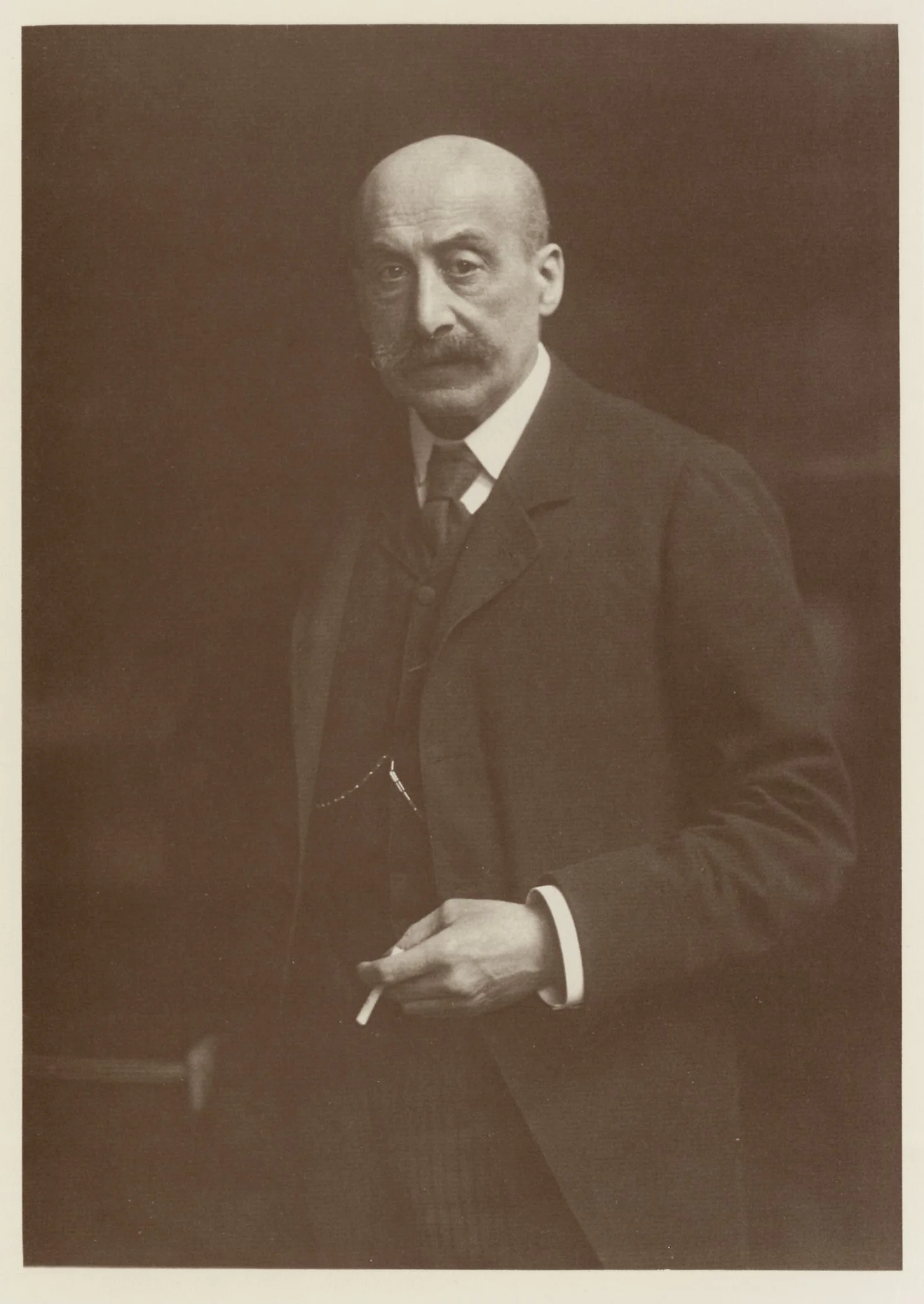
Image from Wikipedia
Image from Wikipedia
Max Liebermann – The Master of German Impressionism and Chronicler of a New Modernity
An Artist Between Light, Society, and Change
Max Liebermann, born on July 20, 1847, in Berlin and died on February 8, 1935, in the same city, is considered one of the most significant representatives of German Impressionism. His work combines the sober perspective of the realist with an increasingly bright, dynamic painting style that shaped the transition from 19th-century art to Classical Modernism in Germany. As a painter, graphic artist, and influential cultural figure, he not only shaped an artistic idiom but also influenced the institutions of his time. ([deutsche-biographie.de](https://www.deutsche-biographie.de/gnd118572695.html?utm_source=openai))
Biographical Beginnings: Berlin, Education, and Early Themes
Liebermann came from a Jewish merchant family in Berlin and received his artistic training in places such as Weimar before stays in Paris and the Netherlands profoundly broadened his perspective. His early works show a naturalistic approach and a clear focus on social themes, often depicting scenes of work and daily life. It is in these images that it becomes evident that Liebermann never merely documented reality, but captured the life world with great attention to light, rhythm, and composition. ([dhm.de](https://www.dhm.de/lemo/biografie/max-liebermann?utm_source=openai))
His early years marked an artistic search in which he broke free from academic conventions and developed his own visual language. His engagement with Dutch models initially led him to a darker, stricter tonality, before the encounter with French modernism ultimately transformed his painting. This development makes Liebermann a key figure in the cultural upheaval in Germany. ([dhm.de](https://www.dhm.de/lemo/biografie/max-liebermann?utm_source=openai))
The Breakthrough: From Naturalism to Vibrant Impression
Around 1880, Liebermann found the luminous color palette and dynamic brushwork that would characterize his main body of work. The influence of French Impressionists resulted in a painting style where light no longer merely describes but becomes the central theme of the image itself. Dark interiors, animated figures, and atmosphere-rich scenes became hallmarks that made his works distinctive. ([deutsche-biographie.de](https://www.deutsche-biographie.de/gnd118572695.html?utm_source=openai))
His artistic rise did not come without friction, as Liebermann navigated an art climate that was long skeptical of modern movements. It was precisely this tension between innovation and resistance that sharpened his profile as a creator of a new visual culture. In retrospect, his work appears as a coherent act of liberation: moving away from strict historical painting toward an open, life-like, and simultaneously highly artificial modernity. ([theartstory.org](https://www.theartstory.org/artist/liebermann-max/?utm_source=openai))
Berlin, Secession, and Cultural Authority
Liebermann became a defining figure in Berlin's art scene and served as president of the Berlin Secession, contributing to the institutional change that brought modernism visibility in Germany. He thus combined not only an individual career but also cultural-political effectiveness: he helped establish new artistic positions against conservative resistance. Therefore, his name stands for both aesthetic renewal and organizational authority. ([dhm.de](https://www.dhm.de/lemo/biografie/max-liebermann?utm_source=openai))
From 1920 to 1932, Liebermann was the president of the Prussian Academy of Arts, later becoming its honorary president. This role illustrates how he was perceived in the Weimar Republic as a representative of modern, liberal artistic views. His influence extended far beyond the studio: he became a central voice in Berlin's art scene and a symbol of bourgeois culture. ([deutsche-biographie.de](https://www.deutsche-biographie.de/gnd118572695.html?utm_source=openai))
Later Years: Wannsee, Withdrawal, and Existential Tension
In 1909, Liebermann acquired a summer residence at Wannsee, which is now known as the Liebermann Villa. The garden and house became an essential source of inspiration for his later work, and the surrounding area by the water influenced numerous later pieces. The current museum not only documents his biography but also the close connection between his living space and artistic world. ([liebermann-villa.de](https://liebermann-villa.de/en/liebermann-villa/?utm_source=openai))
With the rise of the National Socialists in 1933, Liebermann withdrew from the Prussian Academy of Arts after the Gleichschaltung policy had pressured every liberally-oriented institution. As a Jewish artist and prominent representative of the Republic, he faced a social isolation that overshadowed the final years of his life. He spent his last two years withdrawn in Berlin, where he died in 1935. ([deutsche-biographie.de](https://www.deutsche-biographie.de/gnd118572695.html?utm_source=openai))
Stylistic Signature: Light, Movement, and Density
Liebermann's painting thrives on precise observation of the visible and remarkable economical organization of the image. Particularly striking is his fascination with light, with dark interiors infused with brightness, and the dynamism of figures within space. His compositions often appear spontaneous but are thoughtfully constructed; therein lies the tension between realistic representation and impressionistic openness. ([deutsche-biographie.de](https://www.deutsche-biographie.de/gnd118572695.html?utm_source=openai))
In his garden scenes, beach views, and portraits, an art of perception crystallizes that emphasizes atmosphere over mere effect. The painting style remains controlled yet vibrant, with a fine sensitivity to rhythm, color relationships, and the interplay of proximity and distance. Thus, a visual language emerges that makes Berlin Impressionism a distinct chapter in European modernity. ([liebermann-villa.de](https://liebermann-villa.de/en/liebermann-villa/?utm_source=openai))
Work and Reception: Significance for Art History
Art historical reception regards Liebermann as a key figure who bridged the realism of the 19th century with the perception forms of Impressionism. His significance lies not only in individual masterpieces but also in the consistency with which he established a modern visual perspective in Germany. His position between French influence and German cultural tradition makes him particularly relevant in art history. ([theartstory.org](https://www.theartstory.org/artist/liebermann-max/?utm_source=openai))
He also gained high esteem as a portrait artist, as he captured people without pathos but with psychological accuracy. His portraits and interiors reveal a keen interest in social roles, gestures, and the atmosphere of cultivated bourgeois spaces. In this conjunction of observation, style consciousness, and cultural-political presence lies the enduring authority of his work. ([deutsche-biographie.de](https://www.deutsche-biographie.de/gnd118572695.html?utm_source=openai))
Cultural Influence and Contemporary Presence
Liebermann's influence extends to the present day, as his work continues to be showcased in museums, exhibitions, and academic contexts. The Liebermann Villa at Wannsee now serves as a site of remembrance, research, and education; at the same time, it underscores how closely his art remains connected to Berlin. Ongoing engagement with his life illustrates that his role as a modern artist and liberal intellectual has not lost its relevance. ([liebermann-villa.de](https://liebermann-villa.de/en/liebermann-villa/?utm_source=openai))
Berlin and German art history now view Liebermann as a link between tradition and renewal. His name symbolizes the courage to not only embrace artistic developments but to support them institutionally. This underscores his lasting significance: he was not only a painter but a driving force of cultural modernization. ([deutsche-biographie.de](https://www.deutsche-biographie.de/gnd118572695.html?utm_source=openai))
Conclusion: Why Max Liebermann Still Fascinates Today
Max Liebermann impresses as an artist who shaped his century with a clear vision, high painterly sensitivity, and cultural foresight. His paintings connect observation, light, and movement into a language that plays a central role in German modernity. Experiencing his works in the museum or in their original space by Wannsee not only introduces one to a great painter but also to an entire era in transition. ([liebermann-villa.de](https://liebermann-villa.de/en/liebermann-villa/?utm_source=openai))
It is particularly this blend of artistic precision, social awareness, and historical tension that makes Liebermann so compelling. His art remains an impressive plea for the freedom of vision, for openness to the new, and for the power of painting as cultural memory. A visit to his works is always worthwhile — their atmospheric depth unfolds best when experienced live. ([liebermann-villa.de](https://liebermann-villa.de/sommer/?utm_source=openai))
Official Channels of Max Liebermann:
- Instagram: No official profile found
- Facebook: No official profile found
- YouTube: No official profile found
- Spotify: No official profile found
- TikTok: No official profile found
Sources:
- German Historical Museum / LeMO – Biography of Max Liebermann
- German Biography – Liebermann, Max
- Liebermann Villa – The Liebermann Villa
- Liebermann Villa – Cultural Summer at Wannsee
- International Center of Photography – Max Liebermann, artist, Berlin
- S. Fischer Publishers – Max Liebermann, A Biography
- Wikipedia – Max Liebermann
Upcoming Events
International Museum Day at Museum Barberini
Avant-garde: Max Liebermann and Impressionism
Avant-garde. Max Liebermann and Impressionism
Avant-garde: Max Liebermann and Impressionism
Avant-garde. Max Liebermann and Impressionism