
Michel Friedman
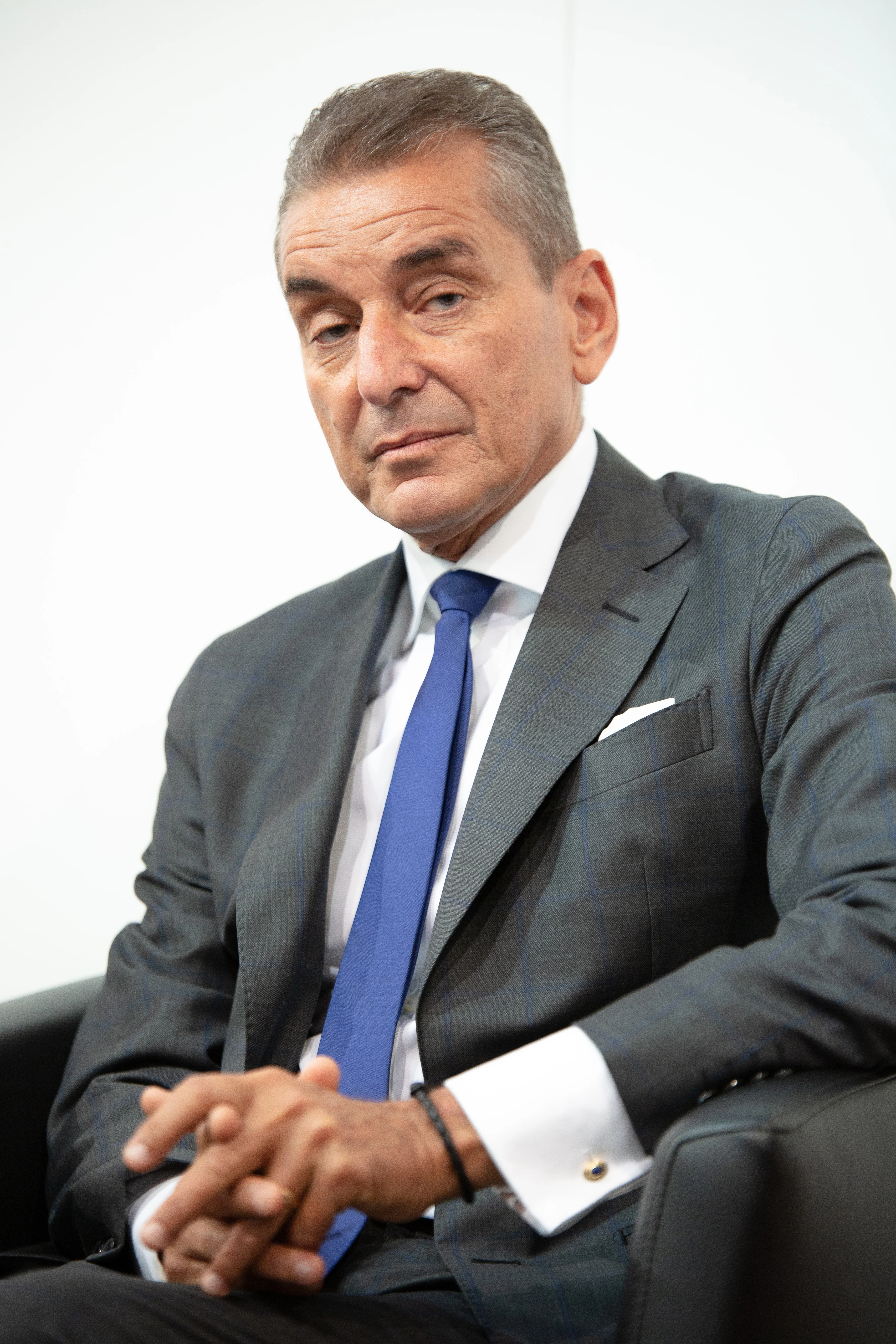
Image from Wikipedia
Image from Wikipedia
Michel Friedman: The Controversial Publicist Who Turns Debates into Art Forms
A Public Intellectual Between Politics, Media, and Stance
Michel Friedman, born on February 25, 1956, in Paris, is a German-French publicist, lawyer, philosopher, and former CDU politician who has shaped the political and media landscape in Germany for decades. His career spans legal precision, journalistic focus, and a prominent presence on television, panels, and discussion formats. He is primarily known as a provocative moderator, analytical commentator, and initiator of debates. His biography is closely tied to major themes in contemporary Germany: democracy, antisemitism, culture of remembrance, and the role of language in public discourse. ([t-online.de](https://www.t-online.de/themen/michel-friedman/?utm_source=openai))
Early Years, Education, and Political Rise
Friedman grew up in an intellectually and historically charged environment that profoundly influenced his later work. According to available sources, he initially established himself as a lawyer and publicist before returning to politics and public life. In the 1990s, he was a member of the CDU federal board and distinguished himself as a voice within the party that did not smooth over societal conflicts but openly addressed them. This political phase was not merely a career step but a foundation for his later role as a commentator and debate instigator. ([t-online.de](https://www.t-online.de/themen/michel-friedman/?utm_source=openai))
From 2000 to 2003, Friedman served as the deputy chairman of the Central Council of Jews in Germany and also as the editor of the weekly newspaper Jüdische Allgemeine. Additionally, from 2001 to 2003, he held the position of President of the European Jewish Congress. These roles showcase the breadth of his public responsibility: he acted not only as a media figure but also as a representative of Jewish interests in Europe. After the so-called "Friedman Affair," he resigned from all public offices but remained a voice in public discourse. ([t-online.de](https://www.t-online.de/themen/michel-friedman/?utm_source=openai))
The Breakthrough on Television: Conversation as a Conflict Zone
His media signature was particularly distilled in the talk formats that bore his name. From 1998 to 2003, he hosted the show Vorsicht! Friedman at Hessischer Rundfunk, followed by the long-term conversation series Studio Friedman at N24, now Welt, which ran from 2004 to 2021. These formats made him one of the most distinctive TV voices in Germany. Friedman's strength was not in smooth moderation but in controlled pressure, precise questioning, and a rhetorical energy that transformed conversations into areas of friction. ([t-online.de](https://www.t-online.de/themen/michel-friedman/?utm_source=openai))
The documentation of his work at Deutsche Welle illustrates how heavily Friedman relied on the political culture of conversation. The archive pages refer to projects such as Conflict Zone and Auf ein Wort…, which underline his focus on international politics, societal conflicts, and argumentative sharpness. Even in more recent formats, conversation remains the central core of his work. Friedman does not view public discourse as a stage for decorative opinions but as a place where language carries responsibility. ([michelfriedman.info](https://michelfriedman.info/conflict-zone/))
Publicist, Author, and Editor with a Clear Stance
In addition to television, Friedman developed an impressive journalistic presence. The official website lists several books and ongoing event formats, including Judenhass, Schlaraffenland abgebrannt, Fremd, and STREITEN? UNBEDINGT!. These titles set the tone: they deal with friction, criticism, moral challenges, and the defense of an open democratic debate culture. His publications serve not merely as supplementary material but as an extension of his public thinking. ([michelfriedman.info](https://michelfriedman.info/conflict-zone/))
In January 2025, DIE ZEIT reported that Friedman would become the new editor of the German-Jewish traditional magazine Aufbau. This is a significant step, as it again places him in an editorial position and institutionalizes his journalistic work. Concurrently, further conversation series and reading events are taking place on his website and in partner institutions, such as the release of his book Mensch! and events in cultural venues. This shows: Friedman remains an active player in the current discourse rather than a mere archive intellectual. ([zeit.de](https://www.zeit.de/news/2025-01/24/michel-friedman-wird-aufbau-herausgeber?utm_source=openai))
Current Projects: Stage, Opera, Literature, and Debate
For 2024 and 2025, the search results show numerous ongoing projects that confirm Friedman's presence in the cultural sphere. He moderated or created discussion formats at the Frankfurt Opera, including Friedman in der Oper, and collaborated with the Städel Museum, the Münchner Kammerspiele, and the Jewish Museum Frankfurt. Such formats connect literature, theater, music, and political reflection. Friedman acts here as a mediator between artwork and the present, between aesthetic experience and social responsibility. ([michelfriedman.info](https://michelfriedman.info/events/friedman-in-der-oper-662-678/?utm_source=openai))
Appearances are also documented for 2026: At the opening of the festival FREMDE ERDE – Festival Verfemte Musik in Vienna, Friedman will deliver the keynote address. This aligns with his profile as an intellectual working at the intersection of culture of remembrance and cultural policy. Particularly noteworthy is that his topics repeatedly address questions of democracy, exile, persecution, and moral judgment. His current work thus remains highly political while also culturally broad-based. ([eventfrog.de](https://eventfrog.de/en/p/classical-music-operas/classical-music/festival-fremde-erde-eroeffnung-mit-michel-friedman-7437827037346169227.html?utm_source=openai))
Style and Impact: Rhetoric as an Instrument of Precision
Friedman's style is characterized by clarity, confrontation, and a deliberate condensation. In his conversations, essays, and moderations, he uses language not to soothe but to clarify conflicts. This is where his special authority lies: he is one of the few public intellectuals who consistently oppose trivialization, evasive rhetoric, and political smoke screens. His impact arises from the combination of legal argumentation, moral urgency, and media presence. ([t-online.de](https://www.t-online.de/themen/michel-friedman/?utm_source=openai))
Several sources describe him as contentious and intellectually sharp. This is not merely a journalistic label but an accurate indication of his public role: Friedman organizes attention through conflict without reducing it to mere provocation. His conversation series, columns, and books reflect a stance that defends open discourse and understands democratic culture as a constant negotiation process. This is precisely what gives his work lasting relevance. ([michelfriedman.info](https://michelfriedman.info/2020/10/21/titel-thesen-temperamente-video-michel-friedman-und-harald-welzer/?utm_source=openai))
Contextualization and Cultural Influence
Michel Friedman is not a classic entertainer, musician, or artist in the narrower sense; his significance lies rather in public language and in connecting politics, ethics, and culture. For this reason, his biography is of interest to music, theater, and cultural audiences: He brings the attitude of critical conversation into spaces where art is not only presented but questioned. Whether at the opera, in a museum, or on a panel – Friedman represents a culture of dissent that has become rare in German-speaking feuilletons. ([michelfriedman.info](https://michelfriedman.info/events/friedman-in-der-oper-662-678/?utm_source=openai))
His cultural influence is also evident in the numerous invitations he receives from major institutions to moderate or open debates. The DSO Berlin features him on its biography page, the Frankfurt Opera continues its conversation series with him, and the Jewish Museum Frankfurt involves him in a programmatic conversation culture. This presence in renowned institutions is a strong signal of authority and relevance. Friedman remains a figure through whom the question of stance in public discourse can be exemplarily negotiated. ([dso-berlin.de](https://www.dso-berlin.de/en/orchestra/people/biographies/michel-friedman/))
Conclusion: Why Michel Friedman Remains Compelling Today
Michel Friedman fascinates because he does not treat public debates as background music to politics but as the genuine stage for democratic self-understanding. His career fuses media history, political responsibility, and intellectual sharpness into a profile that remains unique in Germany. Listening to him is not about experiencing a pleasing moderation but about engaging in a focused space of thought filled with friction and clarity. This is precisely what makes him current and relevant. ([t-online.de](https://www.t-online.de/themen/michel-friedman/?utm_source=openai))
Those who experience Friedman live see not just a publicist but a precise observer of societal tensions. His appearances are worth attending where art, politics, and memory intersect. For anyone who values a culture of argumentation, intellectual presence, and debate, Michel Friedman is an encounter of particular intensity. ([michelfriedman.info](https://michelfriedman.info/events/friedman-in-der-oper-662-678/?utm_source=openai))
Official Channels of Michel Friedman:
- Instagram: No official profile found
- Facebook: No official profile found
- YouTube: No official profile found
- Spotify: No official profile found
- TikTok: No official profile found
Sources:
- Wikipedia – Michel Friedman
- michelfriedman.info – Official Website
- michelfriedman.info – Conflict Zone
- michelfriedman.info – Auf ein Wort…
- Städel Museum / Press Release – Let’s Talk – Städel Conversations
- DSO Berlin – Biography Michel Friedman
- DIE ZEIT – Michel Friedman Becomes Aufbau Editor
- Oper Frankfurt – Press Release “Friedman in the Opera”
Upcoming Events
Bettina Böttinger and Michel Friedman in Conversation: »Human!«
Opening of the Jewish Culture Weeks with Michel Friedman & Paul Ronzheimer