
Plácido Domingo
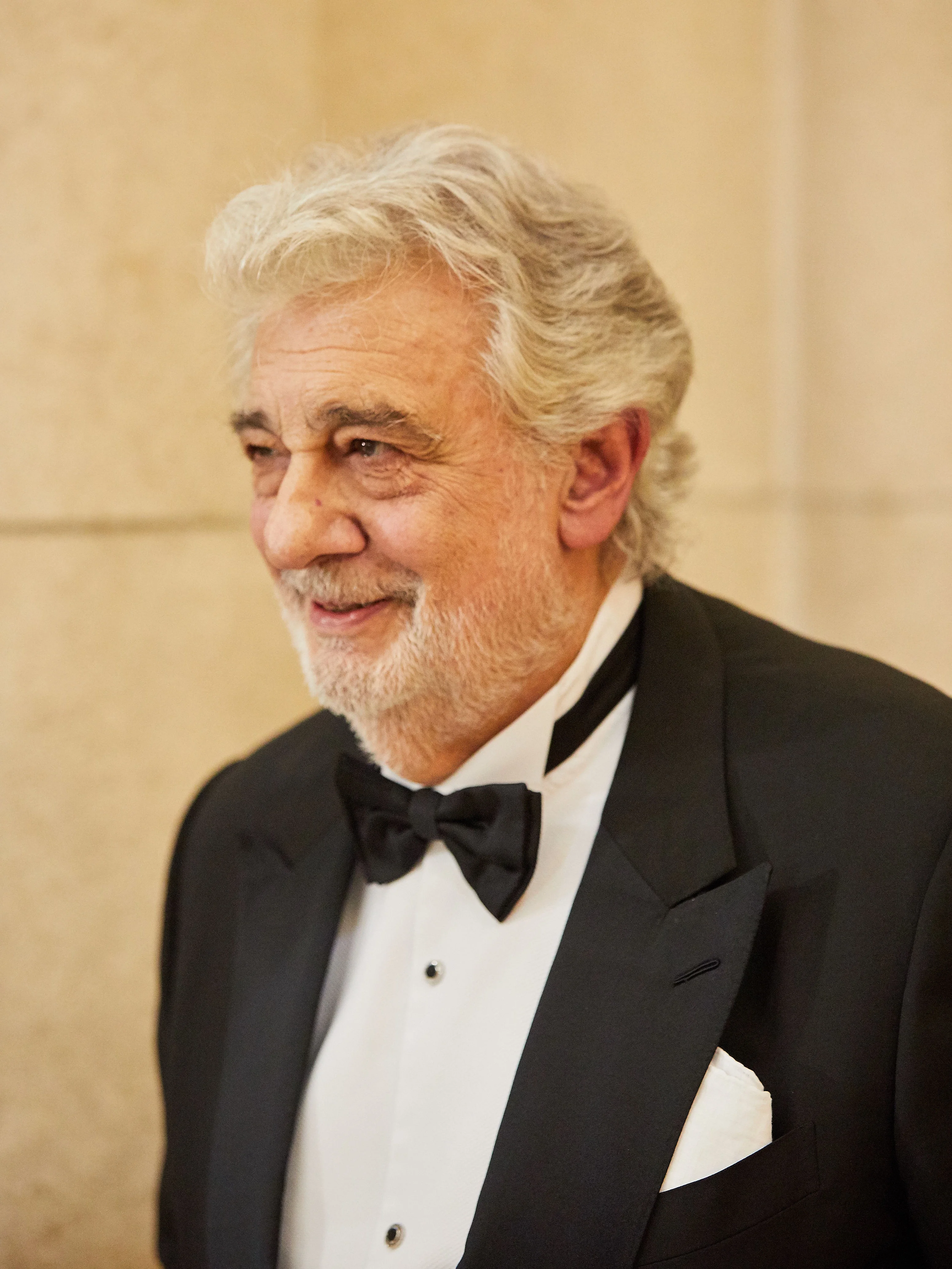
Image from Wikipedia
Image from Wikipedia
Plácido Domingo: The Living Opera Legend Between Tenor, Baritone, and Global Stage Power
An artist who has not only sung opera history but shaped it
Plácido Domingo is one of the great figures in classical music of the 20th and 21st centuries. Born in Madrid in 1941, the singer, conductor, and opera director grew up in a musical environment that shaped his career from an early age: His parents were celebrated zarzuela artists, and as a child, he experienced music not merely as a discipline but as a way of life. His career encompasses over 150 roles and more than 4000 performances; therein lies his extraordinary significance for the world of opera. ([placidodomingo.com](https://www.placidodomingo.com/))
Biography: From Madrid to Mexico and Around the World
Domingo was born on January 21, 1941, in the Barrio de Salamanca in Madrid. When his parents moved to Mexico with their own theater company in 1949, his musical horizons also shifted: There, he gained early experience in music and theater and grew into a career that would soon take him far beyond the Spanish-speaking cultural sphere. The singer's early memories are closely connected to zarzuela, the Spanish operetta form that continues to shape his artistic sensibility to this day. ([placidodomingo.com](https://www.placidodomingo.com/career/timeline/))
His path to international success did not follow a single sudden moment but rather a consistent deepening of technique, repertoire, and presence. After his time in Mexico, he had engagements in Israel, the USA, and Europe; 1967 marked his European debut in Hamburg, a pivotal step before his debut at the Metropolitan Opera in New York in 1968. This development illustrates a singer who did not rest on early success but shaped a global career with perseverance, flexibility, and enormous stylistic range. ([placidodomingo.com](https://www.placidodomingo.com/career/timeline/))
Career: The Rise of an Extraordinary Singer
Domingo's career gained momentum in the 1970s that resonates in opera productions to this day. He debuted at Covent Garden in 1971, was one of the most sought-after singers of his generation by 1972, and his first interpretation of Otello in Hamburg in 1975 became a historic event. Such roles are not only milestones in the tenor repertoire but also require a dramatic awareness that consolidates voice, text, and stage psychology into a single, credible character. ([placidodomingo.com](https://www.placidodomingo.com/career/timeline/))
Furthermore, he early on developed a second career as a conductor. Domingo made his debut as an opera conductor with the New York City Opera in 1973, thus expanding his artistic identity beyond singing. This dual role is central to his authority: He understands scores not only from the perspective of a soloist but also from that of a musical leader who shapes sound balance, tempo, and dramatic architecture. ([placidodomingo.com](https://www.placidodomingo.com/career/timeline/))
The official website today describes him as one of the most influential singing actors in the history of opera, as well as a conductor and important force in opera management. The fact that his repertoire now includes more than 150 roles underscores the magnitude of this career: Domingo represents continuity, curiosity, and the rare ability to actively shape a century of opera history. ([placidodomingo.com](https://www.placidodomingo.com/))
Discography: Over 100 Recordings and a Sonorous Archive of Opera
Domingo's discography is among the most extensive in the classical music industry. According to the official site, his catalog includes well over 100 recordings, including feature films, complete operas, solo albums, and duets; numerous releases have received gold and platinum certifications. This recording activity is not merely a side venture but a central part of his artistic authority, as it documents his repertoire and makes it accessible to new generations of listeners. ([placidodomingo.com](https://www.placidodomingo.com/listen-and-watch/))
Particularly notable is the combination of standard repertoire and stylistic openness. Deutsche Grammophon highlights a recording of Wagner's Tristan und Isolde that, in 2005, filled a gap in his Wagner repertoire and received multiple awards, including the Musica & Dischi Critics Award, the German Record Critics' Award, and the Wagner Award from the Académie du Disque Lyrique. The fact that a singer from the Italian-Spanish opera tradition delves so deeply into Wagner demonstrates the breadth of his musicality and the technical stability of his voice over decades. ([deutschegrammophon.com](https://www.deutschegrammophon.com/de/kuenstler-innen/placidodomingo/biografie))
Recent releases further attest to his ongoing activity. On his official "Listen & Watch" page, titles such as Mocedades Plácido Domingo from 2023, Plácido Domingo. The Versailles Gala from 2022, and Plácido Domingo at the Arena di Verona from 2021 are listed; previous titles include Love Duets and the Arena di Verona production Opera Gala - 50 Years at the Arena di Verona. Thus, the discography remains not merely a museum piece but extends the sonorous portrait of an artist who continues to actively perform in the studio and on stage. ([placidodomingo.com](https://www.placidodomingo.com/listen-and-watch/))
Musical Style: Expression, Role Variety, and Vocal Authority
Domingo's unique position stems from a rare combination of vocal strength, text comprehension, and dramatic presence. The official biography describes him as one of the most convincing singing actor personalities in the history of opera; it is exactly this connection of singing and role interpretation that defines his profile. His art thrives on arcs of tension, a clearly managed line, and stage energy that translates powerfully even in large venues. ([placidodomingo.com](https://www.placidodomingo.com/))
The breadth of his repertoire ranges from Italian and French opera to German roles, zarzuela, songs, and tangos. Deutsche Grammophon highlights that his repertoire includes numerous important German roles such as Parsifal, Lohengrin, Tannhäuser, and Fidelio, while the official website documents his continuous work in operas, galas, and special concert formats. It is precisely this stylistic openness that makes Domingo an artist whose musical career cannot be reduced to a single category. ([deutschegrammophon.com](https://www.deutschegrammophon.com/en/artists/placidodomingo/biography?utm_source=openai))
Awards, Recognition, and Cultural Authority
Domingo’s awards profile reflects the stature of his career. The official awards page lists 12 Grammy Awards as well as high state honors such as the Presidential Medal of Freedom and the Gran Cruz de la Orden del Mérito Civil. There are also newer honors from the years 2023 to 2025, demonstrating that his impact continues to be acknowledged in today's cultural landscape. ([placidodomingo.com](https://www.placidodomingo.com/awards))
Industry critics have repeatedly recognized his recordings with awards. Notably, the recording of Tristan und Isolde has been hailed as a historic event in the world of recordings and has received several important accolades. Such recognition is not merely decorative for Domingo, but part of his authority as an interpreter, whose work stands in the tension of tradition, technical discipline, and artistic curiosity. ([deutschegrammophon.com](https://www.deutschegrammophon.com/de/kuenstler-innen/placidodomingo/biografie))
Current Projects and Stage Presence into 2026
Domingo will continue to be active on international stages through 2026. The official calendar page lists appearances in Budapest, Varna, Düsseldorf, and Tokyo; the site explicitly describes him as an artist with more than 4000 singing and conducting engagements that have taken him around the world. This current presence proves that his musical career is not a finished monument, but a continuing, vibrant practice. ([placidodomingo.com](https://www.placidodomingo.com/))
The homepage also displays current news and projects, including “In Concert in Budapest,” “In Concert in Hong Kong,” and “Omaggio a Puccini e la musica italiana.” The focus on gala concerts, recitals, and curated programs shows how Domingo organizes his stage presence today: less as a pure role ensemble, more as a global presence of a repertoire singer with a historical aura. ([placidodomingo.com](https://www.placidodomingo.com/))
Cultural Influence: Opera as a Global Pop Culture Experience
Domingo's influence extends far beyond the opera stage. His official "Plácido Everywhere" page documents how he has appeared in talk shows, television formats, TV productions, and pop culture contexts, from Sesame Street to The Simpsons. This visibility is a key aspect of his cultural weight: He has made opera more accessible to a mass audience without losing its artistic substance. ([placidodomingo.com](https://www.placidodomingo.com/career/placido-everywhere/?utm_source=openai))
The official website also emphasizes his work as a cultural impresario, entrepreneur, and founder of Operalia, the international opera competition. Thus, Domingo appears not just as an interpreter but also as a promoter of young voices. In music history, this counts doubly: as a personal achievement and as a contribution to passing down operatic expertise to the next generation. ([placidodomingo.com](https://placidodomingo.com/press-and-assets/?utm_source=openai))
Conclusion: Why Plácido Domingo Continues to Fascinate
Plácido Domingo fascinates because he embodies the rare connection of vocal greatness, stylistic versatility, and organizational impact. His career unites opera myth, recording culture, conducting practice, and international presence into a whole that is unparalleled in classical music. Those who wish to understand how a singer becomes a cultural institution will find in Domingo one of the most impressive examples of our time. ([placidodomingo.com](https://www.placidodomingo.com/))
Especially in live performance, the reason his stage presence remains legendary becomes clear: the experience, authority, and dramatic control of an artist who has been at home on the grand stages of the world for decades. Anyone who has the opportunity to see Plácido Domingo in concert or at a gala encounters opera history in motion. ([placidodomingo.com](https://www.placidodomingo.com/calendar/?utm_source=openai))
Official Channels of Plácido Domingo:
- Instagram: https://instagram.com/placido_domingo
- Facebook: https://www.facebook.com/PlacidoDomingo
- YouTube: https://www.youtube.com/@MrPlacidoDomingo/featured
- Spotify: No official profile found
- TikTok: No official profile found
- X/Twitter: https://twitter.com/PlacidoDomingo
- Weibo: https://weibo.cn/3418636352
Sources:
- Plácido Domingo - Official Website
- Plácido Domingo - Timeline
- Plácido Domingo - Listen & Watch
- Plácido Domingo - Awards
- Plácido Domingo - Press Assets
- Deutsche Grammophon - Biography
- Deutsche Grammophon - Biography
- medici.tv - Plácido Domingo, conductor, tenor and baritone
- Wikipedia: Image and Text Source
Upcoming Events
Plácido Domingo – Gala Song Evening
Plácido Domingo - Opera Gala