Rudolf Buchbinder
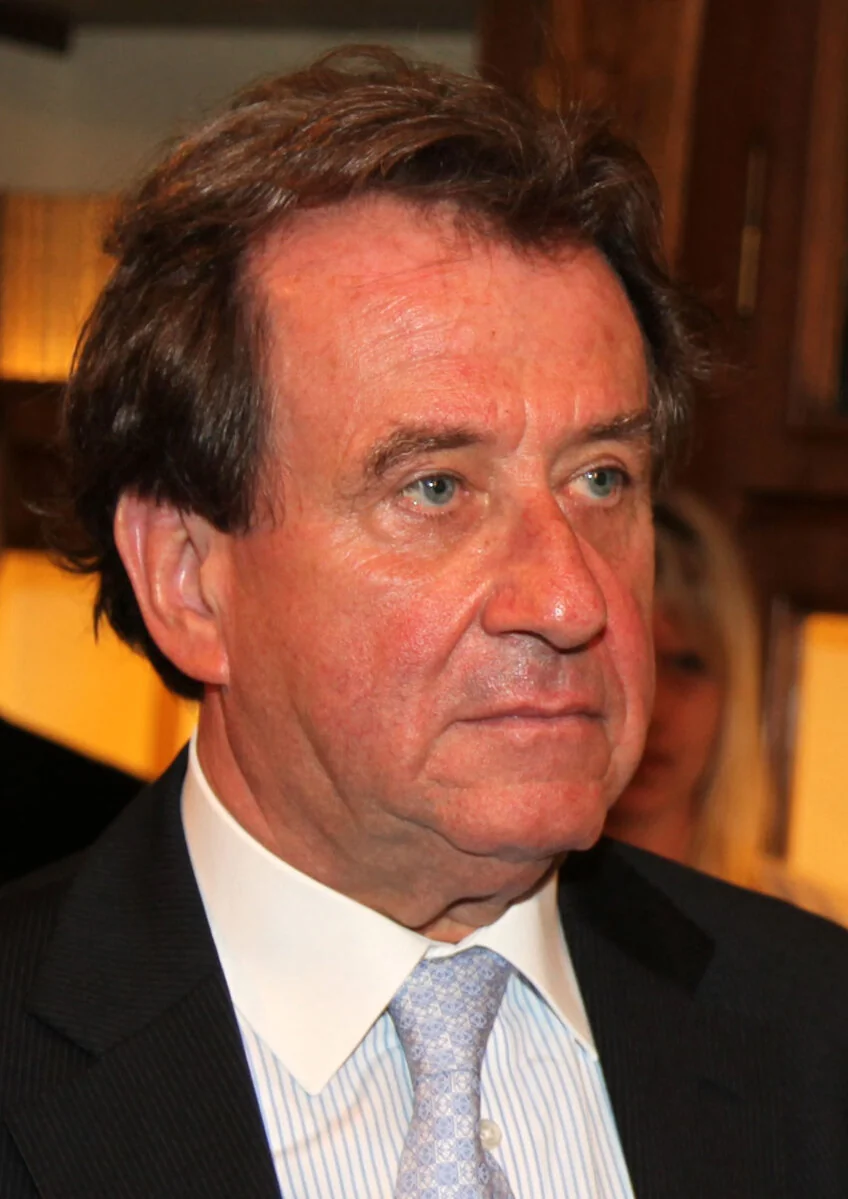
Image from Wikipedia
Image from Wikipedia
Rudolf Buchbinder – the great Beethoven architect at the piano
A world-class pianist between tradition, temperament, and interpretative depth
Rudolf Buchbinder is one of the defining pianists of our time. Born on December 1, 1946, in Litoměřice, this Austrian has embodied a music career for decades that combines technical precision, stylistic sovereignty, and a distinctive stage presence. He has especially made his mark as a Beethoven interpreter, earning an international status that places him in the forefront of classical pianists. ([music.apple.com](https://music.apple.com/de/artist/rudolf-buchbinder/41297908))
Early years and education: the journey from child prodigy to representative of the Viennese piano tradition
Buchbinder was exposed to music early on and was accepted into the Vienna University of Music at the age of five. He gave his first concert at nine and later studied under Bruno Seidlhofer at the Vienna Music Academy. This early influence explains the strict focus on form, sound culture, and structure that continues to shape his playing today. ([music.apple.com](https://music.apple.com/de/artist/rudolf-buchbinder/41297908))
Even at a young age, it was clear where his artistic development would lead: to a repertoire that places the great lines of Viennese Classicism and Romanticism at its center. Early concert performances and collaborations with the leading orchestras of Austria quickly turned the young pianist into a sought-after soloist. Later, he expanded this foundation through chamber music, conducting from the piano, and an extensive discographic career spanning over half a century. ([music.apple.com](https://music.apple.com/de/artist/rudolf-buchbinder/41297908))
The Beethoven specialist: interpretation as lifelong research
Whenever Rudolf Buchbinder is mentioned, the name Beethoven almost inevitably comes up. The pianist has performed the 32 sonatas in cycles around the world and has continually unveiled Beethoven's piano works from new perspectives over the decades. Deutsche Grammophon describes him as an artist who discovers new worlds within Beethoven's work time and again; at the same time, his interpretations of Beethoven have been highlighted by the press as exemplary. ([buchbinder.net](https://www.buchbinder.net/en/home))
Notably, his work on the Diabelli Variations is particularly striking. He began his recording journey with this work nearly 50 years ago and later returned to it after decades of intense Beethoven practice. With The Diabelli Project, he linked the original with variations by significant contemporary composers, thus making a significant statement about the contemporary relevance of classical music. ([buchbinder.net](https://www.buchbinder.net/en/home))
Career highlights on the world's great stages
Buchbinder is not only a studio and repertoire artist but, above all, a man of the grand stage. His performances have connected him with the Vienna Philharmonic, the Vienna Symphony, the Gewandhaus Orchestra in Leipzig, the Saxon State Orchestra in Dresden, the BRSO, the Boston Symphony Orchestra, and the New York Philharmonic. The programs often focus on Beethoven, Mozart, Brahms, and Schubert, frequently in performances where he conducts the solo part from the piano. ([music.apple.com](https://music.apple.com/de/artist/rudolf-buchbinder/41297908))
Such projects highlight his special status as a musician who not only interprets but also shapes. In the 2019/20 season, he was given the extraordinary opportunity to present all five Beethoven piano concertos in a specially curated cycle at the Vienna Musikverein; this was followed by tours and residencies focusing on Beethoven, Schubert, and Mozart. His continued presence in metropolises worldwide such as Paris, New York, Tokyo, Seoul, Rome, and Dresden underscores the international scope of his career. ([buchbinder.net](https://www.buchbinder.net/en/home))
Current projects and releases: Schubert, Mozart, and new Beethoven perspectives
Even beyond the Beethoven canon, Buchbinder remains remarkably productive. For the 2024/25 season, the Vienna Musikverein put a focus on Schubert, where Buchbinder performed alongside Jonas Kaufmann, Hilary Hahn, Gautier Capuçon, and members of the Vienna Philharmonic; additionally, a piano evening featuring Schubert Impromptus and Sonata D 960 is scheduled for February 2025. Concurrently, he brought Mozart cycles to performance with the Saxon State Orchestra in Dresden and the Orchestra dell’Accademia Nazionale di Santa Cecilia. ([buchbinder.net](https://www.buchbinder.net/?utm_source=openai))
Recording-wise, Apple Music has documented several relevant releases for 2024 and 2025, including Beethoven: Piano Variations, Brahms – Reger: Song Transcriptions, and the compilation A Piano Ballad. Previous releases such as Beethoven The Essential Piano Sonatas, Soirée de Vienne, Chopin: Preludes, Op. 28 & 45, and Buchbinder plays Beethoven showcase a discography that focuses more on programmatic depth and repertoire cultivation than on short-term trends. ([music.apple.com](https://music.apple.com/de/artist/rudolf-buchbinder/41297908))
Discography, awards, and critical reception
According to his official biography, Rudolf Buchbinder's discography includes more than 200 recordings. Notable are his Haydn recordings from the 1970s, the Brahms piano concertos with Nikolaus Harnoncourt, and numerous Beethoven recordings; he has also recorded works by Schubert, Mozart, and Chopin. This range indicates a pianist who does not merely cover the classical repertoire but engages with it in an historically informed and sound-reflective manner. ([music.apple.com](https://music.apple.com/de/artist/rudolf-buchbinder/41297908))
His achievements have been recognized with important awards, including the Mozart Interpretation Prize and the Grand Prix du Disque; in 2020, he also received the OPUS Klassik Lifetime Achievement Award. The press has repeatedly described his interpretations of Beethoven as exemplary, while the international reception has highlighted his transparency of touch, formal clarity, and ability for structural narration. In larger Beethoven cycles, Buchbinder is often acknowledged as a musician who never treats virtuosity as an end in itself. ([buchbinder.net](https://www.buchbinder.net/en/home))
Stylistic approach: precise technique, narrative shaping, sonic nobility
Rudolf Buchbinder's style combines classical discipline with a free, breathing approach to the score. His technique serves not mere brilliance but the articulation of form, contrast, and inner tension. Especially in Beethoven and Schubert, a reading emerges that constructs a narrative arc from phrasing, tempo drama, and sound balance. ([music.apple.com](https://music.apple.com/de/artist/rudolf-buchbinder/41297908))
Deutsche Grammophon emphasizes that he continually penetrates Beethoven's work anew over many decades rather than crystallizing it. This is precisely where his authority lies: he treats the repertoire not as a museum piece but as living material that can be illuminated anew in every concert, every recording, and every chamber music encounter. Those who listen to Buchbinder experience a pianist who maintains a rare balance between analytical clarity and singing tone. ([deutschegrammophon.com](https://www.deutschegrammophon.com/de/kuenstler-innen/rudolf-buchbinder/biografie?utm_source=openai))
Grafenegg and the role as a cultural creator
Another dimension of his career lies in his curatorial and institutional responsibility. Buchbinder is the artistic director of the Grafenegg Festival, which has developed under his leadership into a central venue for high-caliber classical music. His position has been expressly confirmed for 2024 to 2026; thus, he remains not only an interpreter but also a shaping cultural and programmatic voice in European music life. ([musik-heute.de](https://www.musik-heute.de/25556/grafenegg-festival-buchbinder-bleibt-leiter-bis-2026/?utm_source=openai))
This dual role makes him interesting to a broad audience. He thinks of music not in isolation as solo repertoire, but as a cultural context: festival dramaturgy, repertoire maintenance, young composers, historical lines, and current concert practice interconnect in his approach. Those who follow his programs quickly recognize an artistic signature that goes far beyond a mere virtuoso career. ([musik-heute.de](https://www.musik-heute.de/25556/grafenegg-festival-buchbinder-bleibt-leiter-bis-2026/?utm_source=openai))
Cultural influence and significance for the present
Rudolf Buchbinder is a key figure in European piano culture because he connects the Viennese tradition with international presence and historical depth. His interpretations of Beethoven have shaped generations of listeners and have significantly expanded the understanding of sonatas, concertos, and variations. At the same time, his work on Schubert and Mozart shows that he can never be reduced to a single body of work. ([music.apple.com](https://music.apple.com/de/artist/rudolf-buchbinder/41297908))
His influence also lies in being a role model for younger pianists: meticulous adherence to the work, high text discipline, and yet a distinctive personal approach. That he continues to tour internationally with over 70 years and initiates new projects gives his music career a rare continuity. Buchbinder represents an art of endurance, where repertoire, experience, and interpretative history merge into a strong artistic identity. ([buchbinder.net](https://www.buchbinder.net/?utm_source=openai))
Conclusion: A pianist you must not only hear but experience
Rudolf Buchbinder captivates with his combination of authority, sonic nobility, and intellectual curiosity. He is a pianist who does not only master the great repertoire but opens it up in ever-new interpretations. Those who experience his Beethoven, Schubert, or Mozart interpretations live encounter an artist who imbues classical music with unmistakable tension, dignity, and relevance. ([buchbinder.net](https://www.buchbinder.net/en/home))
That is precisely the invitation to the audience: Rudolf Buchbinder should be experienced on stage, where his precision, experience, and musical personality shine the brightest. His playing connects tradition with the present, analysis with emotion, and formal rigor with emotional depth. This is what makes him one of the most exciting pianists of our time. ([buchbinder.net](https://www.buchbinder.net/en/home))
Official channels of Rudolf Buchbinder:
- Instagram: https://www.instagram.com/rudolfbuchbinder.piano/
- Facebook: https://www.facebook.com/272101637037987
- YouTube: No official profile found
- Spotify: https://open.spotify.com/artist/7bdwlNOPsycFColkPRlNxY?si=52A3ohtjSEyVpfJ_zySDZw
- TikTok: No official profile found
Sources:
- Rudolf Buchbinder – Office / Management
- Rudolf Buchbinder – Official Website / News
- Rudolf Buchbinder – Biography
- Deutsche Grammophon – Biography
- Apple Music – Rudolf Buchbinder
- Musikverein Wien – The Pianist as Detective
- Musikverein Wien – MVZ February 2025
- Musikverein Wien – Season Brochure 2024/25
- Munzinger Biography – Rudolf Buchbinder
- Federal Ministry for European and International Affairs – Rudolf Buchbinder
- Musik Heute – Grafenegg Festival: Buchbinder remains director until 2026
Upcoming Events
Rudolf Buchbinder, Piano
MEHTA / BUCHBINDER / Wagner, Beethoven, Tchaikovsky in Munich