
Simon Nabatov
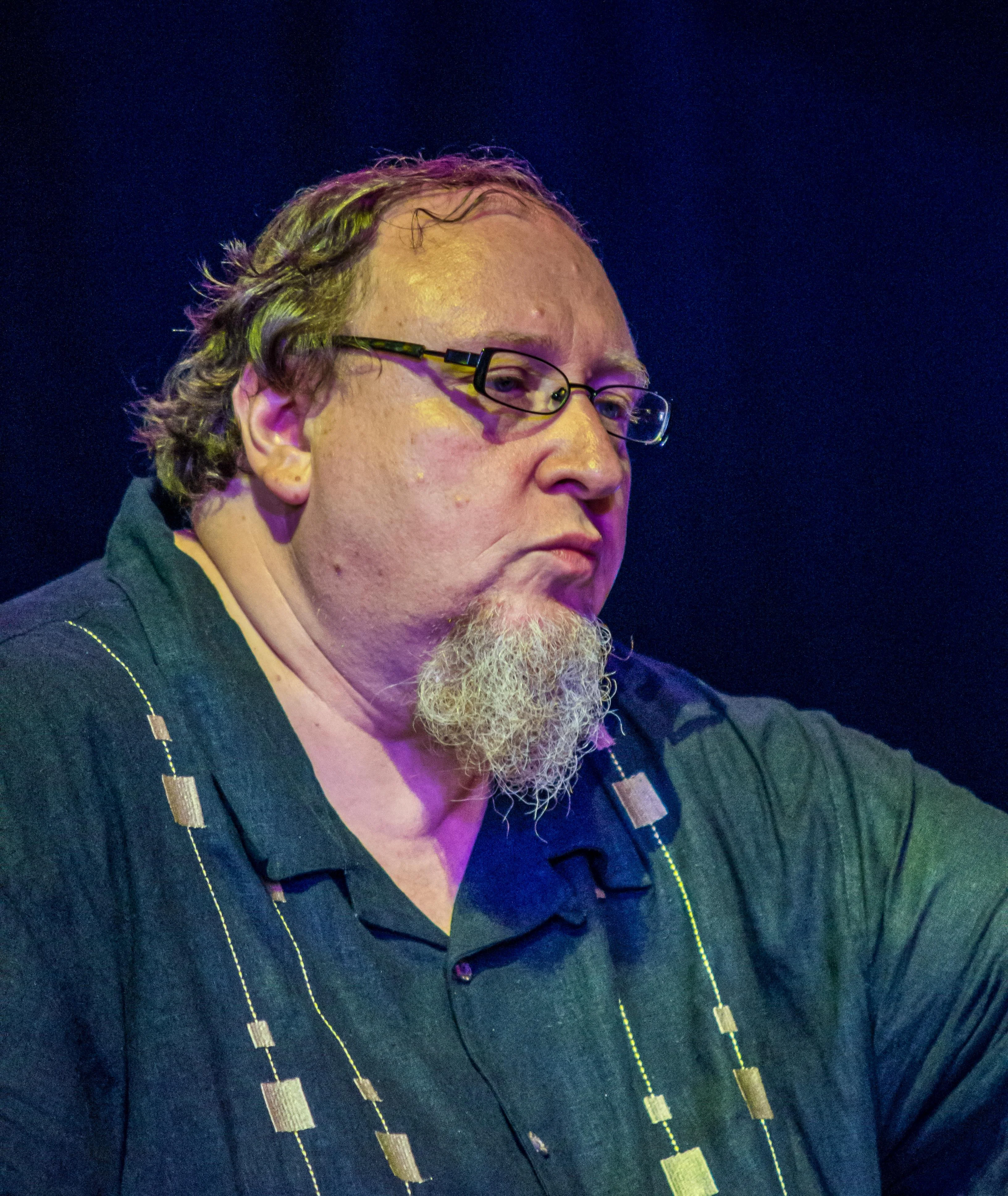
Image from Wikipedia
Image from Wikipedia
Simon Nabatov – The Cosmopolitan Jazz Pianist Between Improvisation, Literature, and Sound Architecture
An Exceptional Pianist with Russian Roots and International Charisma
Simon Nabatov, born on January 11, 1959, in Moscow, is one of those jazz pianists whose artistic career goes far beyond a classical biography. As an American musician of Russian descent, he combines musical precision, intellectual depth, and a pronounced stage presence into a signature style that remains immediately recognizable in contemporary piano jazz. His career spans from Soviet training to American influence, and he has established himself long-term in Cologne, where he operates as an improvising free spirit and composing sound thinker. ([de.wikipedia.org](https://de.wikipedia.org/wiki/Simon_Nabatov))
Early Influence: Music as a Calling
Nabatov's musical development began remarkably early. According to Wikipedia, he was already playing the piano at the age of three, and he created his first composition at six. Growing up in a musical family, he first studied at the Central School of Music and later at the Moscow Conservatory. As a teenager, he navigated between formal education and the vibrant jazz scene; at 17, he was playing bebop in Moscow. This early dual influence explains today why his playing confidently unites classical discipline and improvisational freedom. ([en.wikipedia.org](https://en.wikipedia.org/wiki/Simon_Nabatov))
A key moment was his encounter with great American jazz orchestra cultures: a Duke Ellington concert in 1971 and later a performance by the Thad Jones–Mel Lewis Orchestra solidified his decision to become a jazz musician. Such biographical milestones are not just footnotes; they are audible in his later aesthetics: Nabatov's music thinks in forms, tension arcs, and dynamic contrasts. This results in a style that never merely appears virtuosic but is dramatically charged. ([en.wikipedia.org](https://en.wikipedia.org/wiki/Simon_Nabatov))
Emigration, New York, and the Path to the International Scene
In 1979, Nabatov left the Soviet Union with his family, initially passing through Italy and later heading to the USA. His time in Rome, where he worked as a house pianist at the Mississippi Jazz Club and received support from Tony Scott, sharpened his practical approach to the instrument and club life. In New York, he continued his studies at Juilliard from 1980 to 1984. Simultaneously, he worked in the fields of dance, chamber music, and vocal accompaniment, thus developing a broad professional foundation. ([en.wikipedia.org](https://en.wikipedia.org/wiki/Simon_Nabatov))
In 1984, he was named Best Pianist by Keyboard magazine, an early signal of his exceptional standing. In 1986, he received U.S. citizenship and recorded his trio album Circle the Line with Ed Schuller and Paul Motian the same year. This was followed by tours and collaborations with Ray Anderson, Arthur Blythe, Steve Lacy, and Perry Robinson, as well as performances with the NDR Hamburg Radio Big Band. This phase transformed the highly talented newcomer into a sought-after collaborator in the international jazz scene. ([en.wikipedia.org](https://en.wikipedia.org/wiki/Simon_Nabatov))
Cologne as an Artistic Home
In 1989, Nabatov settled in Cologne with his German partner, and the city became a central resonance space for his music career. The Cologne context fostered his openness to free improvisation, avant-garde formats, and chamber music settings. Especially in the Rhine metropolis, he networked with musicians straddling notation and spontaneity. The Stadtgarten description portrays him as an improvising free spirit, whose playing appears dramatic, sensitive, and highly stylistically reflective. ([en.wikipedia.org](https://en.wikipedia.org/wiki/Simon_Nabatov))
His teaching activities further emphasize this anchoring in the musical discourse: Nabatov taught at the Folkwang University in Essen, at the International Jazz and Rock Academy in Remscheid, and at the Lucerne University of Applied Sciences and Arts. In this way, he stands not only as a soloist and bandleader but also as an educational authority for a generation of musicians. His influence extends far beyond discography and stage presence. ([en.wikipedia.org](https://en.wikipedia.org/wiki/Simon_Nabatov))
Discography: From Trio to Literary Soundscapes
Nabatov's discography reveals an artist who always understands the ensemble as a space for thought. His early and formative releases include Circle the Line, Locomotion, For All the Marbles, Tough Customer, and later Sneak Preview. In the 1990s and 2000s, he established a characteristic sound language in the trio format, particularly with Mark Helias and Tom Rainey, but also in duos with Nils Wogram. These formations became laboratories for form, interaction, and spontaneous architecture. ([en.wikipedia.org](https://en.wikipedia.org/wiki/Simon_Nabatov))
Another core aspect of his work consists of the literary large formats on the Leo label: The Master and Margarita, Nature Morte, A Few Incidences, and No Kharms Done all reference Russian authors such as Mikhail Bulgakov, Joseph Brodsky, and Daniil Kharms. Here, composition, text, and improvisation merge into a kind of musical literary criticism. The works do not function merely as translations; they serve as aesthetic dialogues addressing repression, irony, wit, and historical experience. ([en.wikipedia.org](https://en.wikipedia.org/wiki/Simon_Nabatov))
Later albums such as Time Labyrinth, Plain, Voluptuaries, Tender Mercies, and Lovely Music document his continuous stylistic expansion. Particularly, Lovely Music features a newly formed Cologne quartet with Sebastian Gille, David Helm, and Leif Berger, along with guest Ralph Alessi; according to Wikipedia, the album contains nine Nabatov compositions, including several re-recordings from earlier programs. This makes his work a vibrant workshop where motifs are recontextualized and rethought. ([de.wikipedia.org](https://de.wikipedia.org/wiki/Lovely_Music))
Musical Language: Between Swing, Modernity, and Free Form
Reviews and profiles describe Nabatov as a musician with astounding technique and a confident grasp of jazz and classical piano literature. Jazzthing emphasizes that he masters swing and Monk just as well as Stravinsky or Bartók. This hits a central point of his art: he does not simply play stylistic references but transforms musical traditions into a distinctive idiom that oscillates between seriousness and irony, structure and openness. ([jazzthing.de](https://www.jazzthing.de/review/simon-nabatov-string-trio-situations/?utm_source=openai))
All About Jazz described him as a renowned improvising jazz pianist with a considerable discography. JazzTrail highlighted his long-standing presence in the European creative jazz scene, while Jazzword praised his work as exemplary of modern jazz playing and writing. Such voices underscore his authority as a composer and improviser who does not rely on short-term effects but rather on substance, form awareness, and sonic density. ([allaboutjazz.com](https://www.allaboutjazz.com/picking-order-simon-nabatov-leo-records-review-by-glenn-astarita?utm_source=openai))
Current Projects and Releases
In 2024 and 2025, Nabatov remains productive and present. Lovely Music was released on April 25, 2024, on Clean Feed Records; additionally, the duo and ensemble repertoire has been further expanded in the Bandcamp and label environment. On his official Bandcamp page, newer projects such as Raging Bulgakov 1 “Heart of a Dog”, Raging Bulgakov 2 “The Fatal Eggs”, A Turn For The Best, Roundup, Assemblage, and Your ID Please make their appearance. This demonstrates an artist who consistently organizes his discography as an ongoing narrative. ([de.wikipedia.org](https://de.wikipedia.org/wiki/Lovely_Music))
Especially exciting is the release Getting Personal, a double album on FSR Records, which according to Bandcamp was released on April 3, 2026. The release alludes to Nabatov's ongoing engagement with biography, identity, and memory—themes that have carried his music for years. His official website also highlights new releases, upcoming dates, and projects in solo, trio, duo, and ensemble formats. ([simonnabatov.bandcamp.com](https://simonnabatov.bandcamp.com/album/your-id-please))
Cultural Influence and Artistic Significance
Simon Nabatov represents a concept of jazz that merges cultural experience, formal education, and improvisational risk-taking. His music is not a retrospective on tradition but a continuous confrontation with origins, migration, language, and artistic freedom. The connection between Russian literature, American jazz practice, and European ensemble culture makes his works rich and multifaceted for listeners. ([en.wikipedia.org](https://en.wikipedia.org/wiki/Simon_Nabatov))
Furthermore, he holds a position as a networker between scenes: from solo form to trio to larger ensembles, from free jazz to chamber jazz, from strict composition to open improvisation. It is precisely in this that his ongoing relevance lies. Nabatov creates music that intellectually challenges and emotionally uplifts; that breathes history and burns in the moment. ([en.wikipedia.org](https://en.wikipedia.org/wiki/Simon_Nabatov))
Conclusion: A Pianist Who Understands Jazz as a Form of Thought and Adventure
Simon Nabatov fascinates because he never employs virtuosity as an end in itself but as a means for artistic condensation. His music career weaves together Soviet training, the New York school, European improvisation culture, and literary depth into a body of work of extraordinary density. To experience him live is to encounter not just a pianist but a storyteller in tones, who transforms each performance into a new musical constellation. ([en.wikipedia.org](https://en.wikipedia.org/wiki/Simon_Nabatov))
Especially in live situations, his full range of stage presence is revealed: precise, bold, poetic, and always open to the unpredictable. Simon Nabatov belongs to the artists whose concert evenings resonate long afterward because they bring together thought, corporeality, and sound into a common flow. Experiencing him live means encountering jazz as a living art form in its most demanding and immediate form. ([stadtgarten.de](https://www.stadtgarten.de/programm/wdr-big-band-mit-simon-nabatov-390))
Official Channels of Simon Nabatov:
- Instagram: https://www.instagram.com/simonnabatov/
- Facebook: https://www.facebook.com/simon.nabatov
- YouTube: No official profile found
- Spotify: https://open.spotify.com/intl-de/artist/0lRrUjSI9VlyvjaZ2J7cME?si=_JoNDFUgS3SzsbXZu2XPhw
- TikTok: No official profile found
- Bandcamp: https://simonnabatov.bandcamp.com/
Sources:
- Simon Nabatov Homepage – Official Website
- Simon Nabatov – Bandcamp
- ACT Music – Starting A Story
- Stadtgarten Cologne – WDR Big Band with Simon Nabatov
- Wikipedia: Simon Nabatov
- Wikipedia: Simon Nabatov (English)
- Wikipedia: Lovely Music
- All About Jazz – Picking Order Review
- Jazzthing – Simon Nabatov String Trio: Situations
- JazzTrail – Simon Nabatov Quartet feat. Ralph Alessi: Lovely Music