
Soft Machine
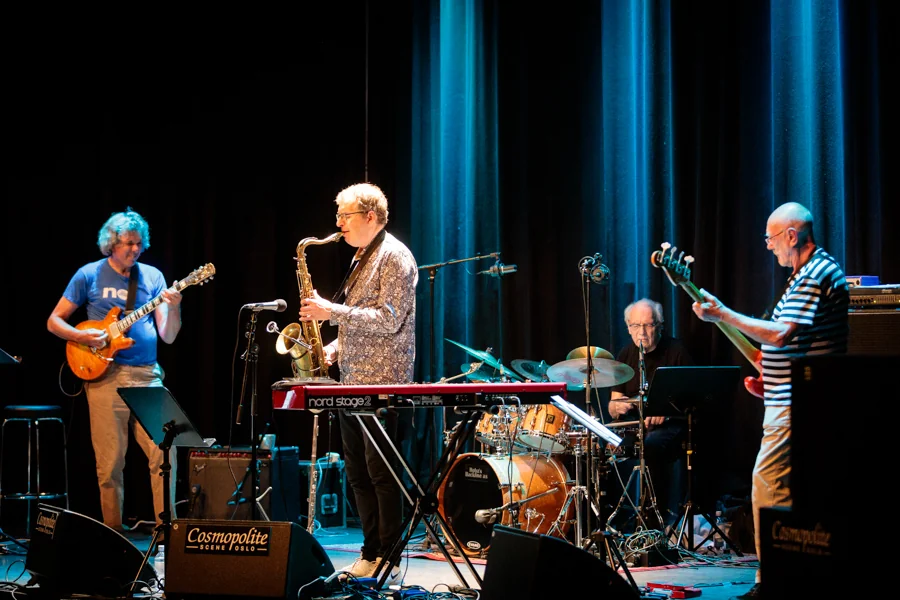
Image from Wikipedia
Image from Wikipedia
Soft Machine – The legendary Canterbury instance between psychedelia, jazz rock, and musical avant-garde
A band that shaped the British underground
Soft Machine is one of the most influential British formations of the late 1960s and early 1970s. The band was formed in 1966 in Canterbury and evolved from the tension between psychedelic rock, jazz, improvisation, and progressive composition into a stylistically defining entity of the Canterbury Scene. Their name refers to William S. Burroughs' novel The Soft Machine and still stands for artistic curiosity, formal openness, and the courage to consistently push musical boundaries. ([en.wikipedia.org](https://en.wikipedia.org/wiki/Soft_Machine))
From early on, Soft Machine distinguished itself from many contemporaries through a sonic signature that did not rely on quick hit singles, but rather focused on structure, atmosphere, and experimental development. The band played a central role in the British underground, performed on the stages of UFO Club, and early on shared the scene with Pink Floyd and other defining acts of the era. From this scene, Soft Machine shaped a sound that would later be celebrated as a precursor to jazz rock, art rock, and experimental prog. ([en.wikipedia.org](https://en.wikipedia.org/wiki/Soft_Machine))
The beginnings in Canterbury and the British underground
The origins of Soft Machine lie in a time when British pop music was radically opening up. Early founding figures included Mike Ratledge, Robert Wyatt, Kevin Ayers, Daevid Allen, and Larry Nowlin; by 1966 they had formed the band, initially performing as The Soft Machine. Early on, line-up changes, international performances, and proximity to the London underground scene shaped the character of the group. ([en.wikipedia.org](https://en.wikipedia.org/wiki/Soft_Machine))
As early as 1967, the band released its first single, Love Makes Sweet Music, on Polydor and subsequently played in Europe, where it received considerable acclaim, particularly in France. The early phase was characterized by long, overlapping pieces, psychedelic experimental joy, and a consciously unconventional dramaturgy. Instead of bowing to the mainstream, Soft Machine developed a form of music that thrived on tension, improvisation, and collective risk. ([en.wikipedia.org](https://en.wikipedia.org/wiki/Soft_Machine))
From psychedelic rock to jazz rock: the artistic breakthrough
With their first album The Soft Machine (1968) and especially with Volume Two, Third, and Fourth, the center of the band's sound increasingly shifted towards jazz rock and instrumental long form. Especially Third from 1970 is considered a turning point: the double album is largely instrumental, each side contains a suite, and it became the band's best-selling album. This step marked the moment when Soft Machine definitively emerged as a cult band of progressive and improvised rock. ([en.wikipedia.org](https://en.wikipedia.org/wiki/Soft_Machine))
The stylistic development was not just a change of genre, but an aesthetic paradigm shift. Soft Machine reduced the vocal component, increasingly dispensed with classical song forms, and condensed their music into complex, often suite-like compositions. The influence of jazz became increasingly clear, while the band simultaneously never fully lost its psychedelic core. This very mix made Soft Machine one of the most original bands of their time. ([en.wikipedia.org](https://en.wikipedia.org/wiki/Soft_Machine))
The great albums: between suite, fusion, and sonic boldness
The discography of Soft Machine reads like a parcours through the development of British progressive rock. Key studio albums include The Soft Machine (1968), Volume Two (1969), Third (1970), Fourth (1971), Fifth (1972), Six and Seven (both 1973), Bundles (1975), Softs (1976), Land of Cockayne (1981), and later Hidden Details (2018). In addition, there are the albums released under the name Soft Machine Legacy: Steam and Burden of Proof. ([en.wikipedia.org](https://en.wikipedia.org/wiki/Soft_Machine))
Especially Bundles is considered a key moment, as it was with Allan Holdsworth that a guitar once again prominently integrated into the band's sound. The band shifted their focus towards fusion, approaching a virtuosic, dynamic playing style that would have a lasting influence on later jazz rock and progressive projects. On Softs, Holdsworth was replaced by John Etheridge, while Mike Ratledge, as the last founding member, left the band during the recordings. ([softmachine.org](https://www.softmachine.org/history))
Influence, criticism, and cultural authority
Although Soft Machine was never among the biggest rock bands commercially, their cultural standing is enormous. The group is described by critics as one of the most influential underground bands of their era; AllMusic called them one of the most formative formations of their surroundings. In music history, Soft Machine represents the transition from psychedelic counterculture to an intellectual, instrumental form of rock that would later influence prog, fusion, and avant-jazz. ([en.wikipedia.org](https://en.wikipedia.org/wiki/Soft_Machine))
Being categorized within the Canterbury Scene underscores this status. Soft Machine combined British independence, experimental formal awareness, and jazzy harmonics into a style that still holds a special aura in musician circles, specialist press, and collector circles. As a result, the band became not just a historically important name but a reference for artistic independence. ([en.wikipedia.org](https://en.wikipedia.org/wiki/Soft_Machine))
The current lineup and new chapters
Soft Machine continues to exist today with a current lineup of John Etheridge, Theo Travis, Fred Thelonious Baker, and Asaf Sirkis, emphasizing the spirit of musical adventure. The official website describes the group as open to progressive jazz fusion, atmospheric psychedelia, free improvisation, and ambient loop-based music. This stylistic flexibility keeps Soft Machine relevant even in the 21st century. ([softmachine.org](https://softmachine.org/))
In 2026, the band announced a new studio album entitled Thirteen, set to be released on March 13, 2026. As the thirteenth studio album with thirteen new pieces, it aims to mark another chapter in the sixty-year history of the band. According to the official website, the release will come via Dyad Records through Proper; the band also points to ongoing tour activities in Europe. For a formation with such a long history, this is not a nostalgic afterpiece but a new, vibrant testament to their creative energy. ([softmachine.org](https://softmachine.org/))
Stage presence, improvisation, and the art of transformation
Soft Machine has never been merely a studio project; they have always been a live band with a pronounced stage presence. The official self-presentation emphasizes the flexibility of the ensemble: from powerful jazz fusion to atmospheric psychedelia to freely improvised jazz rock. It is in this openness that the strength of the band lies, as Soft Machine does not understand sound as a fixed product but as a dynamic, breathing entity. ([softmachine.org](https://softmachine.org/))
The band's live history spans from early club performances in London to current concerts across Europe and beyond. The fact that Soft Machine continues to tour decades after their formation, prepares new releases, and invigorates historical threads with new energy, constitutes the lasting appeal of this family of musicians. Here, musical experience meets compositional artistry, virtuosity meets collective timing, and it is from this combination that the unique authority emerges that only a few bands can maintain over such a long period. ([en.wikipedia.org](https://en.wikipedia.org/wiki/Soft_Machine))
Conclusion: Why Soft Machine continues to fascinate
Soft Machine remains exciting because the band never stops redefining itself while never denying its origins. From the Canterbury Scene through psychedelic underground to sophisticated jazz rock aesthetics, their story tells of artistic consistency and an unbroken desire to experiment. Those who are passionate about musical boundary-pushers, demanding discographies, and intelligent improvisation will find one of the most important British bands of all time here. ([en.wikipedia.org](https://en.wikipedia.org/wiki/Soft_Machine))
Experiencing Soft Machine live means hearing a vibrant music history in real-time: precise, open, surprising, and full of sonic movement. It is precisely this capacity to connect the past and the present while always seeking the next musical horizon that constitutes the enduring power of this band. ([softmachine.org](https://softmachine.org/))
Official channels of Soft Machine:
- Instagram: No official profile found
- Facebook: No official profile found
- YouTube: No official profile found
- Spotify: No official profile found
- TikTok: No official profile found
Sources:
Upcoming Events
Soft Machine – The Jazz-Rock Pioneers of the 70s
Soft Machine – The Jazz-Rock Pioneers of the 70s