
Thomas Brasch
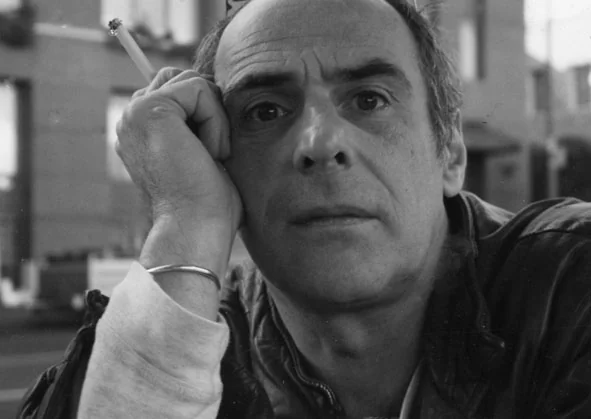
Image from Wikipedia
Image from Wikipedia
Thomas Brasch – the unruly poet between East Germany, West Berlin, and cultural unrest
An author who understood language as a stance
Thomas Brasch was born on February 19, 1945, in Westow, Yorkshire, and died on November 3, 2001, in Berlin. As a writer, playwright, screenwriter, director, and poet, he is one of the most distinctive voices in post-war German literature. His work arose from a biography marked by exile, return, political friction, imprisonment, emigration, and artistic self-assertion. ([de.wikipedia.org](https://de.wikipedia.org/wiki/Thomas_Brasch?utm_source=openai))
Biography: Background, influences, and early conflict with East Germany
Brasch was the son of Jewish emigrants; the family returned to the Soviet occupation zone after the war, where his father, Horst Brasch, rose to a significant position in East Germany. Thomas Brasch grew up in a politically and culturally charged environment that confronted him early with power, loyalty, and dissent. His life story thus became not only a private but also a historical narrative of a person who never came to terms with the demands of the state. ([de.wikipedia.org](https://de.wikipedia.org/wiki/Thomas_Brasch?utm_source=openai))
From 1956 to 1960, he attended the Cadet School of the National People's Army in Naumburg and studied journalism in Leipzig starting in 1964 but was expelled in 1965. Following protests against the Warsaw Pact's invasion of Czechoslovakia in 1968, he was sentenced to two and a half years in prison. This early repression shaped Brasch's work, reflected in his tone: his texts revolve around self-assertion, mistrust of language, and the individual's right against rigid systems. ([de.wikipedia.org](https://de.wikipedia.org/wiki/Thomas_Brasch?utm_source=openai))
Literary breakthrough and artistic independence
After stints in theater, at the Brecht Archive, and as a freelance writer, Brasch developed a voice in East Germany that could not be neatly categorized by official cultural policies or simple dissidence templates. In 1976, he signed the resolution against the expatriation of Wolf Biermann; shortly thereafter, he applied for emigration and moved to West Berlin with Katharina Thalbach. The break with East Germany did not signify an adaptation to the West but rather the start of an even sharper and freer literary productivity. ([de.wikipedia.org](https://de.wikipedia.org/wiki/Thomas_Brasch?utm_source=openai))
In the West, Brasch quickly became recognized as a distinctive author who evaded quick labeling. Contemporary and later classifications describe him as a writer navigating political experience, melancholy, defiance, and radical formal exploration. In reception, he is considered the voice of a divided Germany, his texts not only reflecting the conflict between East and West but also the inner conflict of an author who wrote against simplifications with every sentence. ([zeit.de](https://www.zeit.de/1977/31/fuer-jeden-autor-ist-die-welt-anders?utm_source=openai))
Drama, prose, and film: a body of work with a wide resonance
Brasch worked as a dramatist, storyteller, lyricist, screenwriter, and director. His most well-known cinematic works include Engel aus Eisen, Domino, and Der Passagier – Welcome to Germany; for Engel aus Eisen, he received the Bavarian Film Award in 1981, and he was awarded the Kleist Prize in 1987. These awards not only mark individual successes but also the recognition of a complete body of work intertwining language, imagery, and political experience closely together. ([en.wikipedia.org](https://en.wikipedia.org/wiki/Thomas_Brasch?utm_source=openai))
The Suhrkamp publications and the ongoing legacy at the Academy of Arts underline Brasch's literary standing to this day. His work remains present in the German cultural sphere not only because it documents historical conditions but also because it articulates an aesthetic stance: mistrust of authority, an awareness of fractures, and a profound sensitivity to the cost of freedom. It is precisely this connection between political experience and linguistic precision that makes Brasch equally relevant to literary, theater, and film history. ([tagesspiegel.de](https://www.tagesspiegel.de/kultur/akademie-der-kunste-prasentiert-nachlass-von-thomas-brasch-851257.html?utm_source=openai))
Musical reception and cultural echo
Thomas Brasch was not a musician in the strict sense, but his poems and texts have left a significant mark on music. This is particularly evident in Masha Qrella's album Woanders, where she sets Brasch's poems to music, transferring his language into a new sonic environment. Music press and cultural reports highlight how well Brasch's imagery, solitude, and inner tension can be translated into musical forms. ([musikexpress.de](https://www.musikexpress.de/reviews/masha-qrella-woanders/?utm_source=openai))
Such adaptations reveal the cultural influence of an author whose texts remain rhythmic, condensed, and emotionally open. Brasch is thus read not only as a literary figure but also as a source of artistic inspiration for contemporary music, theater music, and poetic song forms. His language possesses an inner musicality that challenges composition and arrangement. ([musikexpress.de](https://www.musikexpress.de/reviews/masha-qrella-woanders/?utm_source=openai))
Current relevance: Why Thomas Brasch is still read and heard today
Even decades after his death, Brasch remains relevant because his work encapsulates central themes of German post-war culture: memory, system criticism, familial entanglement, emigration, identity, and self-empowerment. New publications, essays, and rediscoveries keep the discourse alive, particularly in literary and critical explorations of his prose. His texts do not read as museum pieces but rather remarkably present, as they capture the tension between inner independence and external pressure with precision. ([bilder.deutschlandfunk.de](https://bilder.deutschlandfunk.de/2b/49/05/e1/2b4905e1-6a66-4832-afa8-f6426abc1dd5/thomas-brasch-martina-hanf-hg-gesammelte-prosa-100.pdf?utm_source=openai))
Style, tone, and stance: the artistic signature of Brasch
Thomas Brasch's style is characterized by density, irony, political awareness, and often incisive emotionality. His literature thrives on cuts rather than smooth transitions, on resistance rather than harmony, featuring characters and voices resisting ascriptions. In this consistency lies his special authority: Brasch did not write about freedom as a buzzword but about its costs. ([wissen.de](https://www.wissen.de/lexikon/brasch-thomas?utm_source=openai))
For readers seeking literary biographies with cultural weight, Brasch remains an extraordinary case. He combines the experience of East Germany with a perspective on the West, theater with film, poetry with political intervention. Exactly therein lies his enduring strength: Thomas Brasch is not an author of smooth transmission but one of productive friction. ([deutsche-biographie.de](https://www.deutsche-biographie.de/dbo017368.html?utm_source=openai))
Conclusion: An artist of unrest whose work remains vibrant
Thomas Brasch continues to fascinate today because his biography and work are inextricably linked. He was an artist who could not be co-opted, whose texts and films are imbued with resistance, vulnerability, and intellectual sharpness. Those who discover Brasch encounter not just an author but a literary stance of lasting urgency. ([de.wikipedia.org](https://de.wikipedia.org/wiki/Thomas_Brasch?utm_source=openai))
Especially on stage, in film, and in set-to-music poetry, this power unfolds to this day. Reading, seeing, and rediscovering Thomas Brasch in musical adaptations means experiencing one of the most distinctive cultural voices of divided Germany anew. His works invite us to continue hearing him live in memory, on stage, and in the cultural consciousness. ([berliner-zeitung.de](https://www.berliner-zeitung.de/kultur-vergnuegen/musik/masha-qrella-woanders-thomas-brasch-album-kritik-review-berliner-musik-li.140230?utm_source=openai))
Official channels of Thomas Brasch:
- Instagram: no official profile found
- Facebook: no official profile found
- YouTube: no official profile found
- Spotify: no official profile found
- TikTok: no official profile found
Sources:
- Wikipedia – Thomas Brasch
- Deutsche Biographie – Brasch, Thomas
- Deutsches Filmhaus – Thomas Brasch Biography
- Suhrkamp – Thomas Brasch
- Suhrkamp Rights – Thomas Brasch
- nd-aktuell – Literature and Freedom: Thomas Brasch
- Berliner Zeitung – Masha Qrella and Thomas Brasch
- Musikexpress – Review of Masha Qrella's "Woanders"
- Logbuch Suhrkamp – Thomas Brasch and the Setting of His Poems to Music
- Tagesspiegel – Legacy of Thomas Brasch
Upcoming Events
Cinema Meets Science – The Passenger: Brasch's Film about Guilt, Memory, and Cinema